Sermons That Exalt Christ
The preaching of God’s Word is central to the life of the church. Tom's pulpit ministry is dedicated to providing clear, biblical teaching to equip believers, strengthen faith, and exalt Christ.

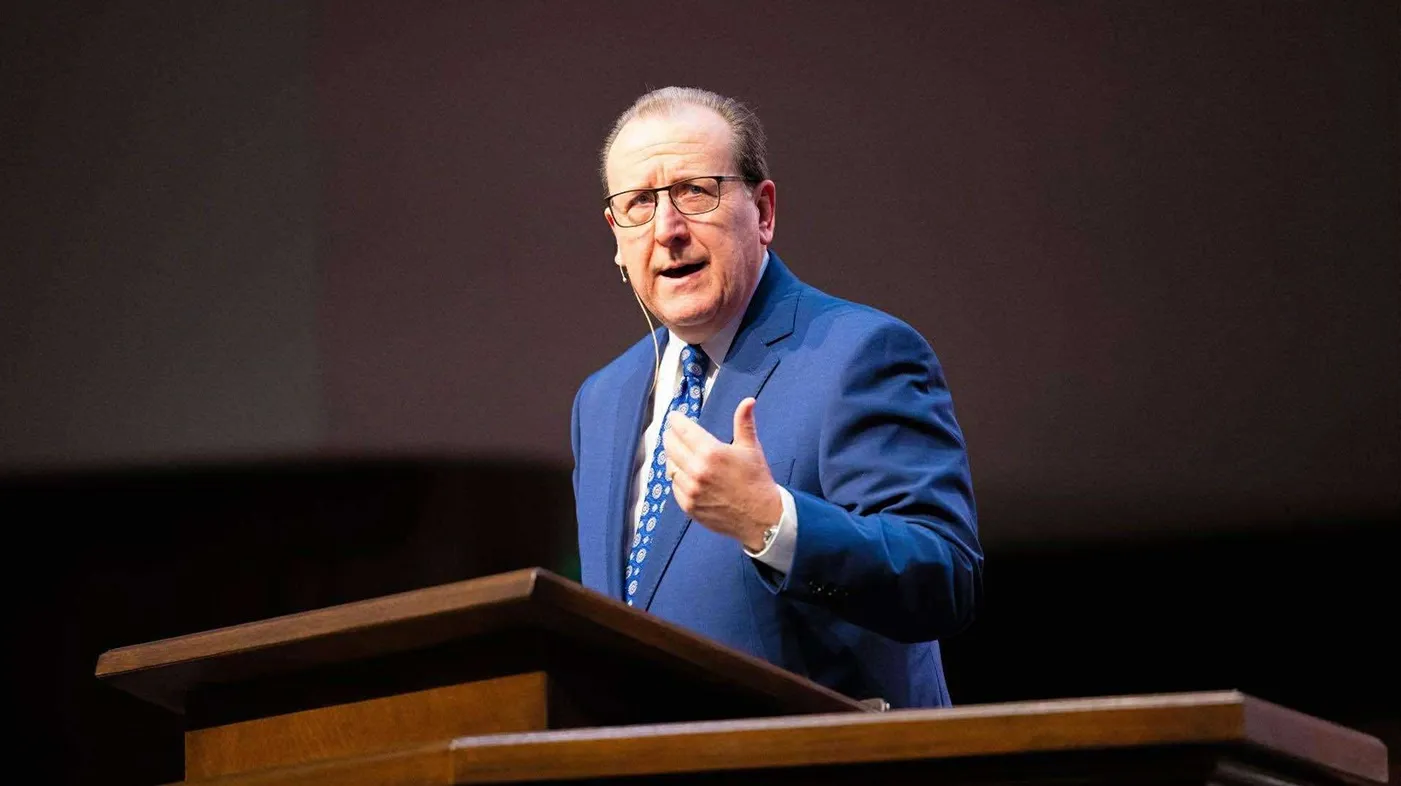
Engage with the most recent teaching from God’s Word.
The preaching of God's Word is central to worship and of the utmost importance for the sanctification of every believer in Christ.

.jpg)
.jpg)

Explore messages organized to help you grow in Christ.
Search and filter sermons for quick access.
The One True God - Part 2
The text emphasizes that God's existence is self-evident through creation, providence, and conscience, necessitating faith to approach Him. It asserts God's utter incomprehensibility; He is unique, unlike anything in the universe, and cannot be fully or exhaustively understood by humans. Scripture reveals His greatness, ways, and thoughts as unsearchable and infinitely higher than ours. Despite this, God *can* be known because He has chosen to reveal Himself truthfully, though partially, through His Word and Jesus Christ. To aid human understanding, Scripture employs anthropomorphisms (attributing human characteristics like hands) and anthropopathisms (attributing human emotions like regret), which are figurative expressions, not literal descriptions of an infinite God without bodily passions. The sermon condemns idolatry, including holding unworthy thoughts about God, and refutes anti-theism, pantheism, and polytheism, labeling other gods as demonic. It defines the true God as a distinct, living, infinite Spirit�immaterial, invisible, incorruptible, and immortal. Fundamentally, God is personal: self-conscious, self-determining, and relational, both within the Trinity and with His creation, as perfectly exemplified in Jesus Christ. We are called to worship this personal, transcendent God in spirit and truth, continually learning about Him even into eternity.
The Triumphal Entry
Pastor Tom Pennington's sermon on the Triumphal Entry (Mark 11:1-11) contrasts Jesus' humble royal entrance with grand worldly events, emphasizing its profound significance. Jesus deliberately orchestrated His entry into Jerusalem on a specific, unridden colt, fulfilling Zechariah 9:9 and publicly declaring Himself Israel's long-promised Messiah, King, and the perfect Passover Lamb. This intentional act, demonstrating His omniscience and sovereignty, challenged the nation's leaders to respond to His claims. During this dramatic event, Jesus wept over Jerusalem, foreseeing its rejection of Him and subsequent destruction in 70 AD, a reminder of divine judgment for those who ignore His rule. He also entered the temple, inspecting it before cleansing it the next day, and healed the sick, demonstrating His compassionate kingship. The Triumphal Entry unequivocally proves Jesus' claims to be King and Messiah, a truth later acknowledged even by Pilate at His crucifixion. It also foreshadows His second coming to establish His eternal kingdom. For us today, this event underscores humanity's desperate need for the cross, as our inherent rebellion mirrors the crowd's varied responses to Jesus.
The One True God - Part 1
Pastor Tom Pennington introduces a study on the Person of God, emphasizing that a right understanding of God is foundational for both theology and practical Christian living, citing McLeod and Tozer. The study aims to impart biblical knowledge, encourage further exploration, and foster deeper fellowship with God. The sermon posits that the Bible assumes God's existence (Genesis 1:1), deriving knowledge from His self-testimony, not human reason. Pennington details general revelation: humanity possesses intuitive knowledge of God through creation (Romans 1), conscience (Romans 2), and providence (Acts 14), rendering all without excuse. However, sin suppresses this inherent truth, making scriptural guidance essential. Classic rational arguments�cosmological, teleological, ontological, and moral�are discussed, highlighting their logical limits. The speaker advocates for a presuppositional approach, where these arguments, rooted in Scripture, serve to dismantle unbelievers' false objections rather than independently prove God. Ultimately, God reveals Himself through general revelation, moral law, Jesus Christ, and decisively, propositionally in His Word. Yet, human spiritual blindness (2 Corinthians 4:4) means even Scripture isn't enough. True, saving belief in God�s existence requires the miraculous regeneration of the Holy Spirit, who illuminates darkened hearts through the Gospel. The Bible never proves God's existence but declares it, labeling deniers as "fools.
The True and Better Adam - Part 4
This text, based on Romans 5:12-21, explores the theological principle of representation, central to the gospel. Just as human parents appoint guardians, God justly appointed Adam as humanity's representative, and Christ as believers' representative. Adam�s single act of disobedience brought sin, condemnation, and death to all mankind, legally making them sinners by divine decree, not personal character. The Law, a secondary addition, increased awareness and gravity of sin, revealing humanity's inability to achieve righteousness and driving them to Christ. In stark contrast, Christ, the "True and Better Adam," through His entire life of perfect active and passive obedience and sacrificial death, brings justification and eternal life to those He represents (believers). His grace "hyper-abounds" where sin increased, establishing a reign of grace instead of sin and death. This principle ensures that justification is wholly God's work, received through repentance and faith, providing unshakeable security. Unlike Adam, Christ will never fail as our representative, guaranteeing an eternal future of righteousness.
The True and Better Adam - Part 3
Pastor Tom Pennington's sermon, "The True and Better Adam (Part 3)," from Romans 5:12-21, elucidates the concept of representative headship, contrasting Adam with Christ. Paul argues that Adam, as humanity's legal representative, brought sin, condemnation, and death to all through his singular act of transgression; his guilt was legally credited to every person, explaining universal death. However, Christ, the "last Adam," is a far superior representative. Pennington highlights three ways Christ surpasses Adam, often using the phrase "much more": First, Adam brought God's judgment, but Christ brought abounding grace and the free gift of righteousness. Second, Adam's one transgression led to condemnation for many, while Christ's work provides justification for believers' many transgressions, erasing every sin. Third, where death reigned through Adam, Christ offers life, allowing believers to "reign in life" with Him, both presently and eternally. Salvation in Christ is a completely unearned, free gift received through faith and repentance. Understanding this "super-abounding grace" should transform believers' lives, showcasing the attractiveness of the gospel to a world under sin and death.
The True and Better Adam - Part 2
The provided text, "The True and Better Adam (Part 2) Romans 5:12-21," explains the legal basis for the security of believers' justification through the doctrine of federal headship. Pastor Tom Pennington emphasizes that God appointed both Adam and Jesus Christ as official representatives of humanity. Through Adam, sin and death (physical, spiritual, and eternal) entered the world and spread to all mankind. This happened because God imputed, or credited, the guilt of Adam's initial sin to all his descendants; thus, "all sinned" in Adam. This concept is defended by noting that even those between Adam and Moses, lacking an explicit law, still died, demonstrating that death came through Adam's imputed sin, not merely personal transgression. Pennington argues this system is not unfair because Adam sinned under perfect conditions, and humanity would have universally failed anyway. Crucially, this representative imputation is the *only* way God can justly credit Christ's righteousness to believers. The gospel involves three imputations: Adam's sin to humanity, humanity's sin to Christ on the cross, and Christ's righteousness to those who believe. Rejecting the imputation of Adam's sin would logically undermine the imputation of Christ's saving work, the very foundation of salvation.
No Results Found.
We couldn’t find anything matching your search.
Explore The Word Unleashed
Our ministry brings together expository preaching, theological precision, and practical application for the good of Christ's church and the daily living of Christ's people.
.webp)
Sermons
Listen to expository sermons that clearly teach God’s Word and guide you in daily living.

Radio
Tune in to gospel-centered programs that share biblical truth and strengthen your daily walk with Christ.
Training
Join courses and workshops designed to deepen your faith and equip you to serve others with biblical wisdom.
.webp)
From the Pastor's Desk
Read pastoral messages that encourage, instruct, and help you apply God’s Word to every part of your life.
.webp)
Hymns
Discover timeless hymns that lift your heart in worship and remind you of God’s abounding grace and faithfulness.
Podcasts
Stay rooted in Scripture through our podcast series.