Sermons That Exalt Christ
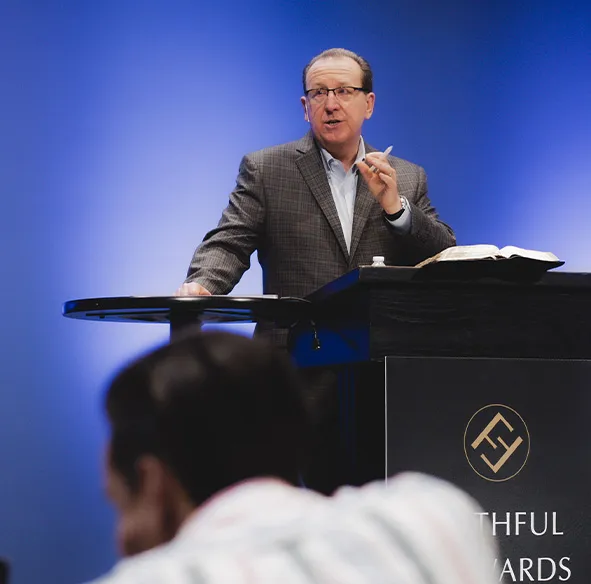
The preaching of God’s Word is central to the life of the church. Tom's pulpit ministry is dedicated to providing clear, biblical teaching to equip believers, strengthen faith, and exalt Christ.


Engage with the most recent teaching from God’s Word.
The preaching of God's Word is central to worship and of the utmost importance for the sanctification of every believer in Christ.

.jpg)
.jpg)

Explore messages organized to help you grow in Christ.
Search and filter sermons for quick access.
Old Testament: The Exile and Return
This sermon concludes an overview of Old Testament history, focusing on the final two movements: the Babylonian exile and the return/restoration. The exile of Judah for 70 years (586-538 BC) was a consequence of Israel's disobedience, particularly their failure to observe Sabbath years for the land, resulting in the destruction of Jerusalem and the Temple, and the departure of God's visible glory. Despite the hardship, God's providence was evident, sending figures like Daniel and Ezekiel to prepare the way and minister to His people. The return from exile, prophesied by Isaiah, was orchestrated by God through pagan King Cyrus, who conquered Babylon and decreed the Jews' return. The restoration unfolded in three phases: Zerubbabel led the rebuilding of the Temple (Ezra 1-6), Ezra returned to restore worship and purify the people from mixed marriages (Ezra 7-10), and Nehemiah led the fortification of Jerusalem's walls (Nehemiah 1-13). Throughout this period, despite opposition, the books of Ezra-Nehemiah emphasize God's invisible hand of providence and the critical importance of obedience to His Word.
The True and Better Adam - Part 1
This sermon on Romans 5:12-21 explains the legal basis for justification through the concept of "federal headship" or "representative headship." The speaker addresses skepticism about penal substitutionary atonement, asserting that God�s justice is upheld when one person�s obedience or death stands for others due to divine appointment. Paul's argument centers on two representatives: Adam and Jesus Christ. Adam, appointed by God, represented all humanity. Through his single act of disobedience, sin, condemnation, and various forms of death (physical, spiritual, and eternal) entered the world, affecting all born "in Adam." This foundational truth, "original sin," is crucial. Conversely, Jesus Christ, the "true and better Adam," was appointed by God to represent those who believe in Him. Through Christ's perfect obedience and substitutionary death, believers are credited with His righteousness, receive justification, and are granted eternal life. The sermon emphasizes that salvation's ultimate certainty comes from being "in Christ," no longer under Adam's condemnation, but secure in Christ's perfect representation. It concludes by urging non-believers to repent and place their faith in Christ, moving from being "in Adam" to "in Christ" to receive eternal life instead of death.
Old Testament: Poetry and Prophets
Pastor Tom Pennington's sermon provides an "enlarged view" of scripture, starting with God's overarching theme of redeeming a people for His glory, with the Old Testament emphasizing the coming Redeemer. This session focuses on the non-historical Old Testament books, specifically the five books of poetry/wisdom literature and the seventeen prophetic books. The wisdom literature section delves into each book's theme: Job addresses suffering and divine sovereignty, urging trust in God's goodness and control. Psalms offers a pattern for personal and corporate worship, highlighting God's greatness and goodness. Proverbs provides "skill" and oral instruction for living a God-pleasing life in daily details. Ecclesiastes explores the vanity and limitations of life in a fallen world, ultimately calling for faith, fear, and obedience to God. Song of Solomon celebrates the joy and instruction of married love through the historical relationship of Solomon and his first wife. The writing prophets, both major and minor, functioned as God's mouthpiece, delivering predictive and moral revelation. Their messages, delivered before, during, and after the Babylonian exile, served as an apologetic for Yahweh's power, showcasing His patience, grace, justice, and steadfast faithfulness to His remnant.
Jesus: The Sovereign of Disease & Death
Tom Pennington's sermon, "Jesus: The Sovereign of Disease & Death," from Mark 5:21-43, highlights Jesus as the ultimate source of hope in desperate circumstances. He presents two individuals whose situations were humanly hopeless: Jairus, an influential synagogue official whose 12-year-old daughter was dying, and an anonymous woman who had suffered a debilitating hemorrhage for twelve years, rendering her an outcast and financially ruined. Both, at the end of their resources, sought Jesus in desperate acts of faith. Jairus risked his reputation by publicly imploring Jesus for his daughter's healing. Simultaneously, the hemorrhaging woman, believing that merely touching Jesus' cloak would make her well, pushed through the crowd. Jesus immediately healed her, prompting her to a public confession of faith, clarifying that her belief in Him�not superstition�brought spiritual salvation alongside physical restoration. While conversing with the woman, Jairus received news that his daughter had died. Jesus, hearing this, immediately commanded Jairus, "Do not be afraid any longer, only believe." Upon arriving at Jairus' home, Jesus expelled the professional mourners, entered the girl's room, and simply commanded, "Talitha kum!" (Little girl, get up!), instantly raising her from the dead.
Old Testament: Judges to Monarchy - Part 2
This text, "Old Testament Judges to Monarchy (Part 2)," explores the significant movements of Old Testament history, underscoring God's central theme of redeeming a people through His Son. It focuses on the monarchy period, particularly the books of 1 and 2 Kings, which were written during Israel's exile to explain their consistent covenant violations, justify the captivity, and urge repentance. The sermon details King Solomon's reign, initially marked by wisdom and temple building, but tragically ending in apostasy due to his foreign wives and their idolatry. This sin led to God's judgment and the kingdom's division after Solomon's death, largely accomplished through Rehoboam's foolishness. The Northern Kingdom (Israel) and Southern Kingdom (Judah) diverged significantly, with the North consistently embracing Jeroboam's substitute worship and later Baalism under Ahab and Jezebel. Prophets like Elijah and Elisha emerged as God's messengers, confronting kings and calling the people to account, foreshadowing the need for a righteous king. Despite numerous warnings, rampant idolatry ultimately led to the Assyrian and Babylonian exiles.
The Amazing Benefits of Justification - Part 4
This sermon, "The Amazing Benefits of Justification (Part 4)" from Romans 5:1-11, explains the immediate benefits accompanying being declared righteous by God through faith. These benefits offer assurance and security in Christ. Building on previously discussed benefits like peace with God and hope in His glory, Pastor Tom Pennington introduces the final two: being saved from God's wrath (verses 9-10) and exulting in God's person (verse 11). Pennington argues that if God accomplished the "greater" act of justifying us, His enemies, through Christ's death, then He will certainly perform the "lesser" act of saving us from future wrath through Christ's life. He clarifies that "salvation" has past, present, and future aspects, focusing here on future deliverance from divine judgment, a truth consistently taught in the New Testament. He also highlights reconciliation, where God brought hostile sinners into relationship with Himself through Christ. Finally, believers are called to exult in God's person, delighting in His character and attributes. This represents the pinnacle of spiritual maturity. The sermon concludes by urging listeners to grasp justification by faith alone, meditate on these truths, and apply them for deeper assurance and joy in their Christian walk.
No Results Found.
We couldn’t find anything matching your search.
Explore The Word Unleashed
Our ministry brings together expository preaching, theological precision, and practical application for the good of Christ's church and the daily living of Christ's people.
.webp)
Sermons
Listen to expository sermons that clearly teach God’s Word and guide you in daily living.

Radio
Tune in to gospel-centered programs that share biblical truth and strengthen your daily walk with Christ.
Training
Join courses and workshops designed to deepen your faith and equip you to serve others with biblical wisdom.
.webp)
From the Pastor's Desk
Read pastoral messages that encourage, instruct, and help you apply God’s Word to every part of your life.
.webp)
Hymns
Discover timeless hymns that lift your heart in worship and remind you of God’s abounding grace and faithfulness.
Podcasts
Stay rooted in Scripture through our podcast series.