Sermons That Exalt Christ
The preaching of God’s Word is central to the life of the church. Tom's pulpit ministry is dedicated to providing clear, biblical teaching to equip believers, strengthen faith, and exalt Christ.

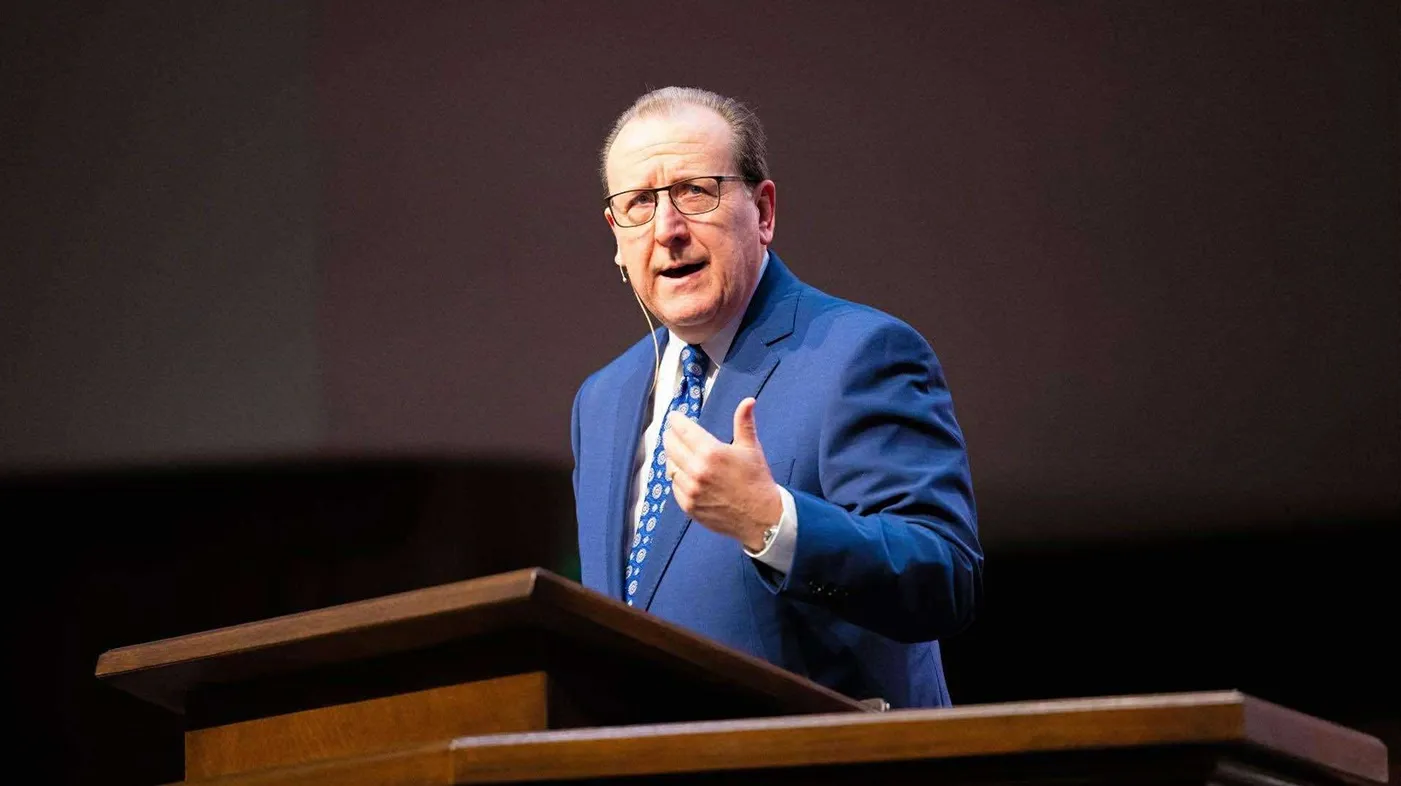
Engage with the most recent teaching from God’s Word.
The preaching of God's Word is central to worship and of the utmost importance for the sanctification of every believer in Christ.

.jpg)
.jpg)

Explore messages organized to help you grow in Christ.
Search and filter sermons for quick access.
A Task Unfinished
Tom Pennington's sermon, "A Task Unfinished," powerfully asserts that the Great Commission remains an ongoing global imperative for Christians. He opens with inspiring historical examples, such as John Paton's fearless mission to the cannibal-infested New Hebrides in the 19th century, highlighting a willingness to sacrifice everything to spread the Gospel, echoing earlier missionary martyrs. Pennington connects this to his own recent mission trip to the Middle East, where he witnessed the profound need for the Gospel in challenging environments, urging congregants to lift their eyes beyond their local contexts. He then delves into Mark 3:7-12, demonstrating Jesus' own ministry as the ultimate model for global mission. Jesus intentionally ministered beyond Israel, reaching diverse peoples from various regions. His consistent ministry involved teaching, healing, and casting out demons, all authenticating His divine authority and foreshadowing the church's worldwide mission. This international design, rooted in Old Testament prophecy (Isaiah) and reiterated by Christ post-resurrection (Luke 24), underscores God's eternal plan to bless all nations through Christ.
Whose Slave are You? - Part 3
Tom Pennington's sermon on Romans 6:15-23 emphasizes that true Christians, regenerated by God, are no longer slaves to sin but have become slaves to God and righteousness. Before salvation, individuals were slaves to sin, obeying its commands, which led to a gradual increase in lawlessness and moral impurity. At regeneration, God frees believers from sin and �enslaves� them to righteousness, implanting a new heart and desire for holiness. Consequently, Christians are called to actively "present their members" (physical faculties, thoughts, emotions) as slaves to righteousness, resulting in sanctification. This growth is a gradual process, mirroring the slow, steady increase in sin before conversion. Sanctification is achieved through consistent, daily patterns of obedience to God's Word, not through shortcuts or miraculous experiences. Just as sin demanded increasing obedience, righteousness requires daily submission to divine commands. Paul uses the "slavery" metaphor to highlight the total, undivided commitment owed to God. However, he acknowledges its imperfection: believers are also adopted children and friends of Christ, not merely slaves. Furthermore, God�s commands bring true freedom and joy, unlike human slavery, and our loving Master demonstrated ultimate commitment by dying to redeem us with His own life.
A Survey of the New Testament - Part 1
Tom Pennington's sermon initiates a four-week New Testament survey, focusing here on Jesus' life from conception to age 30. He introduces the gospels' perspectives: Matthew (Messiah/King for Jews), Mark (Servant for Romans), Luke (Perfect Man for Greeks), and John (Unique Son of God for all). Jesus' birth is placed around 5-6 B.C., leading to his death in 30 A.D. A core discussion explains the two genealogies (Matthew through Joseph, Luke through Mary) which are crucial for Jesus' claim to David's throne. Matthew's legal line via Joseph and Solomon includes the cursed Jeconiah, while Luke's physical line via Mary and Nathan avoids it. The virgin birth thus uniquely allows Jesus to hold both the legal right without the curse and the physical descent. The sermon covers Joseph's decision to marry Mary after an angelic dream, Jesus' infancy (circumcision, temple presentation indicating modest family means), and early years in Bethlehem, Egypt, and Nazareth. Jesus� "silent years" (ages 12-30) in Nazareth are emphasized, highlighting his education in scripture and languages, and his work as a carpenter supporting his family after Joseph�s likely death. His family initially disbelieved him, thinking he was "out of his senses.
Whose Slave are You? - Part 2
Pastor Tom Pennington explains Romans 6 by utilizing the analogy of Roman slavery to illustrate a believer's radical transformation. Unlike ancient Romans, we may not personally understand physical slavery, but the concept�like military enlistment�effectively conveys complete control. Paul clarifies that before Christ, everyone was a slave to sin, leading to death. This was a universal condition, regardless of outward morality, driven by a darkened mind, enslaved will, and lack of fear of God. Through salvation, a profound change occurs. God, by His grace, freed believers from sin's tyranny and regenerated them, making them "obedient from the heart" to the gospel. This obedience, a willing response to faith and repentance, is not self-initiated but God�s sovereign act of delivering us to a new Master. We are no longer free to sin, but rather "enslaved to righteousness," compelled by God's Spirit to walk in His statutes as promised in the New Covenant. This divine intervention ensures spiritual growth and holiness, providing assurance that God, who began this good work, will complete it. Our lives, bought by Christ's death, now solely belong to Him, not ourselves.
The Intertestamental Period
The 400-year Intertestamental Period, or "silent years," between Malachi and John the Baptist, saw no new direct revelation, but God sovereignly prepared the world for His Son's arrival. Politically, Daniel's prophecies accurately foretold successive empires: Babylon, Medo-Persia, Greece, and Rome. Alexander the Great's rapid conquest and subsequent empire division, followed by Antiochus Epiphanes' brutal persecution and temple desecration, prompted the Maccabean Revolt and temple rededication (Hanukkah). Roman rule under Pompey and Herod the Great eventually controlled Judea. Religiously, the Pharisees (conservative, oral law) and Sadducees (priestly, anti-supernatural) arose. The Sanhedrin (ruling council), synagogues for local worship, and the Septuagint (Greek Old Testament translation) also developed. These changes were God's providence: Greek became a precise, universal language; Roman peace (Pax Romana) and road networks aided gospel spread; and dispersed Jews, with the Septuagint, yearned for a Messiah, all paving the way for Christ. This intricate historical tapestry demonstrates God's sovereignty, orchestrating events to fulfill His ultimate plan of redemption, as Galatians 4:4 states, "when the fullness of the time had come, God sent forth His Son."
Whose Slave are You? - Part 1
Tom Pennington's sermon on Romans 6:15-23, "Romans Whose Slave Are You?", asserts that genuine believers, justified by God's grace, are no longer enslaved to sin but are now slaves to God and righteousness. Paul�s letter, specifically this section, addresses how the "gospel is experienced" and offers security in justification. Pennington explains that the question "Shall we sin because we are not under law but under grace?" (referring to a persistent pattern of sin) is met with Paul's emphatic "May it never be!" Using the analogy of Roman slavery, the sermon highlights a fundamental spiritual truth: everyone serves one of two masters. You are either a slave to sin, which inevitably results in death (spiritual, physical, and eternal), or a slave to obedience and righteousness, which leads to sanctification and the free gift of eternal life through Christ. Paul emphasizes that one cannot serve both masters; your actions reveal your true allegiance. If one habitually presents themselves to sin, they are sin's slave, and their profession of faith is a sham. Conversely, a true Christian, freed by Jesus, is compelled by their new nature to obey God, demonstrating a life increasingly characterized by righteousness.
No Results Found.
We couldn’t find anything matching your search.
Explore The Word Unleashed
Our ministry brings together expository preaching, theological precision, and practical application for the good of Christ's church and the daily living of Christ's people.
.webp)
Sermons
Listen to expository sermons that clearly teach God’s Word and guide you in daily living.

Radio
Tune in to gospel-centered programs that share biblical truth and strengthen your daily walk with Christ.
Training
Join courses and workshops designed to deepen your faith and equip you to serve others with biblical wisdom.
.webp)
From the Pastor's Desk
Read pastoral messages that encourage, instruct, and help you apply God’s Word to every part of your life.
.webp)
Hymns
Discover timeless hymns that lift your heart in worship and remind you of God’s abounding grace and faithfulness.
Podcasts
Stay rooted in Scripture through our podcast series.