Sermons That Exalt Christ
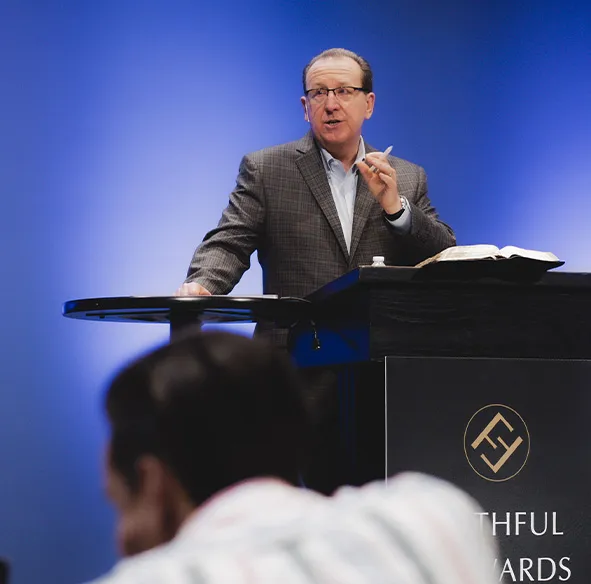
The preaching of God’s Word is central to the life of the church. Tom's pulpit ministry is dedicated to providing clear, biblical teaching to equip believers, strengthen faith, and exalt Christ.


Engage with the most recent teaching from God’s Word.
The preaching of God's Word is central to worship and of the utmost importance for the sanctification of every believer in Christ.

.jpg)
.jpg)

Explore messages organized to help you grow in Christ.
Search and filter sermons for quick access.
And The Word Became Flesh - Part 1
Pastor Tom Pennington's sermon, "And The Word Became Flesh (Part 1)," explores John 1:14-18, focusing on the profound doctrine of the Incarnation. He notes the irony of the song "What If God Was One Of Us?" as God *was* and *is* one of us�the central celebration of Christmas. John's Gospel uniquely presents Jesus' birth from a divine perspective, with its prologue (John 1:1-18) summarizing Christianity's core truth. The Incarnation is the biblical doctrine that the eternal Son of God, the second person of the Trinity, fully assumed humanity, becoming both fully God and fully man in Jesus Christ through a miraculous virgin birth. This is a foundational tenet distinguishing true Christianity. Pennington then details eight characteristics of "the Word" from John 1:1-4, revealing Jesus' pre-incarnate nature: He was God's ultimate self-expression, eternal, eternally with God in an intimate, distinct relationship, and Himself God. He was the exclusive, uncreated agent of all creation. Moreover, He was self-existent, possessing life inherently, and the source of all physical and spiritual life. This divine being is identified as Jesus Christ�Jesus of Nazareth, the historical person, and Christ, the promised Messiah.
The Person of Christ - Part 1
The text "The Person of Christ (Part 1)" examines the foundational truths about Jesus Christ, tracing His revelation from Old Testament prophecies, which progressively narrowed His identity and lineage. Because Christ is central to God's redemptive plan, His nature has been a constant target of Satan's attacks, manifesting as various early church heresies. These included Ebionism (denying His deity), Gnosticism (denying His humanity), Arianism (claiming He was a created being), Apollinarianism (denying His full human spirit), Nestorianism (dividing Him into two persons), and Eutychianism (asserting only one divine nature). The orthodox understanding, solidified at the Council of Chalcedon in 451 A.D., defines Christ as one person, truly God and truly man, possessing two distinct natures (divine and human) that are neither confused nor separated. Biblical evidence for His humanity is extensive, detailing His human birth (including the virgin conception's significance), development, body, soul, and experience of sinless human weaknesses like hunger and fatigue. The concept of Christ "emptying Himself" (kenosis in Philippians 2) is clarified as veiling His pre-incarnate glory and voluntarily restricting the independent use of His divine attributes, not abandoning them.
Caught in the Act - Part 2
The text details the transformative conversion of the Apostle Paul, deeming it a pivotal event. Before Christ, Paul (a Pharisee) was self-confident in his external righteousness, believing himself "blameless" by the Law. However, Romans 7 explains how God's holy Law, particularly the commandment "You shall not covet," was not sin itself but instead highlighted Paul's inherent sinfulness. Initially, Paul felt "alive" with "sin dead" (unrecognized) in his life. But when the commandment's full spiritual depth penetrated his conscience, "sin became alive," exposing his profound covetousness. Consequently, Paul "died"�his self-confidence, self-righteousness, and spiritual pride were shattered, leading to despair. The Law, though theoretically capable of yielding life if perfectly kept, served to reveal his utter inability to comply, proving to result in death by highlighting his sin. This process, where the Holy Spirit uses the Law to humble and convict, is crucial for conversion, acting as a tutor that exposes humanity's desperate need for salvation found only in Jesus Christ.
Acts - Revelation - Part 2
This sermon outlines the New Testament's cohesive theme: God redeeming a people by His Son, for His glory. The Book of Acts serves as the historical framework, charting the gospel's expansion. Initially, witnesses in Jerusalem faced intense persecution, exemplified by Stephen's martyrdom, which paradoxically scattered believers into Judea and Samaria. Here, Philip preached and Saul (Paul) was converted. Critically, Peter's encounter with Cornelius marked the pivotal acceptance of Gentiles into the church without requiring circumcision. Antioch emerged as a key base for Gentile outreach, where Paul began his missionary journeys. The Jerusalem Council affirmed salvation by faith alone, a principle Paul defended in Galatians. His subsequent journeys founded churches across Asia Minor and Europe, leading to epistles like 1&2 Thessalonians, 1&2 Corinthians, and Romans. Paul's eventual arrest and journey to Rome, during which he wrote prison epistles (Colossians, Philemon, Ephesians, Philippians), culminate with the gospel proclaimed unhindered, even from imprisonment. The sermon then briefly places the remaining New Testament books within this timeline, emphasizing that Jesus actively builds His church, and no opposition, not even death, can thwart its divine mission, inspiring believers to continue being His witnesses.
Caught in the Act - Part 1
Tom Pennington's sermon "Caught in the Act (Part 1)" on Romans 7:7-13 examines the purpose of God's law, using Augustine's youthful pear theft to illustrate humanity's inherent desire to do wrong. Pennington addresses Paul's assertion that the law, though it "arouses" sinful passions, is not sin itself. Instead, Paul, through his own pre-conversion experience as a "blameless" Pharisee, reveals the law's dual function for unbelievers: to identify what constitutes sin and, more profoundly, to expose one's personal guilt. The sermon emphasizes the Tenth Commandment, "You shall not covet," as pivotal. This command explicitly targets internal desires, demonstrating that God's law demands righteousness of the heart, not just external conformity. This truth, also highlighted by Jesus in the Sermon on the Mount, shattered Paul's self-righteousness, revealing him as a profound sinner. Ultimately, the law acts as a "tutor to bring us to Christ," showing our inability to meet God's perfect standard and driving us to seek salvation solely through faith in Jesus, finding forgiveness and eternal life.
Dead to the Law - Part 2
The text interprets Romans 7:1-6, asserting that the Law's jurisdiction ends with death, a principle illustrated by marriage. For believers, this means they have "died to the Law" through Christ's body. This death signifies two things: no longer seeking righteousness through law-keeping, and being free from its condemnation because Jesus paid the penalty for all sins. Before Christ, referred to as being "in the flesh," the Law, though good, paradoxically aroused sinful passions, leading only to spiritual, physical, and eternal death. The Law revealed sin and magnified guilt without providing power for obedience. "But now," after salvation, believers are "released from the Law." This freedom, achieved through death with Christ, allows them to serve God "in newness of the Spirit and not in oldness of the letter." This contrasts the external, powerless Mosaic Law ("letter") with the Holy Spirit's internal work, which regenerates hearts and empowers genuine obedience, fulfilling God's moral intentions. The core message is that only through Christ's radical, Spirit-produced transformation can one be made right with God and serve Him out of a changed heart, secure in the eternal, once-for-all atonement for all sins, past, present, and future, ensuring "no condemnation."
No Results Found.
We couldn’t find anything matching your search.
Explore The Word Unleashed
Our ministry brings together expository preaching, theological precision, and practical application for the good of Christ's church and the daily living of Christ's people.
.webp)
Sermons
Listen to expository sermons that clearly teach God’s Word and guide you in daily living.

Radio
Tune in to gospel-centered programs that share biblical truth and strengthen your daily walk with Christ.
Training
Join courses and workshops designed to deepen your faith and equip you to serve others with biblical wisdom.
.webp)
From the Pastor's Desk
Read pastoral messages that encourage, instruct, and help you apply God’s Word to every part of your life.
.webp)
Hymns
Discover timeless hymns that lift your heart in worship and remind you of God’s abounding grace and faithfulness.
Podcasts
Stay rooted in Scripture through our podcast series.