Sermons That Exalt Christ
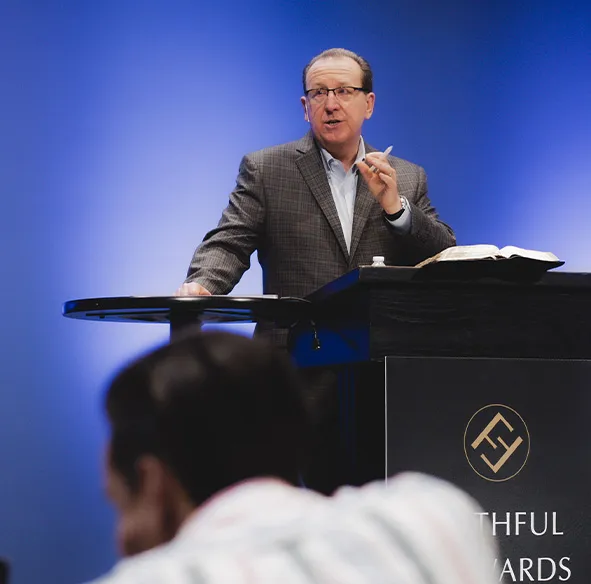
The preaching of God’s Word is central to the life of the church. Tom's pulpit ministry is dedicated to providing clear, biblical teaching to equip believers, strengthen faith, and exalt Christ.


Engage with the most recent teaching from God’s Word.
The preaching of God's Word is central to worship and of the utmost importance for the sanctification of every believer in Christ.

.jpg)
.jpg)

Explore messages organized to help you grow in Christ.
Search and filter sermons for quick access.
No Condemnation! - Part 2
The sermon on Romans 8:1-4, "No Condemnation!" highlights the eternal security of believers in Jesus Christ, who are delivered from God's condemnation. While unrepentant sinners face an infinitely worse condemnation than any earthly sentence for breaking God's laws, for those "in Christ Jesus," there is "now no condemnation"�meaning no guilty verdict or penalty. This freedom arises from "the law of the Spirit of life in Christ Jesus," which liberates believers from "the law of sin and of death." This refers to justification�God declaring believing sinners righteous through Christ's work�rather than daily victory over sin. What the Law couldn't achieve due to human weakness, God did by sending His sinless Son "in the likeness of sinful flesh" as a sin offering. God condemned our sin in Jesus's flesh on the cross, pouring out His wrath on Christ as our substitute. The ultimate result is "that the requirement of the Law might be fulfilled in us." This signifies God's purpose in salvation is both justification and sanctification, enabling believers to live righteous lives, loving God and neighbor, by walking "according to the Spirit." This growing obedience always accompanies justification, demonstrating God's plan for believers to reflect Christ's moral character.
Christology: The Atonement - Part 2
The text delves into the atonement of Jesus Christ, defining it as the covering of sin to reconcile humanity with God. It emphasizes Christianity's uniqueness in teaching that God initiated and completed this atonement through His Son's substitutionary sacrifice. The atonement was necessary due to sin's gravity, and caused by God's justice and love. Its nature is penal (satisfying God's law for our lawless deeds) and substitutionary (Christ taking our place, enduring punishment on our behalf). This vicarious death provides common grace, redemption, reconciliation, propitiation, and justification. A significant portion addresses the "extent of the atonement"�for whom Christ died. The pastor refutes universalism (actual salvation for all) and the idea of potential salvation for all (unlimited atonement), advocating for "definite" or "particular redemption" (often called limited atonement). Arguments for definite atonement include its consistency with God's eternal plan of redemption, where the Father chose specific individuals for the Son to save. Scriptural passages often speak of Christ dying for "His people" or "the church," not all without exception. Furthermore, verses seemingly supporting unlimited atonement, using terms like "all" or "world," are argued to mean "all without distinction" (e.g.
No Condemnation! - Part 1
Pastor Tom Pennington begins a sermon series on Romans 8, describing it as a profoundly life-changing chapter that outlines the absolute security of the Christian. He identifies seven reasons for this security presented in the chapter, starting with God delivering believers from condemnation (Romans 8:1-4). Focusing on Romans 8:1, "Therefore there is now no condemnation for those who are in Christ Jesus," Pennington explains this verse as a logical conclusion to Paul�s argument in Romans 5, where Christ's work results in our justification. "No condemnation" signifies a complete, permanent reversal of a believer's legal status before God. It means there is no guilty verdict and no divine penalty for those in Christ, because Jesus bore the condemnation for their sins. Pennington clarifies that this doesn't diminish the seriousness of sin, the priority of sanctification, or future judgment for believers' works (for rewards, not punishment). Instead, for Christians, sin becomes a relational issue with God as a Father, rather than a legal issue in a courtroom of justice. This status of "no condemnation" is permanent, bookending Romans 8 with the assurance that nothing can separate believers from God�s love in Christ Jesus.
The Dark Guest - Part 3
The sermon explores Romans 7, emphasizing the Christian's universal inner conflict with sin, a lifelong battle many try to avoid through spiritual shortcuts or alternative experiences. Pastor Pennington states this struggle is normal for believers, describing it as a conflict between the redeemed soul, delighting in God's law, and the unredeemed flesh, which wages war against these desires. The desperate cry, "Wretched man that I am! Who will set me free from the body of this death?" (Romans 7:24), marks a true believer recognizing their sin against God's holiness. This isn't despair but a longing for future, complete deliverance. "Thanks be to God through Jesus Christ our Lord!" (Romans 7:25a) expresses confident hope in a coming new, glorified body, free from indwelling sin, at resurrection. This future hope doesn't eliminate the "continual war" of present reality (Romans 7:25b), where the mind serves God and the flesh serves sin. Romans 8 then offers victory and confidence, reminding believers that this tension is their normal existence until Christ's return or death.
The Dark Guest - Part 2
Tom Pennington's sermon "The Dark Guest (Part 2)" interprets Romans 7:14-25, revealing the Christian's persistent struggle with indwelling sin, termed a "professional squatter" or "dark guest." Using an analogy of a Colorado squatter law, Pennington explains that this "flesh"�our unredeemed part�continually wages war within believers until glorification. Paul�s laments (Romans 7:14-20) describe the paradox of wanting to do good but doing evil, and vice versa. This isn't the regenerated self sinning, but "sin which dwells in me," as nothing morally good resides in our flesh. This internal conflict stems from two opposing principles: the redeemed soul's joyful delight in God's law (Principle 1) and the flesh's war against it, making one a "prisoner of the law of sin" (Principle 2). Pennington asserts this struggle is a universal Christian experience and a test of genuine faith. A true believer delights in God's law, desires obedience, battles indwelling sin, and is acutely aware of this inner conflict. The very presence of this spiritual battle proves one is a Christian, providing comfort and encouragement. Ultimately, freedom from sin's bondage is found only through Jesus Christ, offering the sole hope for all.
The Dark Guest - Part 1
In a sermon on Romans 7:14-25, Tom Pennington addresses the believer's ongoing struggle with sin, emphasizing the Law's weakness not due to its inherent flaw, but due to human sinfulness. He argues this passage describes all believers�mature and immature�and how they respond to sin: hating it and desiring holiness, despite repeated failures. Pennington refutes the popular "conflict of two natures" view, which often misinterprets regeneration as an old self warring with a new self. Scripturally, at salvation, the "old self" dies with Christ, and believers become entirely new creations. The continued struggle is between this new, redeemed self and the "flesh," defined as unredeemed humanness residing primarily in the physical body and brain, with its ingrained sinful patterns. Paul's laments express this internal battle: doing what he hates and failing to do what he wills, acknowledging the Law's goodness but being bound by indwelling sin. This doesn't negate personal responsibility but differentiates the redeemed person from the lingering influence of sin. Ultimately, this internal conflict is a hopeful sign of true regeneration, demonstrating a love for God's Law and a hatred for sin, confirming the believer's freedom from condemnation in Christ.
No Results Found.
We couldn’t find anything matching your search.
Explore The Word Unleashed
Our ministry brings together expository preaching, theological precision, and practical application for the good of Christ's church and the daily living of Christ's people.
.webp)
Sermons
Listen to expository sermons that clearly teach God’s Word and guide you in daily living.

Radio
Tune in to gospel-centered programs that share biblical truth and strengthen your daily walk with Christ.
Training
Join courses and workshops designed to deepen your faith and equip you to serve others with biblical wisdom.
.webp)
From the Pastor's Desk
Read pastoral messages that encourage, instruct, and help you apply God’s Word to every part of your life.
.webp)
Hymns
Discover timeless hymns that lift your heart in worship and remind you of God’s abounding grace and faithfulness.

Podcasts
Stay rooted in Scripture through our podcast series.