Sermons That Exalt Christ
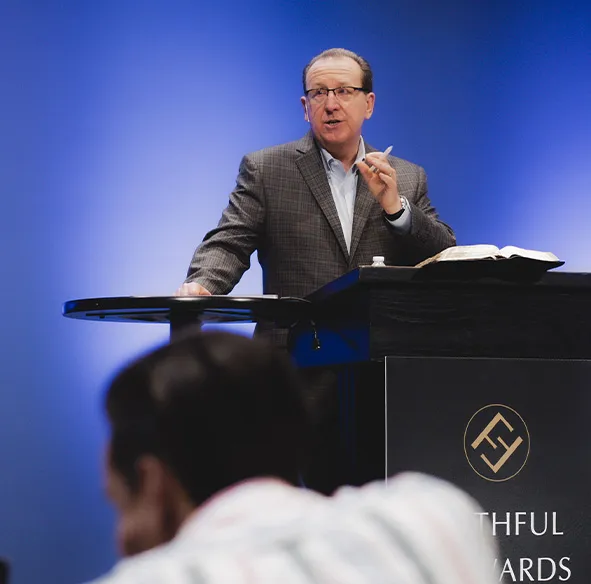
The preaching of God’s Word is central to the life of the church. Tom's pulpit ministry is dedicated to providing clear, biblical teaching to equip believers, strengthen faith, and exalt Christ.


Engage with the most recent teaching from God’s Word.
The preaching of God's Word is central to worship and of the utmost importance for the sanctification of every believer in Christ.

.jpg)
.jpg)

Explore messages organized to help you grow in Christ.
Search and filter sermons for quick access.
He's Alive!
This sermon, "He�s Alive" (John 19:31-20:28), confronts common doubts about the literal, physical resurrection of Jesus Christ. It systematically refutes six arguments against the resurrection by presenting four irrefutable lines of evidence. First, Jesus was **certifiably dead**. Roman soldiers, experienced in crucifixion, confirmed His death before piercing His side, and Pilate officially certified it, debunking any "coma" theories. Second, His body was **carefully buried and secured** by wealthy individuals in a new tomb, sealed with a massive stone and guarded by Roman soldiers, countering claims of body theft. Third, on Sunday morning, Jesus' grave was **categorically empty**. Witnesses like Mary Magdalene, Peter, and John found only orderly grave clothes, not a disheveled body, a fact even opponents acknowledged, discrediting "wrong tomb" or "stolen body" theories. Fourth, Jesus was **certainly alive**, evidenced by at least 14 post-resurrection appearances to over 500 individuals, including doubting Thomas, solidifying the reality against "hallucination" claims. The resurrection is central to the Christian faith, validating Jesus' claims and sacrifice for sin. The sermon concludes by urging listeners not just to accept these historical facts intellectually, but to personally confess Jesus as Lord and believe in their hearts that God raised Him from the dead for salvation.
God Forsaken
Tom Pennington's sermon on Mark 15:33-37 reveals God's commentary on the cross through three divine miracles. A miraculous darkness from noon to 3 PM symbolized God's judgment against sin, signifying Jesus bearing the full weight of divine wrath as a substitute for humanity. Next, Jesus' "mega-voice" cry, "My God, My God, why have You forsaken Me?" at 3 PM, highlighted His complete abandonment by the Father. This agonizing separation occurred as Jesus, though sinless, bore the sins of all believers, enduring the eternal judgment � separation from God � that we deserve, so that we never would. This was the "cup" of wrath He willingly drank. Lastly, Jesus' miraculous death was an act of sovereign will, not forced. Unlike typical crucifixion victims, He voluntarily "laid down His life" at 3 PM, the time of the Passover lamb sacrifice, uttering "It is finished." This intentional surrender completed His redemptive work. These miracles underscore both God's righteous judgment against sin and His profound love, offering salvation through Christ's substitutionary death, which remains humanity's only hope for reconciliation with God.
The Spirit of Christ In Us - Part 2
This sermon transcript on Romans 8:5-13, "The Spirit of Christ In Us," explores the Christian's absolute security through a radical, Spirit-wrought transformation, comparing it to metamorphosis. Pastor Tom Pennington distinguishes true believers from unbelievers based on their fundamental change in nature, mindset, conduct, spiritual condition, and relationship with God. Unbelievers, "in the flesh," are hostile to God and spiritually dead, whereas believers, "in the Spirit," delight in God's Word and experience life and peace. This fundamental shift, called regeneration, is accomplished by the "Spirit of life" through the Gospel. The Holy Spirit, and the entire Trinity, permanently "dwells" within genuine believers, making their bodies a temple�a key identifying mark and a fulfillment of Old Testament prophecy. While a believer's physical body remains mortal ("dead because of sin") and an instrument for sin, their spirit is "alive because of righteousness" through Christ. This indwelling Spirit is an absolute guarantee of future glorification. The same Spirit who raised Jesus from the dead will also give life to our mortal bodies, resurrecting and transforming them into glorified bodies like Christ's.
Christology: The States of Christ - Part 1
Tom Pennington introduces Christ's "humiliation" as the ultimate "riches to rags" story, beginning with His Incarnation. Eternally existing in the "form of God," Jesus voluntarily "emptied Himself"�not relinquishing deity, but veiling pre-incarnate glory and restricting the independent use of divine attributes. He became fully human, a bond-servant, yet remained sinless and fully God. His humiliation continued through a life of profound suffering: enduring temptation, rejection, and persecution as the holy God-man in a sinful world. This culminated in His obedient death on a cross, the most cursed form of execution. His burial, a key gospel element, confirmed His real death, proved His Messiahship and innocence, and precisely identified the tomb for the future resurrection. The text then transitions to Christ's "exaltation," centered on His resurrection. This foundational event confirmed Jesus' divine claims, securing believers' regeneration, justification, and future glorification. His resurrection body was perfected, immortal, and material. Supported by Old Testament prophecy, Jesus' own predictions, and the historically attested empty tomb, the resurrection perfectly validates Christ's entire mission and forms the bedrock of our faith.
Q & A
Pastor Tom Pennington addresses various questions about Christian doctrine and practice. He explains that *fasting* is not a prescribed routine for earning God's favor, but a response to overwhelming circumstances, dedicating time to prayer. Regarding the *Trinity*, God is one being in three distinct, equally divine persons (Father, Son, Holy Spirit), all deserving of worship, despite their differing roles. Pennington clarifies biblical narratives: Jonah did not die in the fish; Jesus's "three days and three nights" referred to a timeframe, not Jonah's death. Saints raised at Christ's crucifixion were resurrected *after* Jesus, demonstrating His power over death. He affirms the biblical principle of *self-defense* against threats to life, cautioning against vigilantism. The *Holy Spirit* indwells every believer at conversion, and biblical tongues were *known languages*, supporting cessationism. Finally, Pennington clarifies that *heavenly rewards* are not merit-based but purely *grace*, God rewarding believers for what He accomplished through them, with the ultimate reward being His "Well done."
The Spirit of Christ In Us - Part 1
Pastor Tom Pennington, in a sermon from Romans 8:5-13, emphasizes the security of believers, debunking common, but flawed, sources of assurance such as a one-time profession, a specific prayer, or baptism alone. Citing Matthew 7:21-23, he warns that true faith is evidenced by obedience, not mere pronouncements. The core of a Christian�s security, Pennington explains, comes from the Holy Spirit�s radical transformative work. The sermon distinguishes between two groups: those "in the flesh" (unbelievers) and those "in the Spirit" (true believers), highlighting five fundamental differences. These include their inherent nature, mindset, patterns of conduct (like "deeds of the flesh" versus "fruit of the Spirit"), spiritual condition and eternal destiny, and their relationship with God. Unbelievers are characterized by hostility, unwillingness, and inability to please God, while believers have peace with God, submit to His Word, and can obey and please Him. This profound, God-wrought change in nature provides genuine assurance to those who see the Spirit's fruit in their lives, and serves as a call for those still "in the flesh" to seek Christ for this essential transformation.
No Results Found.
We couldn’t find anything matching your search.
Explore The Word Unleashed
Our ministry brings together expository preaching, theological precision, and practical application for the good of Christ's church and the daily living of Christ's people.
.webp)
Sermons
Listen to expository sermons that clearly teach God’s Word and guide you in daily living.

Radio
Tune in to gospel-centered programs that share biblical truth and strengthen your daily walk with Christ.
Training
Join courses and workshops designed to deepen your faith and equip you to serve others with biblical wisdom.
.webp)
From the Pastor's Desk
Read pastoral messages that encourage, instruct, and help you apply God’s Word to every part of your life.
.webp)
Hymns
Discover timeless hymns that lift your heart in worship and remind you of God’s abounding grace and faithfulness.
Podcasts
Stay rooted in Scripture through our podcast series.