Sermons That Exalt Christ
The preaching of God’s Word is central to the life of the church. Tom's pulpit ministry is dedicated to providing clear, biblical teaching to equip believers, strengthen faith, and exalt Christ.

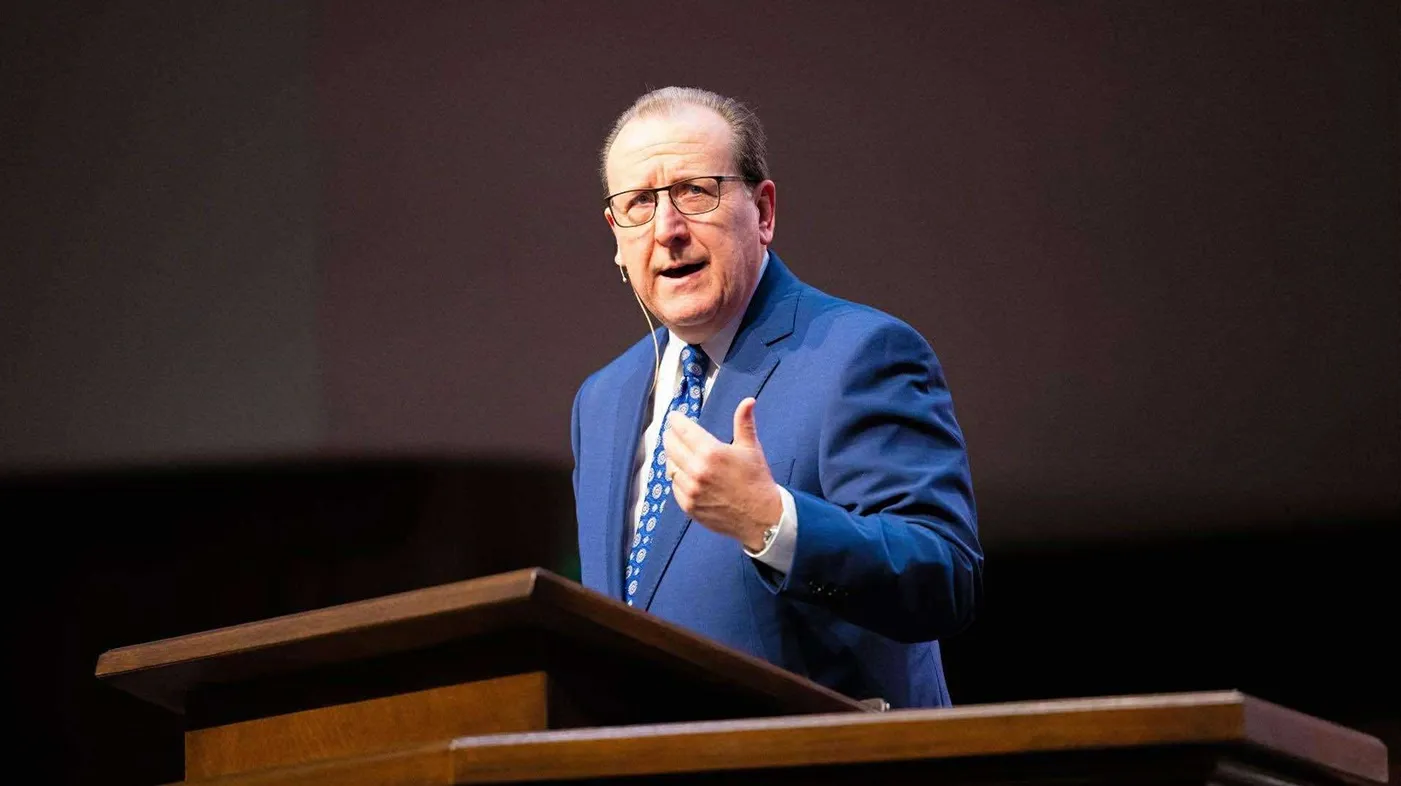
Engage with the most recent teaching from God’s Word.
The preaching of God's Word is central to worship and of the utmost importance for the sanctification of every believer in Christ.

.jpg)
.jpg)

Explore messages organized to help you grow in Christ.
Search and filter sermons for quick access.
Children of God - Part 2
This sermon, "Romans Children of God (Part 2)," explores Romans 8:14-17, emphasizing God's adoption of believers as a source of their security. Drawing an analogy to human adoption, it highlights the transformative shift from spiritual slavery to an intimate relationship with God, enabling believers to cry out "Abba! Father!" The sermon details four aspects of this spiritual adoption: 1. **Identity:** True children of God are "led by the Spirit," meaning they actively put sin to death and pursue holiness. 2. **Intimacy:** Through the "spirit of adoption," believers experience a deep, child-like connection with God, rather than fear. 3. **Certainty:** The Holy Spirit assures believers of their adoption, not through subjective feelings or mystical voices, but primarily "through the Scripture alone." This assurance is gained by enabling belief in the gospel's promises and by examining one's life against biblical tests (e.g., love for Christ, fruit of the Spirit, pursuit of holiness). 4. **Legacy:** Adoption brings immense privileges: God is our loving Father, Christ our older brother, and we are members of God's family. Furthermore, we receive a staggering future inheritance, including eternal life, the universe, Christ's glory, and God Himself.
Children of God - Part 1
This sermon on Romans 8:14-17 highlights spiritual adoption as the greatest adoption story. Pastor Tom Pennington explains that while historical figures like Caesar Augustus experienced significant adoptions, the most profound is God�s legal adoption of believers. This "apex of grace and privilege" means God places justified sinners into His family, granting them all rights and privileges as His children. Not everyone is a child of God; by nature, humanity is enslaved to sin and belongs to the devil. However, all true Christians�those chosen by the Father, redeemed by Christ's death, and who have faith�are adopted. The test of true sonship is being led by the Holy Spirit, which means actively putting sin to death and pursuing Christ-like holiness daily. This adoption transforms a relationship based on fear of judgment (a spirit of slavery) into one of profound intimacy. Believers receive a "spirit of adoption" by which they can cry out "Abba! Father!"�an Aramaic term Jesus used, signifying both tender endearment and deep respect, like "Daddy" or "Papa." This personal, loving relationship, confirmed by the Holy Spirit, assures believers of their absolute security in Christ, as a loving Father will never abandon His adopted children.
Christology: The Offices of Christ - Part 1
The sermon "Christology- The Offices Of Christ (Part 1)" introduces the vital concept of Christ's offices, tracing God's promise of a Redeemer, the "Messiah" or "Anointed One," through Old Testament prophecy. This title signifies Jesus' consecration to unique roles, fulfilling the Old Testament functions of prophet, priest, and king, thereby addressing humanity's ignorance, alienation, and inability to return to God. This sermon primarily focuses on Christ as the Prophet. A prophet reveals God's word and truth, receiving and delivering divine revelation, often validated by miracles, and consistent with previous revelation. Deuteronomy prophesied a great prophet like Moses, whom Peter identified as Jesus. Christ is unique: He prophesied about Himself, spoke with His own authority, and His words possess divine permanence. Before His incarnation, Christ acted as prophet through theophanies and by inspiring Old Testament authors via His Spirit. During His earthly ministry, He revealed the Father in His person, brought new revelation, expounded existing truth, and predicted the future, all validated by miracles. Since His ascension, Christ continues His prophetic work through His Spirit (inspiring apostles, illumining Scripture), providing gifted teachers, and teaching through His example.
The Spirit of Christ In Us - Part 4
The sermon on Romans 8:5-13 addresses Christian sanctification, defining it as "mortification" (putting sin to death) and "vivification" (putting on Christ-like virtues). Mortification involves a relentless fight against sin, leading to its gradual weakening. The speaker refutes common "wrong means" of holiness, such as legalism, asceticism, "sudden spiritual crises," or "spiritual osmosis," emphasizing that "the flesh has no power to control the flesh." True sanctification depends on five biblical means: 1. **Living by faith in Jesus Christ:** Believing in His finished work and ongoing power. 2. **Learning, meditating on, and applying God's Word:** The Spirit's primary instrument for transformation. 3. **Expending maximum effort to pursue obedience:** This synergistic process involves believers diligently identifying and killing all sins while empowered by the Spirit, who works "to will and to work" within them (Philippians 2:12-13). 4. **Depending completely on Christ and His Spirit:** Acknowledging, "apart from Me you can do nothing." 5. **Praying for sanctification:** Following biblical examples. This continuous, Spirit-dependent effort against sin is essential for spiritual growth and a defining characteristic of a true Christian.
Christology: The States of Christ - Part 2
This sermon on "The States of Christ" concludes a study by focusing on Jesus' exaltation, which includes His resurrection, ascension, session at God's right hand, and Second Coming. The resurrection is substantiated by Old Testament prophecies, Jesus' own predictions, the undeniable certainty of His death (attested by both biblical and extra-biblical sources), the transformed confidence and martyrdom of His disciples, over 500 post-resurrection appearances, the radical conversions of Paul and Jesus' skeptical brothers, James and Jude, the empty tomb, and the inadequacy of all alternative theories. Christ's ascension visibly demonstrated His human nature returning to heaven, signifying the Father's acceptance of His work, enabling the sending of the Holy Spirit, and preparing a place for believers. His session at God's right hand represents a position of supreme honor and authority, proving His deity. In this role, Jesus continually intercedes for believers by reminding the Father of His atonement, answering Satan's charges, sanctifying their spiritual activities, and praying for their protection and sanctification. The final step in His exaltation is the Second Coming, distinct from the Rapture. This fundamental Christian doctrine, prophesied extensively, will occur after the Tribulation.
The Spirit of Christ In Us - Part 3
Pastor Tom Pennington's sermon on Romans 8:5-13, "The Spirit of Christ In Us (Part 3)," introduces John Owen, an influential English Puritan whose work, "Of the Mortification of Sin in Believers," is central to the message. Owen's life exemplified deep commitment to holiness. The sermon's core theme is the absolute security of the Christian, achieved through God's transformative power by His indwelling Spirit. Believers are radically changed from unbelievers through regeneration, and this change guarantees future glorification, despite the body's present decay. Pennington emphasizes that true spiritual growth hinges on doctrine, not mere action. Due to the Spirit's work�providing justification, regeneration, and indwelling�believers are obligated to Him, not their sinful flesh. This means actively "putting to death the deeds of the body," an ongoing, violent fight against sin (Colossians 3) empowered *by the Spirit*, not self-effort. He warns that a persistent lifestyle of sin signals eternal death, indicating a false profession of faith (Hebrews 12). Conversely, genuine, Spirit-empowered pursuit of holiness assures true believers of eternal life and confirms their status as God's children.
No Results Found.
We couldn’t find anything matching your search.
Explore The Word Unleashed
Our ministry brings together expository preaching, theological precision, and practical application for the good of Christ's church and the daily living of Christ's people.
.webp)
Sermons
Listen to expository sermons that clearly teach God’s Word and guide you in daily living.

Radio
Tune in to gospel-centered programs that share biblical truth and strengthen your daily walk with Christ.
Training
Join courses and workshops designed to deepen your faith and equip you to serve others with biblical wisdom.
.webp)
From the Pastor's Desk
Read pastoral messages that encourage, instruct, and help you apply God’s Word to every part of your life.
.webp)
Hymns
Discover timeless hymns that lift your heart in worship and remind you of God’s abounding grace and faithfulness.
Podcasts
Stay rooted in Scripture through our podcast series.