Sermons That Exalt Christ
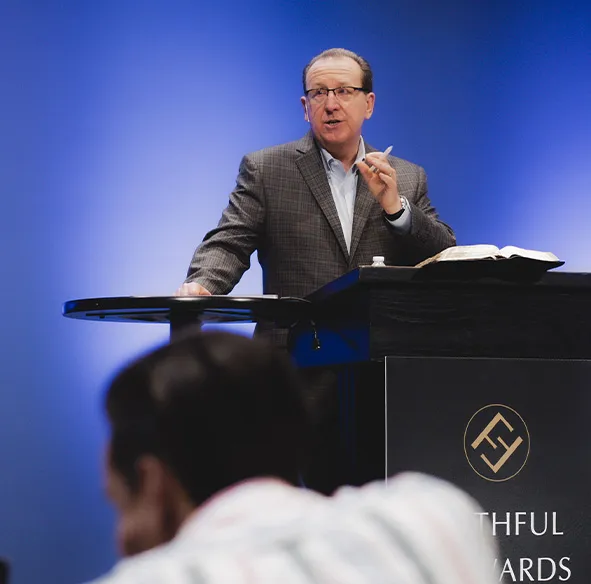
The preaching of God’s Word is central to the life of the church. Tom's pulpit ministry is dedicated to providing clear, biblical teaching to equip believers, strengthen faith, and exalt Christ.


Engage with the most recent teaching from God’s Word.
The preaching of God's Word is central to worship and of the utmost importance for the sanctification of every believer in Christ.

.jpg)
.jpg)

Explore messages organized to help you grow in Christ.
Search and filter sermons for quick access.
The Spirit's Intercession
Pastor Tom Pennington's sermon on Romans 8:26-27 emphasizes the Holy Spirit's vital role as an intercessor, reinforcing the absolute security of the Christian. He explains that "our weakness" encompasses our lack of spiritual strength and insight, often leaving us unsure of what to pray for. The Spirit "helps" by literally taking up and bearing our burden with and for us, a powerful counter to Satan's temptation to doubt God's goodness. The Spirit Himself constantly intercedes, not through our groans, but with His own "groanings too deep for words." These wordless expressions signify His profound compassion and identification with our struggles. This divine communication within the Trinity ensures perfect appeals for individual believers. The effectiveness of this intercession is guaranteed because God the Father already knows our hearts, understands the Spirit's mind (as they are one in purpose), and the Spirit perfectly knows and prays according to God's will. This perfect alignment assures believers that they are held fast and secure in Christ, providing immense comfort amidst life's difficulties, while unbelievers are urged to accept Christ, acknowledging God's complete knowledge of them.
Destined for Glory! - Part 4
This sermon, focusing on Romans 8:18-25, explores the believer's absolute security in Christ, particularly through their destiny for glory. It presents three key lessons. First, our future glory�seeing and sharing God�s glory, being made like Jesus�far outweighs all present sufferings. Life�s grief and pain are incomparable to what awaits us. Second, this future glory offers hope in present sufferings. Both creation and believers "groan" under the impact of sin and God's curse, experiencing difficult circumstances, human weakness, and remaining sinfulness. However, Christians possess the "first fruits of the Spirit," an assurance and down payment of full redemption. This includes a perfect, glorified body and character, like Christ's resurrected form�imperishable, glorious, powerful, and spiritual. This partial experience of the Spirit now makes us yearn for the complete harvest. Finally, this confident hope builds endurance for current trials. Biblical hope is not uncertain desire but a desire married to certainty�a firm expectation of complete salvation, freeing us even from the possibility of sin. This certain future empowers us to persevere under the load of present difficulties.
Destined for Glory! - Part 3
Pastor Tom Pennington's sermon on Romans 8:18-25 contrasts present sufferings with the believer's destined eternal glory, drawing a parallel between destructive human "art" and God's nature to create and restore. He asserts that our salvation is absolutely secure, and our future glory far outweighs any current grief or pain. The passage reveals that the entire creation, subjected to futility, slavery, and decay due to human sin (Genesis 3), eagerly awaits "the revealing of the sons of God." This universal groaning is likened to childbirth pains�temporary, purposeful, and leading to new life. The creation's liberation from corruption is inextricably linked to the full redemption and glorification of God's children, which will culminate in Christ's Millennial reign and the ultimate creation of new heavens and a new earth. Pennington offers practical lessons, emphasizing the crucial historicity of Genesis 1-3, that humans cannot destroy or save the earth (only Jesus can), and the importance of not being surprised or discouraged by life's sufferings. Instead, believers should intentionally meditate on their promised future glory, preaching God's truth to themselves to find profound hope amidst present trials.
Destined for Glory! - Part 2
Pastor Tom Pennington's sermon "Romans Destined for Glory (Part 2)" addresses how Christians should biblically respond to life's trials. He first critiques common, unbiblical reactions, such as believing God shields believers from suffering, complaining, growing angry with God, doubting His character or one's salvation, falsely claiming "it's all good," expecting quick relief, or merely resigning to fate. Instead, Pennington emphasizes that Romans 8:18-25 presents an eternal perspective. Scripture promises both earthly troubles and God's sustaining faithfulness, alongside a future glory that overwhelmingly outweighs any present suffering. This glory entails seeing and sharing God's divine character, becoming truly like Christ. The sermon highlights that all creation itself "groans" under the "futility" and "slavery to corruption" imposed by God's curse following humanity's sin (Genesis 3). This cosmic anticipation underscores that the universe's destiny is intrinsically tied to the "revealing of the sons of God." Paul's message directly contradicts naturalistic worldviews, affirming God as the Creator who, in His grace, subjected creation to a curse "in hope"�a hope for redemption and renewal accomplished through Jesus Christ's work on the cross, ensuring the ultimate liberation of both creation and God's children.
Destined for Glory! - Part 1
Pastor Tom Pennington's sermon "Romans Destined for Glory (Part 1)" unpacks Romans 8:18-25, explaining why believers experience suffering despite their secure salvation. He begins by highlighting the universal decay caused by Adam's sin and God's subsequent curse, leading to suffering in the cosmos, on Earth, and personally. However, Romans 8 promises that believers are "destined for glory," a security founded on God's deliverance from condemnation, empowerment by His Spirit, and adoption as His children. Pennington emphasizes two key lessons. First, our future glory far outweighs our present sufferings. Citing Paul's "reckoning" in verse 18, he argues that all earthly pain and trials are "momentary, light affliction" compared to the "eternal weight of glory" awaiting Christians. This future glory encompasses seeing God's glory and sharing in it, transforming believers to be like Christ in character and receiving glorified bodies. Second, this assured future provides profound hope in present sufferings. The entire creation "groans" and "waits eagerly" for "the revealing of the sons of God," signaling the public and complete finalization of believers' adoption, as creation's destiny is intertwined with ours.
Christology: The Offices of Christ - Part 2
The text examines Christ's three divine offices: Prophet, Priest, and King, which collectively summarize His work and identity for believers. As **Prophet**, Jesus reveals God's truth. As **Priest**, He fulfilled His role by offering Himself as the perfect, once-for-all sacrifice for sin, satisfying divine justice and reconciling humanity to God. He eternally intercedes for believers, presenting His sacrifice to the Father, praying for their salvation and sanctification, defending them against accusations, aiding in trials, and sanctifying their worship. This means human mediators are unnecessary, and Jesus' prayers are always effective. As **King**, Jesus was prophesied to reign eternally. During His earthly ministry, He established a spiritual kingdom in the hearts of believers. Since His ascension, He sovereignly calls the elect, governs His church, protects His people, restrains and defeats enemies, and providentially orchestrates history for His glory and His church's good. In the future, He will establish a physical millennial kingdom on Earth, ultimately destroying the current universe to create a new heaven and earth where He will reign forever. Jesus is thus an all-sufficient Savior: our Prophet providing knowledge, our Priest securing righteousness, and our King offering power and protection.
No Results Found.
We couldn’t find anything matching your search.
Explore The Word Unleashed
Our ministry brings together expository preaching, theological precision, and practical application for the good of Christ's church and the daily living of Christ's people.
.webp)
Sermons
Listen to expository sermons that clearly teach God’s Word and guide you in daily living.

Radio
Tune in to gospel-centered programs that share biblical truth and strengthen your daily walk with Christ.
Training
Join courses and workshops designed to deepen your faith and equip you to serve others with biblical wisdom.
.webp)
From the Pastor's Desk
Read pastoral messages that encourage, instruct, and help you apply God’s Word to every part of your life.
.webp)
Hymns
Discover timeless hymns that lift your heart in worship and remind you of God’s abounding grace and faithfulness.

Podcasts
Stay rooted in Scripture through our podcast series.