Sermons That Exalt Christ
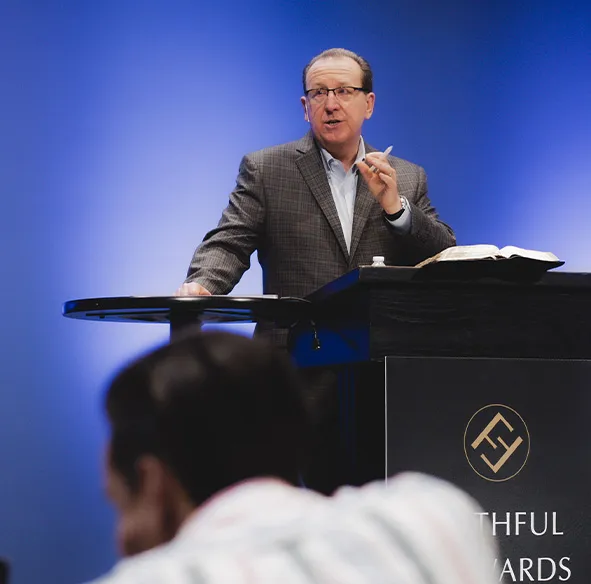
The preaching of God’s Word is central to the life of the church. Tom's pulpit ministry is dedicated to providing clear, biblical teaching to equip believers, strengthen faith, and exalt Christ.


Engage with the most recent teaching from God’s Word.
The preaching of God's Word is central to worship and of the utmost importance for the sanctification of every believer in Christ.

.jpg)
.jpg)

Explore messages organized to help you grow in Christ.
Search and filter sermons for quick access.
He Will Hold Me Fast - Part 1
This sermon, "Romans He Will Hold Me Fast (Part 1)," explores the absolute security of believers in Jesus Christ, contrasting it with the unreliability of worldly security. Focusing on Romans 8:31-39, Pastor Tom Pennington states that no one and nothing in the universe can separate us from God's eternal love in Christ. He presents two foundational truths: "God is for us" and "no one can successfully be against us." For believers, God is unequivocally on their side, a truth based on His eternal plan of foreknowing, predestining, calling, justifying, and glorifying. The sermon addresses potential threats to this security. First, *God the Father* will not undermine it. If He sacrificed His most precious possession, His Son, for our salvation, He will certainly provide everything else necessary to complete it, demonstrating His immutable love. Second, *Satan*, the accuser, cannot bring successful charges against God's elect. The very Judge, God, has already justified believers, rendering any accusations null and void as Christ's death covered all sins. Third, *Jesus Christ*, the ultimate Judge, will never condemn those who trust Him.
Dealing with Sin in the Church
This sermon, drawing from James 1, emphasizes that true faith is tested by how we respond to Scripture, urging us to be "quick to hear, slow to speak, and slow to anger" even when God's word confronts personal sin or cultural norms. A key area where many struggle is church discipline�the loving confrontation of sin within the church family. Pastor Pennington asserts that church discipline is a direct command from Christ (Matthew 18) and affirmed throughout the New Testament epistles. Its purposes are multi-faceted: to protect Christ's reputation, keep the church pure, protect from false teaching, remind all members of sin's gravity, and ultimately, to restore the sinning Christian. The biblical process, outlined in Matthew 18, involves four steps: private confrontation; then with one or two witnesses; next, telling the church for wider intercession; and finally, if unrepentant, excommunication, treating them as outside the community of faith. Public discipline is reserved not for the sin's severity, but for *unrepentance*�a defiant refusal to turn from sin despite biblical counsel. This process must be carried out with genuine love, a desire to restore, gentleness, and humility, recognizing it as Christ's rescue mission and a demonstration of obedience to Him.
Called According to His Purpose
Tom Pennington's sermon on Romans 8:28-30 illuminates God's eternal plan of salvation, emphasizing that He causes all things to work for the good of genuine believers�those "called according to His purpose." This call is God's powerful, irresistible summons, not merely a general invitation. Pennington outlines God's unbreakable "Golden Chain" of redemption: 1. **Foreknew:** In eternity past, God sovereignly set His unconditional love upon individuals, choosing them. 2. **Predestined:** He determined their destiny to be conformed to the image of His Son, both morally and physically, so that Christ would be preeminent among many brethren. 3. **Called:** In human history, God powerfully draws these chosen individuals to Himself through the gospel. 4. **Justified:** Upon their God-given repentance and faith, God declares them legally righteous through Christ's perfect life and atoning death. 5. **Glorified:** God guarantees their future perfection, making them completely like Christ, a certainty underscored by Paul's past-tense phrasing. This divine chain confirms that salvation is entirely God's work, from its eternal initiation to its glorious completion, thus assuring the absolute security of every true believer.
Sin & Sacrifice: The NT Reality
Tom Pennington's sermon examines Hebrews 10:1-18, explaining why Jesus Christ's sacrifice is the ultimate fulfillment of God's demand for atonement. Old Testament sacrifices, like those in Leviticus, were a "shadow" of good things to come. They highlighted God's holiness and man's sin, serving as a temporary "soothing aroma" to God's just wrath and a reminder of sins, but could never truly "make perfect" or take away sin, necessitating endless repetition. Forgiveness in the Old Testament was always based on faith in God's promise of a coming Messiah. Christ's sacrifice provides the definitive solution through three realities. Firstly, it offers **complete satisfaction**, fully appeasing God's righteous anger against human sin, something animal blood could not do. Secondly, it is a **perfect substitution**: Jesus, the sinless God-man, voluntarily laid down His life, replacing the involuntary and inadequate animal sacrifices by dying in our place. Finally, it provides a **permanent solution**. Unlike Old Testament priests who continually stood offering sacrifices, Christ "sat down" after His single offering, signifying a finished work that perfects believers for all time. The Holy Spirit confirms this New Covenant promise: our sins are remembered no more, rendering all prior sacrifices obsolete.
All Things for Good
The sermon addresses the human struggle with suffering, refuting the idea that God is good but not all-powerful. Instead, it asserts God is both completely sovereign and inherently good, actively involved in our lives. Romans 8:28, "God causes all things to work together for good to those who love God, to those who are called according to His purpose," provides profound comfort and security for believers. This verse reveals God's absolute rule and comprehensive, eternal plan, which includes an individual plan for each of His children. "All things" encompass life's blessings, joys, trials, griefs, and even the sins of others and our own, which God orchestrates without authoring sin. His providence actively directs every event towards two ultimate ends: the glory of His Son and the spiritual good of believers, primarily our conformity to Christ's image. This isn't a promise that all things *are* good or *feel* good, but that God *causes* them to work for our eternal good. Crucially, this promise is limited to those who genuinely love God, a love stemming from His prior, powerful, and irresistible "effectual call" to salvation, according to His purpose.
Understanding Sin and Sacrifice
The sermon "Leviticus Understanding Sin and Sacrifice" emphasizes Leviticus as a vital but often misunderstood book, revealing two core messages: approaching God requires sacrifice (forgiveness), and walking with Him demands sanctification (holiness). The mandatory sin and guilt offerings covered both sins of commission and omission, whether committed ignorantly, negligently, or deliberately, showcasing the pervasive nature of human guilt. Crucially, the text distinguishes "high-handed" or defiant sin�unrepentant rebellion against God's Word (Numbers 15)�as the only unforgivable sin under the Old Testament law. This defiance could be open or cloaked beneath spiritual pretense. Such sin had no sacrifice, as God would not forgive those living in unrepentant rebellion. The purpose of the sacrifices was twofold: satisfying God's justice and granting the sinner forgiveness. Personal forgiveness, then and now, requires genuine confession of sin, sincere repentance (including restitution where applicable), and a substitutionary sacrifice. While animal sacrifices merely foreshadowed, Jesus Christ is the ultimate "guilt offering" (Isaiah 53:10). His death fully satisfied God's justice, making complete forgiveness possible for all who confess their sins, repent, and place their faith in Him as their substitute.
No Results Found.
We couldn’t find anything matching your search.
Explore The Word Unleashed
Our ministry brings together expository preaching, theological precision, and practical application for the good of Christ's church and the daily living of Christ's people.
.webp)
Sermons
Listen to expository sermons that clearly teach God’s Word and guide you in daily living.

Radio
Tune in to gospel-centered programs that share biblical truth and strengthen your daily walk with Christ.
Training
Join courses and workshops designed to deepen your faith and equip you to serve others with biblical wisdom.
.webp)
From the Pastor's Desk
Read pastoral messages that encourage, instruct, and help you apply God’s Word to every part of your life.
.webp)
Hymns
Discover timeless hymns that lift your heart in worship and remind you of God’s abounding grace and faithfulness.

Podcasts
Stay rooted in Scripture through our podcast series.