Sermons That Exalt Christ
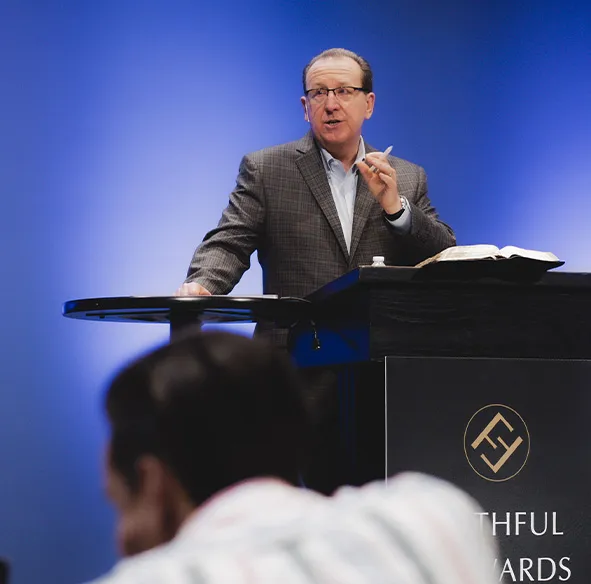
The preaching of God’s Word is central to the life of the church. Tom's pulpit ministry is dedicated to providing clear, biblical teaching to equip believers, strengthen faith, and exalt Christ.


Engage with the most recent teaching from God’s Word.
The preaching of God's Word is central to worship and of the utmost importance for the sanctification of every believer in Christ.

.jpg)
.jpg)

Explore messages organized to help you grow in Christ.
Search and filter sermons for quick access.
The Transforming Power of Scripture
The sermon contends that God's Word is the most powerful force on Earth, surpassing even the scientific "nuclear strong force." It demonstrates this power through creation, where God simply spoke the universe into being (Psalm 33), and in its ability to transform human hearts, likened to a hammer shattering rock (Jeremiah 23) and a two-edged sword piercing intentions (Hebrews 4). Focusing on Psalm 19:7-14, the text describes Scripture as perfect, sure, right, pure, clean, and true. This divine revelation restores the soul from death to life, makes the simple wise, brings joy, enlightens understanding, and provides an eternal, unwavering guide for righteousness. The Word's incomparable worth is stressed as being more valuable than the finest gold and sweeter than honey, offering ultimate satisfaction. Believers are called to a personal response: heeding its warnings, pursuing the blessings of obedience, receiving its confrontation of sin, trusting its promise of forgiveness, and seeking protection from deliberate and ruling sins. Through Scripture, one can pursue ongoing sanctification, aligning thoughts and words to be acceptable in the sight of God, our Rock and Redeemer.
Divine Election - Part 1
Pastor Tom Pennington's sermon on Romans 9:6-29, "Divine Election," highlights a significant issue: many professing Christians in America deny biblical authority and salvation by grace alone, suggesting only a "remnant" are true believers. He explains that in Romans 9-11, Paul addresses why most of God's chosen people, Israel, rejected the Messiah, assuring that God's promises have not failed. The core of Paul's argument, especially in Romans 9:6, is "For they are not all Israel who are descended from Israel." Pennington clarifies that God's Word never fails, and His promises to Israel never intended to save *all* ethnic descendants, but a select "remnant," alongside chosen Gentiles. This concept was revolutionary to first-century Jews who believed physical lineage guaranteed spiritual salvation. Applying this principle today, Pennington emphasizes that "not all Christians who are connected to Christians" are genuinely saved. True salvation isn't based on Christian upbringing, rituals like baptism, church membership, or personal good deeds and zeal. Instead, it requires abandoning all self-reliance and placing complete faith solely in Jesus Christ's perfect life and atoning death as the only hope for righteousness before God. This profound lesson calls for personal self-examination regarding where one's true confidence lies.
The Sermon of the Skies
Pastor Tom Pennington�s sermon on Psalm 19:1-6, "The Sermon of the Skies," differentiates between general and special revelation. He refutes the notion that the stars reveal a "primal gospel," affirming that salvation's message comes exclusively through special revelation�the Scriptures and preaching. The sermon focuses on general revelation, where God's glory is revealed universally through creation. Psalm 19:1-6 proclaims that the heavens explicitly, constantly, silently, and universally declare God's majesty and workmanship. Day and night pour forth knowledge, demonstrating His power and wisdom without audible words, yet intelligibly to all. The sun, personified as a radiant bridegroom and a powerful warrior, illustrates this pervasive influence, tirelessly traversing the sky and revealing God's grandeur through its light and heat. Drawing on Romans 1, Pennington clarifies that this powerful "sermon in the skies" renders all humanity "without excuse" for suppressing the evident truths about God's eternal power and divine nature. While it testifies to God's existence, power, and goodness, and reveals human sinfulness through conscience, general revelation alone cannot lead to salvation; special revelation of the Gospel is necessary.
Israel's Rejection of the Gospel
Tom Pennington's sermon "Israel's Rejection of the Gospel" introduces Romans 9:1-5, addressing the surprising reality that only a small percentage of Jewish people globally believe in Jesus as their Messiah. This issue prompts Paul's deep theological exploration in Romans 9-11, questioning God's faithfulness and Israel's destiny. Pennington highlights Paul's profound grief and unceasing sorrow over his kinsmen's unbelief, emphasizing his sincerity through powerful assertions. Paul's passion for their salvation is so intense that he expresses a hypothetical wish to be accursed, separated from Christ, if it meant their salvation�a sentiment echoing Moses' intercession for Israel. The sermon details Israel's unique spiritual advantages, which make their rejection even more astounding. These include their identity as Israelites, divine adoption, the visible glory of God, sacred covenants, the giving of the Law, temple service, God's promises, the patriarchs, and critically, being the lineage from which Christ, "who is over all, God blessed forever," descended. Despite these unparalleled privileges, the majority rejected Jesus. Paul's emotional introduction sets the stage for his subsequent arguments on divine election, human responsibility, and God's ultimate faithfulness, urging contemporary believers to share the gospel with a similar passion for all people.
He Will Hold Me Fast - Part 3
In his sermon on Romans 8:31-39, Pastor Tom Pennington emphasizes the foundational truth that nothing can separate true believers from God�s eternal love in Jesus Christ. This section concludes Romans 8, highlighting seven reasons for a believer's security. Paul's "unshakable confidence" stems not from feelings, but from the logical arguments presented throughout the chapter. Pennington details Paul�s conviction that neither life's trials (tribulation, distress, persecution, famine, peril, the sword) nor any of ten other potential threats�including death, angels, principalities (demons), things present or to come, powers (miracles), height, depth (heaven or hell), or any other created thing�can sever this divine bond. Believers "overwhelmingly conquer" through Christ in all circumstances. The ultimate reason for this unbreakable love is that it is "in Christ Jesus our Lord." God has appointed Jesus as believers' permanent legal representative, meaning His love for them is as steadfast as His love for His Son. Christians are encouraged to counter doubt by meditating on these scriptural arguments and believing God�s Word over their own feelings, resting in the certainty that His eternal love will hold them fast.
He Will Hold Me Fast - Part 2
Pastor Tom Pennington's sermon "He Will Hold Me Fast (Part 2)" expounds on Romans 8:31-39, focusing on the believer's absolute security in Jesus Christ. The central theme is that nothing in the universe can separate a Christian from God's eternal love in Christ. Pennington explains Paul's argument that neither God the Father (who gave His own Son), Satan (whose accusations are nullified by God's justification), nor Jesus Christ Himself (who died, rose, and intercedes for us) can undermine a believer's salvation. The sermon then extensively addresses the common fear that human beings or life's trials might separate us. Paul emphasizes Christ's personal and complete love for each believer, listing hardships like tribulation, persecution, famine, and even death that Christians often face. Despite these overwhelming circumstances, Paul declares believers "overwhelmingly conquer" (or "super conquerors"). This victory isn't achieved by avoiding trials or through personal strength, but "through Him who loved us." Christ preserves believers by continually praying for them, carefully limiting the circumstances they face to what they can endure, strengthening their faith through His Word, and providing sufficient grace.
No Results Found.
We couldn’t find anything matching your search.
Explore The Word Unleashed
Our ministry brings together expository preaching, theological precision, and practical application for the good of Christ's church and the daily living of Christ's people.
.webp)
Sermons
Listen to expository sermons that clearly teach God’s Word and guide you in daily living.

Radio
Tune in to gospel-centered programs that share biblical truth and strengthen your daily walk with Christ.
Training
Join courses and workshops designed to deepen your faith and equip you to serve others with biblical wisdom.
.webp)
From the Pastor's Desk
Read pastoral messages that encourage, instruct, and help you apply God’s Word to every part of your life.
.webp)
Hymns
Discover timeless hymns that lift your heart in worship and remind you of God’s abounding grace and faithfulness.

Podcasts
Stay rooted in Scripture through our podcast series.