Sermons That Exalt Christ
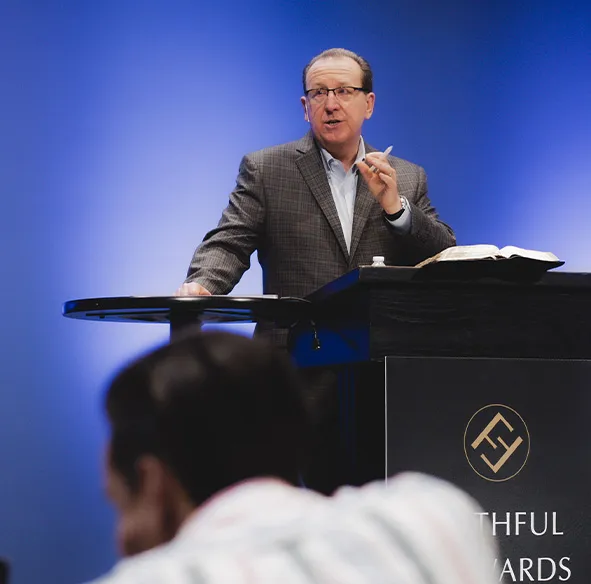
The preaching of God’s Word is central to the life of the church. Tom's pulpit ministry is dedicated to providing clear, biblical teaching to equip believers, strengthen faith, and exalt Christ.


Engage with the most recent teaching from God’s Word.
The preaching of God's Word is central to worship and of the utmost importance for the sanctification of every believer in Christ.

.jpg)
.jpg)

Explore messages organized to help you grow in Christ.
Search and filter sermons for quick access.
First Lessons in Sovereignty
This sermon on Daniel 1, "First Lessons in Sovereignty," introduces the book's central theme: Yahweh's ultimate sovereignty over individuals, nations, empires, and all human history. Daniel, a powerful figure in Babylon, exemplifies this truth. Chapter 1 serves as a prologue, showing God's sovereign hand in Daniel's life. God delivered Jerusalem and its temple vessels into Nebuchadnezzar's power, fulfilling ancient prophecies (Daniel 1:1-2). This demonstrates God's faithfulness, even in judgment, and His humble nature in allowing His name to be dishonored for His people's ultimate good. God also sovereignly orchestrated the selection and training of Daniel and his three friends for Babylonian court service (Daniel 1:3-7). Despite Nebuchadnezzar's efforts to assimilate them through education, royal food, and renaming them after pagan gods, God was in control, preparing them for His purposes. Daniel's courageous decision not to defile himself with the king's food, due to Mosaic law and pagan associations, highlights God's blessing of obedience (Daniel 1:8-16). After a ten-day test on vegetables and water, God miraculously made Daniel and his friends appear healthier, prompting the overseer to continue their chosen diet.
A Biblical Perspective of Abuse
This sermon provides a biblical perspective on abuse, defining it as the misuse of legitimate authority, often repeatedly injuring another person. It establishes God as the sole ultimate authority, who then delegates *limited* authority to humans in the contexts of marriage (husbands), family (parents), church (elders), and civil society (government). However, God also sets strict biblical limits on these human authorities. Husbands are commanded to love sacrificially, parents to avoid provoking anger, elders to lead by example, and government authority is subordinate to God's law. Misusing this delegated authority through consistent sin, physical or sexual violence, dominating leadership, or abusive speech deeply angers and dishonors God, making such actions unacceptable among believers. The text emphasizes that God provides accountability for abusers through His Word, conscience, government (for illegal acts), and the church, which is mandated to protect victims, implement discipline for unrepentant abusers, and offer biblical counsel. Ultimately, God Himself holds all human authorities accountable and will judge those who abuse their power.
Divine Election - Part 4
Tom Pennington's sermon "Romans Divine Election (Part 4)" explores Romans 9:6-29, focusing on the biblical doctrine of divine election. He explains that election is an undeniable aspect of God's sovereignty, where He constantly makes choices, even for salvation. Using the examples of Abraham, Isaac, and Jacob, Pennington argues that God's choice for salvation is unconditional, not based on human merit, genetics, or any foreseen actions. Instead, it stems solely from His sovereign love and grace, as seen in "Jacob I loved, but Esau I hated." The sermon addresses how divine election reconciles with God's universal love and His desire for all to repent. Pennington distinguishes between God's universal love for all mankind (e.g., providing sun and rain for everyone) and a *special, redeeming, electing love* reserved for those He chooses. "Hated" in this context signifies being "passed by" for this special redemptive favor. He also differentiates between God's *moral will* (commands or desires, which can be disobeyed) and His *sovereign will* (decrees that always come to pass). God's sovereign will to elect, ultimately for His own glory, is paramount.
Divine Election - Part 3
This sermon, "Romans Divine Election (Part 3)," addresses why a majority of God's chosen people, Israel, rejected their Messiah, attributing it to divine election as expounded in Romans 9:6-29. Pastor Tom Pennington explains that God's saving promises were made to true spiritual Israel, not merely all physical descendants of Abraham. Through biblical illustrations, particularly the choice of Jacob over Esau, the sermon argues for *unconditional election*. God's choice for salvation is not based on genetics, human relationships, personal merit, demerit, or even foreseen faith. Paul emphasizes that God chose Jacob before birth, "so that God's purpose according to His choice would stand" (Romans 9:11). This highlights that if election depended on human will or works, God's infallible purpose could fail; therefore, it rests solely on "Him who calls"�God's sovereign grace. The sermon notes that the very objections Paul anticipates ("It's not fair," "It violates human freedom") confirm the unconditional nature of God's election. The doctrine's ultimate purpose is to humble believers, ensuring "no man may boast before God" and solely exalting God's grandeur and grace.
An Introduction to Daniel
Tom Pennington introduces the Book of Daniel, situating it historically in the 7th century B.C. Judah, due to persistent idolatry, faced God's judgment and a prophesied 70 years of Babylonian captivity. Nebuchadnezzar's 605 B.C. siege of Jerusalem led to the first deportation, capturing young Daniel and other Jewish nobility. This event, though devastating, was God's grace, as Daniel's rise to power would later benefit the exiled Jews and uphold God's name among pagan nations who otherwise might perceive Yahweh as weak. The book is heavily criticized, with many scholars rejecting Daniel's authorship due to its incredibly detailed prophecies (e.g., Daniel 11) which they claim are "too accurate" to be pre-written without supernatural foreknowledge. However, compelling evidence supports Daniel's authorship, including his own claims within the text, contemporary prophet Ezekiel's references to him, and Jesus Christ's direct confirmation. Extra-biblical sources like 1 Maccabees and the Dead Sea Scrolls also attest to its antiquity. Daniel's life in Babylon spanned roughly 70 years, serving across two great empires. The book uniquely shifts between Hebrew (addressing Israel) and Aramaic (addressing Gentile nations), reflecting its dual audience.
Divine Election - Part 2
Pastor Tom Pennington's sermon "Romans Divine Election (Part 2)" explores the doctrine of divine election, a topic he acknowledges is often unpopular and attacked in contemporary churches. He urges listeners to approach Romans 9 humbly, letting the Scripture speak for itself, even if the truths seem difficult. Pennington refutes common mistaken ideas: that election isn't taught in the Bible, that it applies to groups rather than individuals, or that it's about service instead of salvation. Using biblical illustrations from Abraham and Isaac, Pennington demonstrates God's sovereign choice of specific individuals for salvation, not based on their merit but purely on His grace. Abraham, an idolater, was unilaterally chosen by God. Similarly, Isaac was chosen over Ishmael before birth, not for any good works, but to fulfill God's promise and become a spiritual child. Just as God miraculously intervened to give Isaac physical life, He supernaturally intervenes to give spiritual life to those He chooses. For believers, election is a humbling truth that fosters profound gratitude, recognizing that salvation is entirely God's work. For unbelievers, the question is not "Am I elect?" but "Am I willing to repent and believe in Jesus Christ?
No Results Found.
We couldn’t find anything matching your search.
Explore The Word Unleashed
Our ministry brings together expository preaching, theological precision, and practical application for the good of Christ's church and the daily living of Christ's people.
.webp)
Sermons
Listen to expository sermons that clearly teach God’s Word and guide you in daily living.

Radio
Tune in to gospel-centered programs that share biblical truth and strengthen your daily walk with Christ.
Training
Join courses and workshops designed to deepen your faith and equip you to serve others with biblical wisdom.
.webp)
From the Pastor's Desk
Read pastoral messages that encourage, instruct, and help you apply God’s Word to every part of your life.
.webp)
Hymns
Discover timeless hymns that lift your heart in worship and remind you of God’s abounding grace and faithfulness.
Podcasts
Stay rooted in Scripture through our podcast series.