Sermons That Exalt Christ
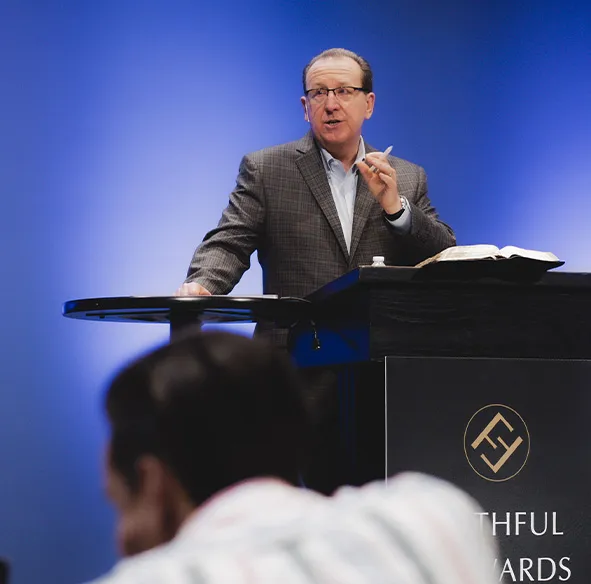
The preaching of God’s Word is central to the life of the church. Tom's pulpit ministry is dedicated to providing clear, biblical teaching to equip believers, strengthen faith, and exalt Christ.


Engage with the most recent teaching from God’s Word.
The preaching of God's Word is central to worship and of the utmost importance for the sanctification of every believer in Christ.

.jpg)
.jpg)

Explore messages organized to help you grow in Christ.
Search and filter sermons for quick access.
Heaven Rules - Part 1
Daniel 4, titled "Heaven Rules," emphasizes God's complete sovereignty over all human rulers and kingdoms, a central theme of Daniel's prophecy. The chapter introduces King Nebuchadnezzar's second dream, occurring late in his prosperous reign. He dreamt of a massive, flourishing tree, symbolizing himself and his empire, which an angelic watcher commanded to be cut down. The decree specified that the stump, representing the king, would remain but be bound, and the king's mind would change to that of an animal for seven periods of time (likely seven years). The explicit purpose of this divine judgment, proclaimed by the angelic watchers, is "in order that the living may know that the Most High is ruler over the realm of mankind, and bestows it on whom He wishes and sets over it the lowliest of men." After Babylon's wise men fail to interpret the disturbing dream, Daniel, recognized by Nebuchadnezzar as possessing "a spirit of the Holy God," is called upon. The text highlights God's sovereignty as constant, real (over mankind's affairs), specific (over individual rulers), and unrestricted, demonstrating that no one attains power apart from His will and ultimate purposes.
Not Your Own!
Tom Pennington's sermon, "Not Your Own!", challenges the modern cultural value of personal autonomy, asserting that for Christians, the opposite is true: they belong entirely to Jesus Christ. He defines autonomy as being one's "own law," a concept alien to believers who are fundamentally Christ's possession. Pennington outlines four biblical reasons for this ownership. Firstly, Christ is the Creator of all things, including every person, thus holding ultimate ownership. Secondly, the Father, in an act of eternal love, "donated" believers to His Son. Thirdly, through redemption, Christ purchased believers from their slavery to sin with His own blood, establishing a change of ownership. While this means becoming Christ's "doulos" (slave), this relationship is characterized by His gracious, kind, and loving mastership, treating believers as friends and family. Lastly, salvation involves a personal devotion and commitment to deny oneself, take up one's cross, and follow Christ as Lord. The practical ramification is that Christians are literally "not their own." This means every facet of their lives�their bodies, minds, thoughts, spiritual life, time, relationships, work, possessions, and daily decisions�is under Christ's authority and intended to be lived for Him.
Through the Fire - Part 3
This sermon on Daniel 3 highlights God's sovereignty over government persecution. It recounts how Nebuchadnezzar, in defiance of God, commanded all officials, including Shadrach, Meshach, and Abed-nego, to worship a golden image or face a fiery furnace. The three Hebrews courageously refused, demonstrating an unintimidated, confident, submissive, and committed faith. Enraged, Nebuchadnezzar ordered the furnace heated seven times hotter. When the bound men were thrown in, the extreme heat killed the soldiers who cast them. However, Nebuchadnezzar was astonished to see four men, unbound and unharmed, walking in the fire, the fourth "like a son of the gods" (believed to be a pre-incarnate Christ). He called them out, and they emerged completely untouched, without even the smell of smoke, their ropes being the only things consumed. This miraculous deliverance powerfully illustrates God's complete power. The sermon details how God protects His people, not just miraculously, but also through Christian support, biblical wisdom, providence, eternal deliverance, spiritual preservation, and His constant presence.
Divine Election - Part 10
This sermon on Romans 9:6-29, titled "Romans Divine Election (Part 10)," by Tom Pennington, focuses on the doctrine of divine election and the concept of "the remnant." Using an analogy of a lone ring surviving Hurricane Camille's destruction, Pennington explains that God's eternal plan was always to save Gentiles and a specific, smaller "remnant" of Israel. Drawing from Old Testament prophecies in Hosea and Isaiah, Paul demonstrates that this decision is biblically clear. Although the physical descendants of Israel are numerous, only a remnant, characterized by genuine saving faith, will be saved. This applies to believing Jews in the first century, throughout the church age, and a future mass salvation during the Tribulation and at Christ's second coming. The sermon emphasizes that God's decision is unchangeably certain and perfectly just. He will thoroughly and decisively execute judgment on the majority who do not believe, just as He did with ancient nations. However, it is also perfectly gracious, as all humanity, Jews and Gentiles alike, are as deserving of destruction as Sodom and Gomorrah. The only reason anyone is saved is solely by God's sovereign grace.
Through the Fire - Part 2
Pastor Tom Pennington's sermon, "Daniel Through the Fire (Part 2)," focuses on God's sovereignty over all human history, particularly in the context of government persecution, drawing parallels with escalating persecution of Christians in China. The text underscores that state-sponsored persecution is a relentless reality for God's people. Believers are taught to respond to such trials with four key perspectives from Daniel 3. First, they must be completely unintimidated by human authorities, fearing God, who is supreme and ordains all rulers. Second, confidence in God's power is crucial, trusting He can deliver them miraculously in this life or eternally beyond death, as seen in Daniel 12. Third, submission to God's will is paramount; recognizing that while God can miraculously deliver, ultimate submission to His sovereign plan is essential. Fourth, believers must maintain an unwavering commitment to God's revealed will, refusing to compromise their faith, even unto death. This unwavering commitment, exemplified by Shadrach, Meshach, and Abed-nego, demonstrates the true miracle of faith in persecution.
Divine Election - Part 9
This sermon, "Romans Divine Election (Part 9)," emphasizes that a church's understanding of divine election is a critical test of its commitment to a high view of God and Scripture, challenging modern human arrogance. Pastor Tom Pennington explains Paul's argument in Romans 9:6-29, which addresses why few Jewish people believed in their Messiah and if God's Old Testament purposes had failed. Paul's answer is the reality of divine election. He clarifies that not all physical descendants of Abraham are true Israelites, as God sovereignly chooses individuals from both Jews and Gentiles for salvation. This election is defended against objections that God is unfair or that human will is not free. Paul then applies this doctrine, stating that "vessels of mercy" are those God "called" through the gospel, leading to repentance and faith in Jesus Christ. He provides extensive biblical evidence from prophets like Hosea and Isaiah, showing God's eternal plan to call "not my people" His people, thereby demonstrating His sovereign, gracious declaration over those who were once without hope. This plan, traced through the entire Bible, reveals that Gentiles were never an afterthought in God's design.
No Results Found.
We couldn’t find anything matching your search.
Explore The Word Unleashed
Our ministry brings together expository preaching, theological precision, and practical application for the good of Christ's church and the daily living of Christ's people.
.webp)
Sermons
Listen to expository sermons that clearly teach God’s Word and guide you in daily living.

Radio
Tune in to gospel-centered programs that share biblical truth and strengthen your daily walk with Christ.
Training
Join courses and workshops designed to deepen your faith and equip you to serve others with biblical wisdom.
.webp)
From the Pastor's Desk
Read pastoral messages that encourage, instruct, and help you apply God’s Word to every part of your life.
.webp)
Hymns
Discover timeless hymns that lift your heart in worship and remind you of God’s abounding grace and faithfulness.
Podcasts
Stay rooted in Scripture through our podcast series.