Sermons That Exalt Christ
The preaching of God’s Word is central to the life of the church. Tom's pulpit ministry is dedicated to providing clear, biblical teaching to equip believers, strengthen faith, and exalt Christ.

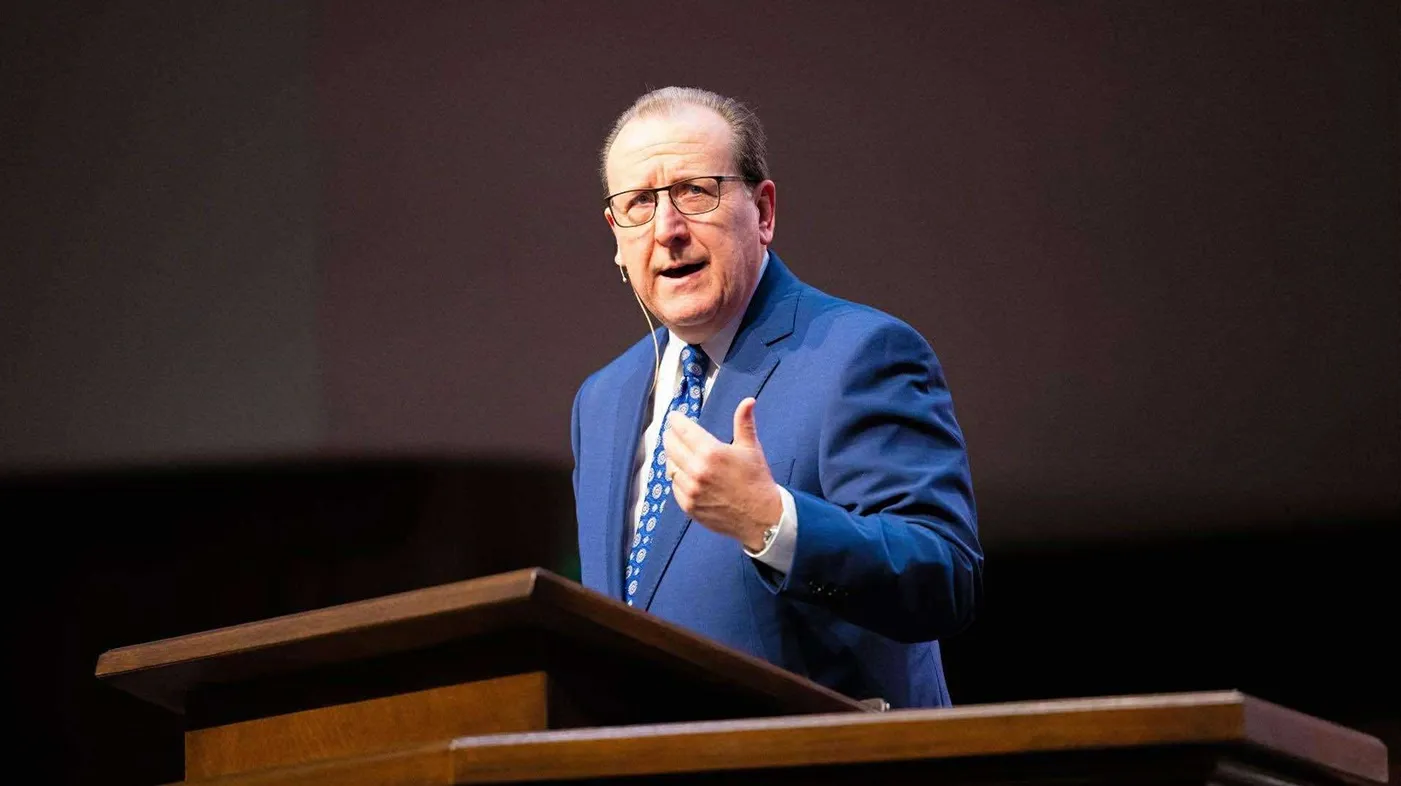
Engage with the most recent teaching from God’s Word.
The preaching of God's Word is central to worship and of the utmost importance for the sanctification of every believer in Christ.

.jpg)
.jpg)

Explore messages organized to help you grow in Christ.
Search and filter sermons for quick access.
The Voice - Part 3
The sermon "The Voice (Part 3)" examines Luke 1:5-25, focusing on John the Baptist's miraculous birth and crucial role as the Messiah's forerunner. Pastor Tom Pennington highlights that John�s divinely orchestrated arrival, announced by the angel Gabriel to the elderly, barren priest Zacharias and his wife Elizabeth, serves as a core credential for Jesus Christ's identity. Zacharias's unbelief in Gabriel�s message led to his temporary muteness, which acted as both a divine chastening and a public sign of God's promise. John's ministry encompassed two main aspects: preaching repentance to spiritually prepare the people for the Lord and explicitly identifying the Messiah. He called for profound internal change, symbolized by "making rough roads smooth," and declared Jesus as "the Lamb of God who takes away the sin of the world," the preexistent Lord, and the One who baptizes with the Holy Spirit. This narrative proves Jesus's identity as the promised Messiah, strengthens believers' faith by solidifying the historical and miraculous foundations of God's plan, and directs Christmas celebrations toward genuine worship of Jesus Christ, the "Sunrise from on high" who brings salvation and peace.
Through the Fire - Part 1
Pastor Tom Pennington highlights the global rise in government persecution against Christians, particularly in China, drawing parallels to Daniel chapter 3. The text introduces Nebuchadnezzar's 90-foot golden statue, an act of defiance against God, symbolizing the king's belief in his empire's eternal reign. All officials were commanded to worship this image or face death in a blazing furnace. Despite extreme pressure and the terrifying threat, Shadrach, Meshach, and Abed-nego famously refused, demonstrating unwavering loyalty to God. Chaldean informers, fueled by prejudice and jealousy, reported their defiance. Nebuchadnezzar, enraged, challenged their God's ability to save them. The sermon explains that persecution, often disguised as reasonable governmental demands, escalates when Christians prioritize God's law. Ultimately, such persecution stems from sinful human hatred and satanic influence, yet believers are encouraged that God is sovereign and faithful, empowering them to remain steadfast and obey Him above all else, even in the face of death.
The Voice - Part 2
The sermon emphasizes that all four Gospels introduce Jesus as the long-awaited Messiah, fulfilling Old Testament prophecies of a messenger preceding Him. John the Baptist is this crucial messenger, whose birth in Luke 1 establishes Jesus' messianic credentials. Historically, Jesus' birth is placed around 5-6 BC during Herod the Great's reign, supported by evidence like Herod's death and priestly service records. The narrative details the miraculous announcement of John's birth to the elderly, righteous, but barren priest Zacharias and his wife Elizabeth by the angel Gabriel. This was a profoundly rare event after centuries of divine silence. Gabriel's announcement answered two prayers: Zacharias' personal desire for a child (which they had given up on) and his priestly prayer for the Messiah. The speaker highlights that God always hears prayers, answers in His own time, and that prayer perfectly complements His sovereign, eternal plan, often achieving multiple purposes simultaneously. John, described as "great," a lifelong Nazarite, and filled with the Holy Spirit from birth, was destined to "turn many of the sons of Israel back to the Lord their God" by preaching genuine repentance for sin, thereby preparing the way for Christ.
The Voice - Part 1
The text, "The Voice (Part 1)," begins a Christmas study by highlighting Luke 1:5-25 and the pivotal role of John the Baptist. John is presented as a crucial "hinge" between the Old and New Testaments, serving as the last prophet who fulfills Malachi�s prophecy of a messenger preparing the Messiah�s way. His primary purpose is to clearly identify and prepare the people for Jesus. The historical setting is the harsh rule of King Herod, a time of hardship for Israel. In stark contrast, Zacharias and Elizabeth, a godly and blameless priestly couple, faced personal disappointment due to barrenness in their old age. Despite their cultural disgrace, their righteousness came from faith in the coming Messiah, not inherent perfection. Zacharias was chosen for the unique, once-in-a-lifetime privilege of burning incense in the temple, an act symbolizing several spiritual realities: humanity cannot directly approach a holy God, access to God's presence is only through a mediator (now Christ), and our prayers are a "sweet smell" to God, signifying His delight in our dependence. The narrative sets the stage for God to miraculously answer Zacharias's prayers for a son and for the Messiah's arrival, perfectly intertwining personal and prophetic fulfillment.
God's Plan for Human History - Part 3
The Book of Daniel's central theme is God's sovereignty over human history, exemplified in Daniel chapter 2 through King Nebuchadnezzar's prophetic dream. The dream features a colossal statue with a golden head, silver chest/arms, bronze belly/thighs, iron legs, and feet/toes of mixed iron and clay. Daniel interprets these parts as a sequence of four great Gentile empires: the Neo-Babylonian, Medo-Persian, Greek, and Roman. The iron and clay feet represent a future, divided, and powerful revived Roman Empire. Crucially, a stone, cut without human hands, strikes the statue's feet, crushing the entire image to dust that the wind carries away. This stone then grows into a great mountain filling the earth. This stone symbolizes God's eternal kingdom, established by Jesus Christ at His Second Coming. This divine kingdom will utterly destroy all earthly empires, enduring forever under Christ's rule. Nebuchadnezzar acknowledges Daniel's God as supreme and trustworthy, promoting Daniel and his friends. This prophecy assures believers that God has a certain plan, actively ordering history towards the triumph of His eternal kingdom.
Divine Election - Part 8
Tom Pennington's sermon on Romans 9:20-23 explains God's reasons for divine election, specifically why He saves some and passes by others. Using a governor's pardon analogy, the message clarifies that while some receive mercy and most receive justice, no one receives injustice, affirming God's sovereign right, like a potter's, over sinful humanity. God allows "vessels of wrath" to receive justice for three primary reasons: to demonstrate His just wrath against sin, to reveal His power in condemning rebellion, and to display His patience. This patience, the sermon notes, reflects God's genuine desire for all to repent, emphasizing that God does not actively create individuals for destruction; rather, they are prepared for it by their own sin or passive divine judgment. Conversely, God's singular reason for choosing "vessels of mercy" (those He saves) is to make known the "riches of His glory," particularly His glorious mercy. This profound display of grace, which makes believers eternal "trophies," is not self-serving but ultimately for the good of His creation, allowing His character to be rightly known.
No Results Found.
We couldn’t find anything matching your search.
Explore The Word Unleashed
Our ministry brings together expository preaching, theological precision, and practical application for the good of Christ's church and the daily living of Christ's people.
.webp)
Sermons
Listen to expository sermons that clearly teach God’s Word and guide you in daily living.

Radio
Tune in to gospel-centered programs that share biblical truth and strengthen your daily walk with Christ.
Training
Join courses and workshops designed to deepen your faith and equip you to serve others with biblical wisdom.
.webp)
From the Pastor's Desk
Read pastoral messages that encourage, instruct, and help you apply God’s Word to every part of your life.
.webp)
Hymns
Discover timeless hymns that lift your heart in worship and remind you of God’s abounding grace and faithfulness.
Podcasts
Stay rooted in Scripture through our podcast series.