Sermons That Exalt Christ
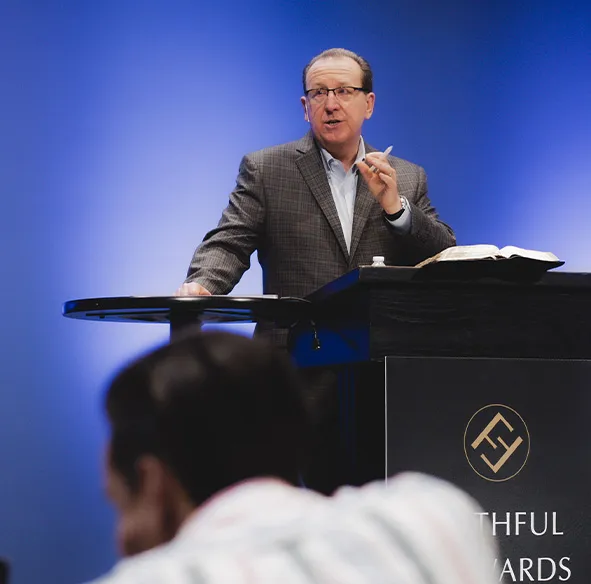
The preaching of God’s Word is central to the life of the church. Tom's pulpit ministry is dedicated to providing clear, biblical teaching to equip believers, strengthen faith, and exalt Christ.


Engage with the most recent teaching from God’s Word.
The preaching of God's Word is central to worship and of the utmost importance for the sanctification of every believer in Christ.

.jpg)
.jpg)

Explore messages organized to help you grow in Christ.
Search and filter sermons for quick access.
The Best Case Against the Resurrection
The sermon emphasizes the resurrection of Jesus Christ as the absolute bedrock of Christian faith, addressing common challenges to its truth. It highlights "the best case" against the resurrection: the conspiracy described in Matthew 28. Roman guards, assigned to secure Jesus's tomb at the Jewish leaders' request, witnessed supernatural events�an earthquake, angels, and an empty tomb�which they reported to the chief priests. Driven by fear of losing power, the Sanhedrin bribed the soldiers to lie, instructing them to claim Jesus�s disciples stole the body while the guards slept. They also promised protection from the severe Roman penalty for sleeping on duty. Ironically, this conspiracy inadvertently proves the resurrection. The lie is illogical because the disciples were too fearful to steal a guarded body (a capital offense), Roman soldiers were highly disciplined, and if truly asleep, the guards couldn't have known who took the body. The very existence of this cover-up confirms the empty tomb, as Jesus�s enemies could not produce a body, leaving them with only a flimsy theft claim. Ultimately, the sermon concludes that intellectual agreement with Christian facts ("historical faith") or merely witnessing miracles is insufficient for salvation.
I Thirst
This sermon, delivered on Palm Sunday, focuses on Jesus' fifth statement from the cross, "I thirst" (John 19:28-30), highlighting its profound implications for understanding the Passion week. This concise, single Greek word reveals six critical truths. First, "I thirst" underscores Jesus' true humanity, a necessary qualification for Him to serve as humanity's sin-bearing substitute and fulfill prophecy. Second, His intentional cry to fulfill Scripture (Psalm 22:15, 69:21) affirms His credentials as the Messiah. Third, Jesus� immense physical and emotional suffering, including desperate dehydration, enables Him to fully sympathize with human pain, offering comfort as our compassionate Brother. Fourth, this thirst came "after" God had forsaken Him for our sins, emphasizing His suffering *for* us as our substitute. He endured the spiritual separation of eternal judgment so that believers would not, thereby quenching our spiritual thirst. Fifth, Jesus declared "I thirst" knowing "all things had already been accomplished," signaling His certainty that redemption was nearly complete. Finally, He accepted the sour wine to wet His parched lips, intentionally preparing to loudly proclaim, "It is finished!" This powerful cry from the cross confirms that the plan of redemption was fully purchased and accomplished.
The King of Beasts - Part 1
Daniel 7 is presented as the book's most important chapter, transitioning from historical narratives (chs 1-6) to comprehensive prophecy (chs 7-12). It provides the Old Testament's most detailed prophetic overview, assuring God's people of His sovereignty and plan, including the Messiah's coming. Paralleling Daniel 2, this vision presents world empires from God's perspective, not as a noble statue, but as ferocious, predatory beasts judged for their rebellion. The vision depicts four successive world empires. A lion with eagle wings represents the Neo-Babylonian Empire. A bear with three ribs symbolizes the Medo-Persian Empire. A swift leopard with four wings and four heads signifies the Greek Empire, divided into four kingdoms. The fourth, a uniquely terrifying beast with iron teeth and ten horns, represents the Roman Empire. From these horns emerges a "little horn," identified as the Antichrist�an intelligent, blasphemous ruler who subdues three kings and controls this final empire. He will persecute God's people but be destroyed by the returning Messiah, who will establish His everlasting kingdom. This vision underscores God's absolute control over history and His ultimate triumph.
In the Lions' Den - Part 2
The sermon "Daniel In the Lion's Den (Part 2)" from Daniel 6 emphasizes God's sovereignty over persecution. Daniel was targeted due to jealousy and resentment, leading conspirators to craft an unjust law forbidding prayer. Daniel's response exemplified how believers must respectfully disobey laws contradicting God's commands, obey God, and patiently accept consequences. King Darius, despite his power and desire to save Daniel, was ultimately helpless, highlighting that trust should be in God alone, not in human authority. Daniel miraculously survived the lion's den because "My God sent His angel and shut the lion's mouth." This demonstrated God's unlimited power and vindication of His innocent servant. The immediate demise of Daniel's accusers when thrown into the same den confirmed the miracle. The sermon concludes God always vindicates His people, whether through deliverance in this life or in eternity. Darius, awestruck, issued a decree for all to fear Daniel's "living God." Daniel's enduring faithfulness in adversity serves as an inspiring example for believers to finish well.
Human Responsibility - Part 6
Pastor Tom Pennington's sermon on Romans 10:14-15, "Human Responsibility," explores the "normal course of saving faith" and its profound implications for evangelism and world missions. Inspired by William Carey, Pennington emphasizes that while God is sovereign, He has ordained the *means* by which people come to salvation, making humans responsible in the process. The sermon outlines a "Golden Chain of Evangelism," describing how faith normally unfolds: 1. **Being Sent:** Christ sends messengers�apostles, missionaries, and all Christians through the Great Commission. 2. **Preaching:** These sent individuals proclaim the gospel. 3. **Hearing:** People hear Christ's message through these authorized representatives. 4. **Believing:** Hearing leads to belief, which encompasses heartfelt assent to Christ's resurrection and confession of Him as Lord. 5. **Calling:** Believers then "call on the name of the Lord" in a prayer of genuine repentance and faith. 6. **Being Saved:** Those who call are saved. Though exceptions like children, the mentally disabled, or direct divine intervention exist, these exceptions underscore the general rule. This divinely ordained process motivates Christians to engage in both personal evangelism�sharing the gospel in their daily lives�and world missions.
In the Lions' Den - Part 1
Pastor Tom Pennington's sermon on Daniel 6, "In the Lion's Den (Part 1)," establishes God's sovereignty over the persecution of His people, especially when it stems from malicious, unjust laws. The sermon details the historical context, including a discussion on Darius the Mede's identity, positing he was likely Governor Gaubaruv or Cyrus himself. Daniel's persecution is attributed to two common factors: jealousy over his extraordinary success and resentment of his impeccable integrity as a top official. Unable to find fault in his professional life, his jealous colleagues conspired to pass an irrevocable law forbidding petitions to any god or man other than King Darius for 30 days, punishable by being cast into the lion's den. This was a political maneuver designed to ensnare Daniel. Upon learning of the decree, Daniel, an 80-year-old exile, deliberately continued his established practice of open prayer towards Jerusalem three times a day, demonstrating unwavering faith. This act exemplifies the Christian response to unjust laws: respectfully and graciously disobeying government when its commands conflict with God's, and patiently enduring the consequences.
No Results Found.
We couldn’t find anything matching your search.
Explore The Word Unleashed
Our ministry brings together expository preaching, theological precision, and practical application for the good of Christ's church and the daily living of Christ's people.
.webp)
Sermons
Listen to expository sermons that clearly teach God’s Word and guide you in daily living.

Radio
Tune in to gospel-centered programs that share biblical truth and strengthen your daily walk with Christ.
Training
Join courses and workshops designed to deepen your faith and equip you to serve others with biblical wisdom.
.webp)
From the Pastor's Desk
Read pastoral messages that encourage, instruct, and help you apply God’s Word to every part of your life.
.webp)
Hymns
Discover timeless hymns that lift your heart in worship and remind you of God’s abounding grace and faithfulness.
Podcasts
Stay rooted in Scripture through our podcast series.