Sermons That Exalt Christ
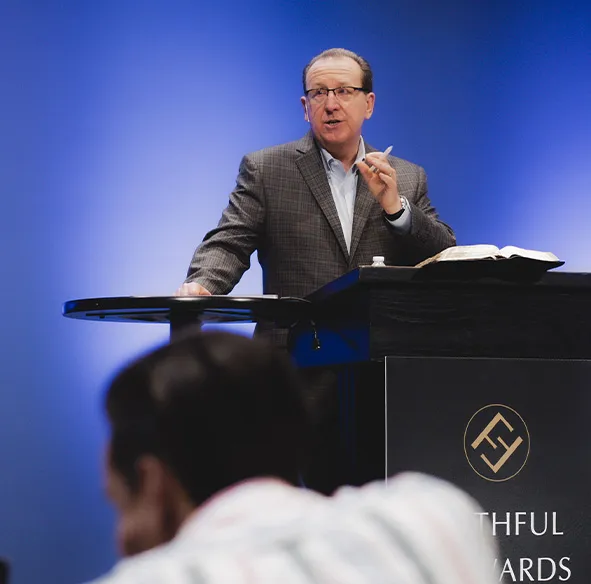
The preaching of God’s Word is central to the life of the church. Tom's pulpit ministry is dedicated to providing clear, biblical teaching to equip believers, strengthen faith, and exalt Christ.


Engage with the most recent teaching from God’s Word.
The preaching of God's Word is central to worship and of the utmost importance for the sanctification of every believer in Christ.

.jpg)
.jpg)

Explore messages organized to help you grow in Christ.
Search and filter sermons for quick access.
Israel's Current Spiritual Condition - Part 4
Pastor Tom Pennington's sermon "Romans Israel�s Current Spiritual Condition (Part 4)" uses the legend of El Dorado to illustrate humanity's futile search for righteousness through self-effort, a path leading to spiritual destruction. Examining Romans 11:7-10, he explains Israel's spiritual state. As a nation, Israel failed to attain righteousness because they pursued it through works rather than faith, ultimately stumbling over Christ. However, a remnant, "the elect," did obtain righteousness, not by their own merit, but through God's gracious choice, proving His unwavering faithfulness. The "rest" of Israel, those not chosen, were judicially "hardened" by God. This hardening is a divine act where God allows individuals to be bound by the sin and rebellion they've chosen, withholding His softening influence. Supported by Old Testament texts, this hardening results in spiritual blindness and stubbornness, serving as a just retribution for their unbelief. The sermon concludes with two lessons: Christians must humbly submit to God's profound and often unsearchable wisdom, accepting His truths without questioning, and all individuals must anticipate God's perfect justice, which for non-believers, is an urgent call to repent and trust in Christ today, as continued refusal only hardens the heart further.
Israel's Current Spiritual Condition - Part 3
Pastor Tom Pennington's sermon "Romans Israel�s Current Spiritual Condition (Part 3)" from Romans 11:1-10 addresses God's enduring faithfulness to Israel, despite their widespread rejection of the Messiah. Paul begins by asking if God has permanently rejected His people, emphatically stating, "May it never be!" The sermon uses the Old Testament account of Elijah, where God preserved 7,000 who hadn't bowed to Baal, to illustrate four key implications concerning a "believing remnant." First, a remnant of true believers always exists, demonstrated in Elijah's era, the early church, and extending to Jews and Gentiles today. Second, this remnant exists exclusively because of God's gracious choice, not human merit or initiative. Third, God's choice is based solely on His grace�His delight in bestowing unmerited favor on the undeserving. Finally, this grace is entirely separate from human works; grace and works are mutually exclusive paths to salvation, and incorporating works fundamentally negates the nature of grace. Pennington stresses that if any part of one's hope for salvation depends on personal works, it indicates a misunderstanding of the true gospel, which offers salvation as a gift received by grace alone through faith in Jesus Christ.
Israel's Current Spiritual Condition - Part 2
Pastor Tom Pennington's sermon on Romans 11:1-10, "Israel�s Current Spiritual Condition," argues that God has not permanently rejected Israel, despite their widespread unbelief. He demonstrates God's enduring faithfulness through the biblical concept of a "remnant"�a small, divinely preserved group maintaining true faith. This is evidenced by four points: Paul's conversion, Old Testament promises, God's electing love for Israel, and God's interaction with Elijah. Elijah, lamenting Israel's deep apostasy and Baal worship, famously declared, "I alone am left." God corrected his despair, revealing He had "kept for Myself seven thousand men who have not bowed the knee to Baal." This highlights that God always has a hidden remnant, often larger than we perceive, who remain faithful and do not succumb to the world's idolatry (symbolized by the pursuit of sexual pleasure and materialism). For contemporary believers, the sermon offers several lessons: God has not forsaken Israel and continues to save Jewish people; God always preserves a larger remnant than we imagine, even in difficult times; the spiritual majority is often wrong, so believers should not fear being in the minority; and God primarily accomplishes His purposes quietly, building His church one soul at a time.
Israel's Current Spiritual Condition - Part 1
Pastor Tom Pennington's sermon "Romans Israel�s Current Spiritual Condition (Part 1)" examines Romans 11:1-10, tackling the question: "Has God permanently rejected Israel?" He firmly declares, "May it never be!" This part of Romans, within the "Gospel Defended" section (chapters 9-11), underscores God's unwavering faithfulness. Pennington offers three key proofs for God's continued commitment. First, **personal evidence** is Paul's conversion. As a Jewish Christian, Paul exemplifies God's ability to save even the "foremost of all sinners," showing that Israel is not completely forsaken. Second, **biblical evidence** stems from God's explicit Old Testament promises (e.g., 1 Samuel 12:22, Jeremiah 31:35-37) never to abandon His people. God's immutable nature guarantees His promises. Third, **theological evidence** is God's "foreknowledge" of the nation (Romans 11:2). This "foreknew" denotes God's predetermined love and choice of *the entire nation* of Israel as His special witness, ensuring His relationship with them as a people, distinct from individual salvation. The broader implication is that God's faithfulness to Israel�despite their unbelief�undergirds His unchangeable promises to individual believers. If God keeps His word to a nation that has largely rejected Him, His commitment to those He has foreknown in Christ is absolutely secure.
The King of Beasts - Part 2
Tom Pennington's sermon "Daniel The King of Beasts (Part 2)" unpacks Daniel chapter 7, presenting God's view of human history. Unlike Daniel 2, which shows empires as a glorious statue, Daniel 7 reveals them as four ravenous beasts: Babylon, Medo-Persia, Greece, and a terrifying fourth beast representing the Roman Empire. This fourth beast gives rise to a "little horn," identified as the future Antichrist, who will speak blasphemies against God. The vision then shifts to the heavenly throne room. Daniel sees the "Ancient of Days" (God the Father), eternal and wise, seated on a fiery judgment throne, surrounded by countless angels. This imagery underscores God's undisturbed sovereignty amidst earthly chaos. Books are opened, leading to the decisive judgment and destruction of the Antichrist and his empire. Finally, "one like a Son of Man" (Jesus Christ, the divine Messiah), distinct from the Ancient of Days yet equally divine, arrives with the clouds of heaven. He is presented before the Ancient of Days to receive everlasting dominion, glory, and a universal kingdom. This signifies Christ's coronation after defeating the Antichrist, establishing His millennial reign and ultimately extending into a new heaven and earth.
Human Responsibility - Part 7
This sermon on Romans 10:16-21 explores human responsibility for rejecting the gospel, focusing on why many, particularly Jewish people, refuse to believe. The pastor asserts that rejection isn't passive but a deliberate refusal of God's command to repent and believe. The text addresses common excuses for unbelief: 1. **"I haven't heard"**: This is refuted, as the gospel message, like general revelation, has spread widely, especially throughout the Mediterranean world where Jewish communities thrived. 2. **"I don't understand"**: Paul argues that people understand enough to be angered by the gospel's challenge to self-righteousness, and its core tenets are simple for anyone to grasp. 3. **"It's God's fault"**: This excuse, whether blaming divine election or God's love, is dismissed. Election explains why some *are* saved, not why others are lost. God genuinely desires all to repent and live, constantly extending His hands in a pleading invitation, as evidenced in Isaiah 65:2 and the parable of the prodigal son. Ultimately, the real reasons for rejecting the gospel are human disobedience and obstinacy�a rebellious refusal to heed God's gracious call.
No Results Found.
We couldn’t find anything matching your search.
Explore The Word Unleashed
Our ministry brings together expository preaching, theological precision, and practical application for the good of Christ's church and the daily living of Christ's people.
.webp)
Sermons
Listen to expository sermons that clearly teach God’s Word and guide you in daily living.

Radio
Tune in to gospel-centered programs that share biblical truth and strengthen your daily walk with Christ.
Training
Join courses and workshops designed to deepen your faith and equip you to serve others with biblical wisdom.
.webp)
From the Pastor's Desk
Read pastoral messages that encourage, instruct, and help you apply God’s Word to every part of your life.
.webp)
Hymns
Discover timeless hymns that lift your heart in worship and remind you of God’s abounding grace and faithfulness.
Podcasts
Stay rooted in Scripture through our podcast series.