Sermons That Exalt Christ
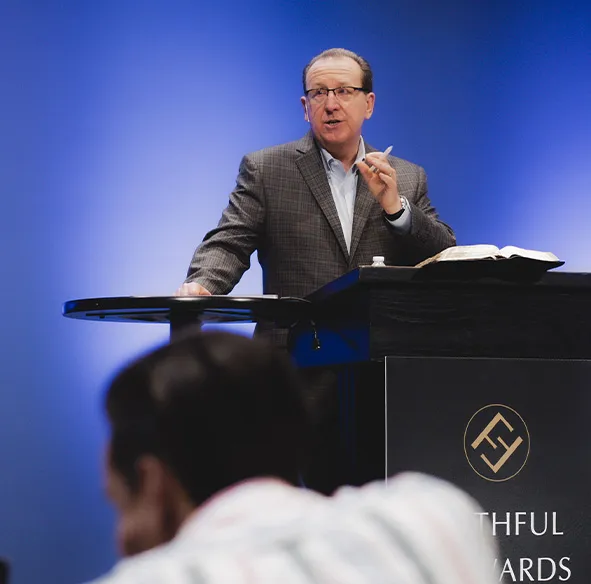
The preaching of God’s Word is central to the life of the church. Tom's pulpit ministry is dedicated to providing clear, biblical teaching to equip believers, strengthen faith, and exalt Christ.


Engage with the most recent teaching from God’s Word.
The preaching of God's Word is central to worship and of the utmost importance for the sanctification of every believer in Christ.

.jpg)
.jpg)

Explore messages organized to help you grow in Christ.
Search and filter sermons for quick access.
The Heart of the Reformation: Sola Gratia!
Tom Pennington's sermon, delivered on Reformation Day, highlights "Sola Gratia" (grace alone) from Ephesians 2:8-9 as the heart of the Protestant Reformation. He recounts Martin Luther's challenge to the Roman Catholic Church's sale of indulgences, which propagated a salvation system based on human merit and works. Pennington explains that salvation is a spiritual rescue accomplished entirely by God's sovereign grace, a gift received through faith alone, not as a result of human effort or works. He clarifies that faith itself is not a work we generate but a gift from God, serving as the means by which we apprehend Christ's saving work. God�s design ensures that absolutely nothing in human nature or action contributes to salvation. This divine plan, "by grace you have been saved through faith, and that not of yourselves, it is the gift of God; not a result of works, so that no one may boast," serves two primary purposes: to display the surpassing riches of God's grace and to utterly destroy all human pride or boasting before Him. True believers acknowledge their salvation is solely Christ's work, a masterpiece of God's grace from beginning to end.
He Is Worthy! - Part 1
The text explores biblical visions of heaven, beginning with Old Testament accounts from Moses, Isaiah, Ezekiel, and Daniel, offering glimpses of God's throne and glory. It then transitions to Revelation 4-5 as the Bible's most comprehensive description. John is invited into heaven through an open door to witness events "after these things," signifying the shift from the church age to the tribulation period. He observes God's unshakable throne, with the Father appearing as blazing light�like a crystal-clear jasper and a blood-red sardius�symbolizing divine glory and impending wrath. An emerald rainbow surrounds the throne, representing both God's judgment and His covenant mercy, assuring believers of salvation from wrath. The twenty-four elders, clothed in white with golden crowns, are identified as redeemed humans (Old and New Testament saints) destined to rule with Christ. This foundational vision establishes God's infinite worthiness to govern and judge the universe, delegating this authority to the Son, thus serving as a prelude to the tribulation's judgments. The author also suggests the church is raptured between Revelation chapters 3 and 4.
The Apostles' Proclamation - Part 3
Pastor Tom Pennington's sermon on 1 John 1:1-4, "The Apostles� Proclamation (Part 3)," defines biblical "fellowship" (Greek: *koinonia*) as an objective, close relationship, not a subjective feeling or mystical experience. He critiques the "Higher/Deeper Life Movement" for promoting a feeling-oriented Christianity that he deems spiritually destructive. True fellowship involves a new shared relationship with God�as Father and His Son Jesus Christ as Savior and Lord�and with fellow believers as brothers and sisters in Christ. This shared bond mandates active involvement within a local church community. John�s letter aims to assure believers that they *already possess* this fellowship, which is established at the moment of new birth. The purpose is not to gain a missing experience, but to understand and grow in the *depth of knowledge* of this existing, objective relationship, focusing on God�s character and "ways" rather than fleeting emotions. Ultimately, the Apostolic Proclamation and John's letter seek to provide this assurance of fellowship, which leads to the "fullness of joy." Believers are encouraged to shed mystical notions, diligently study 1 John for assurance, and experience complete joy, while non-believers are invited to repent and trust in Christ to enter this profound fellowship.
Laodicea: A False Gospel
Pastor Tom Pennington interprets Revelation 3:14-22, arguing that the letter to the Laodicean church is widely misunderstood. He asserts that Christ is not addressing lukewarm believers but an entire church that has abandoned the biblical gospel for a false, works-based one, potentially coupled with a flawed view of Christ as a created being. The physical city of Laodicea, known for its wealth, self-sufficiency, lukewarm and mineral-filled water, banking, black wool, and eye salve industries, provides the backdrop for Christ's metaphors. The "lukewarm" state of the church signifies spiritual uselessness, bringing no benefit to others. Though the Laodiceans boasted of spiritual riches, Christ declared them "wretched, miserable, poor, blind, and naked"�terms directly reflecting their local industries, highlighting their spiritual bankruptcy. Christ's "prescription" is an ironic invitation to "buy" from Him (i.e., freely receive) true saving faith (gold refined by fire), imputed righteousness (white garments), and spiritual illumination (eye salve). This is a call to zealous repentance and faith in the true Christ.
The Apostles' Proclamation - Part 2
Tom Pennington's sermon on 1 John 1:1-4 asserts that the Apostles' proclamation of the gospel forms the ultimate foundation for fellowship with God, assurance of eternal life, and resultant joy. John provides evidence for the truth of this gospel, presenting his and the other Apostles' testimony as uniquely reliable, even meeting the standards for competent witnesses in a legal system. The integrity of the Apostles' message is highlighted by four key features. First, they were reporting real historical events, emphasizing Jesus's physical manifestation and life on Earth, not myths. Second, they were firsthand eyewitnesses who personally heard, saw with their eyes, intently looked at, and touched Jesus; their recollection was supernaturally aided by the Holy Spirit. Third, they were official witnesses, chosen and commissioned by Jesus for this specific purpose, not merely accidental observers. Finally, they served as legal representatives ("apostles") of Christ, authorized to proclaim His message. Rejecting their testimony is tantamount to rejecting Jesus and the Father who sent Him. Jesus blesses those who believe the Apostles' eyewitness accounts without having seen Him personally, offering a solid, divinely-backed foundation for faith, providing confidence and comfort to all who believe.
Philadelphia: Enduring Faithfulness
Tom Pennington's sermon on Revelation 3:7-13, "Philadelphia: Enduring Faithfulness," examines Christ's letter to a church unique for receiving only commendation. Jesus identifies Himself as holy, true, and holding the "key of David," controlling access to His kingdom. The city of Philadelphia, prone to earthquakes and economic hardship, hosted a small, often persecuted Christian community. Christ praised them for their "little power" yet unwavering faithfulness: they "kept My word" (obeyed) and "have not denied My name" (remained loyal). Due to this faithfulness, Christ promises them an "open door" to His kingdom, vindication before their Jewish adversaries ("synagogue of Satan"), and protection "from the hour of testing"�referring to the future Great Tribulation, implying removal before it. He calls them to "hold fast what you have" to secure their "crown" (reward) and promises overcomers (all true believers) permanence in God's presence, like "pillars," never to be removed. They will also receive new names�God's, the New Jerusalem's, and Christ's new name�signifying their eternal belonging and citizenship. The sermon concludes that faithfulness to Christ and His word, not worldly success, is paramount, and believers must persevere until the end to keep their reward.
No Results Found.
We couldn’t find anything matching your search.
Explore The Word Unleashed
Our ministry brings together expository preaching, theological precision, and practical application for the good of Christ's church and the daily living of Christ's people.
.webp)
Sermons
Listen to expository sermons that clearly teach God’s Word and guide you in daily living.

Radio
Tune in to gospel-centered programs that share biblical truth and strengthen your daily walk with Christ.
Training
Join courses and workshops designed to deepen your faith and equip you to serve others with biblical wisdom.
.webp)
From the Pastor's Desk
Read pastoral messages that encourage, instruct, and help you apply God’s Word to every part of your life.
.webp)
Hymns
Discover timeless hymns that lift your heart in worship and remind you of God’s abounding grace and faithfulness.
Podcasts
Stay rooted in Scripture through our podcast series.