Sermons That Exalt Christ
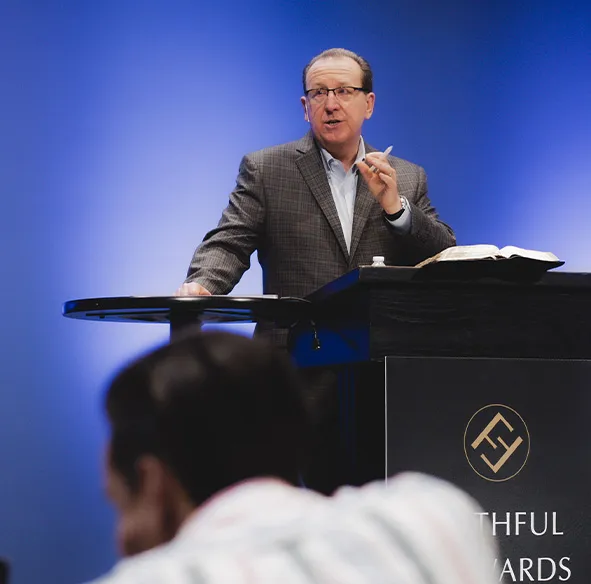
The preaching of God’s Word is central to the life of the church. Tom's pulpit ministry is dedicated to providing clear, biblical teaching to equip believers, strengthen faith, and exalt Christ.


Engage with the most recent teaching from God’s Word.
The preaching of God's Word is central to worship and of the utmost importance for the sanctification of every believer in Christ.

.jpg)
.jpg)

Explore messages organized to help you grow in Christ.
Search and filter sermons for quick access.
Praise from A to Z
Pastor Tom Pennington's sermon from Psalm 145 focuses on cultivating praise and thanksgiving, particularly relevant before Thanksgiving. Psalm 145, an acrostic "Psalm of David," is presented as a framework for understanding praise. It outlines three escalating forms: David's personal commitment (verses 1-9), corporate praise among God's people (verses 10-20), and ultimately, universal praise from all humanity (verse 21). The core theme is the praise of "Our King," Jesus Christ, for the greatness and goodness of His sovereign reign. David's personal praise is rooted in God's unsearchable greatness, evident in His character and mighty acts, and His abundant goodness�gracious, merciful, slow to anger, and full of steadfast love. Corporate praise expands this, emphasizing the glory, power, majesty, eternity, and stability of God's kingdom. His sovereignty's goodness is practical: He helps the falling, provides for the dependent, acts consistently and predictably, saves those who trust Him, answers those who fear Him, and eternally preserves those who love Him, while warning of the destruction for the wicked. The sermon encourages listeners to let these truths shape their individual and collective worship, calling for repentance and faith in Jesus Christ as King.
The Believer's New Relationship to Sin - Part 3
Tom Pennington�s sermon, "The Believer�s New Relationship to Sin," from 1 John 1:5 � 2:6, delineates the crucial difference between true and false Christians based on their interaction with sin. John's letter aims to assure believers through moral, social, and doctrinal tests, with this sermon focusing on the moral test in light of God�s holy nature. False Christians deny or downplay their inherent sinfulness and actual misdeeds, often by redefining sin, blaming others, or accepting cultural norms over biblical standards. Such denial effectively makes God a liar and indicates that His word is not genuinely in them, as they perceive Jesus merely as a moral example rather than a Savior from sin. In contrast, true Christians admit and hate their sins, striving for holiness and desiring not to sin. When they inevitably fall, they do not despair but instead trust in Jesus Christ as their constant Advocate and High Priest with the Father. Jesus continually intercedes for them in heaven by presenting His perfect sacrifice, defending against Satan's accusations, praying for their sanctification, supplying grace during trials, ensuring spiritual protection, and sanctifying their prayers and worship.
He Is Worthy! - Part 3
This sermon on Revelation 4-5 delves into the universe's true ownership, focusing on chapter 5's central event: the Lamb and the mysterious book. This scroll, held in God's right hand and sealed with seven seals, is identified as the "title deed to the earth." Humanity forfeited this deed through sin, allowing Satan to usurp it. A powerful angel's cry echoes throughout creation, seeking someone worthy to open the scroll, but no one in heaven, on earth, or under the earth is found. John weeps inconsolably, interpreting this silence as a halt to God's redemptive plan and a perpetual curse on the world. Yet, an elder intercedes, proclaiming, "Stop weeping; behold, the Lion that is from the tribe of Judah, the Root of David, has overcome so as to open the book and its seven seals." These titles confirm Jesus' messianic credentials, signifying His authority and victorious nature as a warrior king. This pivotal moment symbolizes the transfer of authority from the Father to the Lamb. The opening of the seals initiates Christ's judgments, culminating in Him reclaiming His rightful inheritance and establishing His eternal reign over all creation.
He Is Worthy! - Part 2
This text, "Revelation He is Worthy! (Part 2)," delves into Revelation chapter 4, presenting a detailed vision of Heaven as a prelude to God's judgments. John is invited to witness God's throne, described with blazing brilliance, an emerald rainbow signifying covenant faithfulness, and flashes of lightning and thunder hinting at looming wrath. Surrounding the throne are twenty-four elders, representing all redeemed believers, and four living creatures�an exalted angelic order. These creatures, depicted with faces of a lion, calf, man, and eagle, are full of eyes, symbolizing their keen perception and vigilance. Both the elders and living creatures engage in unceasing worship, proclaiming God's holiness, omnipotence, and eternality. Their primary hymn extols God as the Creator, acknowledging His sole right to receive glory, honor, and power because all things exist and were created by His will. This grand celestial scene establishes God's absolute worthiness to rule and judge, reminding humanity that His glory is revealed in creation, and man's refusal to worship Him justly incurs His wrath.
The Believer's New Relationship to Sin - Part 2
This sermon, based on 1 John 1:5 � 2:6, explores the believer's new relationship to sin, particularly emphasizing the nature of genuine confession. It begins by highlighting God's essential nature as "Light," meaning absolute holiness, which necessitates a transformed relationship to sin for those in fellowship with Him. The text distinguishes between false and true Christians based on their relationship with sin. False Christians habitually live in darkness and deny their inherent sinfulness or the depth of their depravity, leading to self-deception. This denial prevents them from embracing the true gospel, as they never acknowledge their spiritual bankruptcy. Conversely, true Christians demonstrate their faith by admitting their total depravity before Christ and acknowledging the ongoing presence of sinful "flesh" even after salvation. Crucially, they consistently confess their sins. This ongoing practice of confession is evidence of genuine salvation and is distinct from the one-time judicial forgiveness (justification) received at salvation. Instead, daily confession is about seeking relational forgiveness from God as a Father, much like "washing feet" after a "bath." True confession is a constant, personal admission of guilt, directed primarily to God (and to others when sinned against).
The Believer's New Relationship to Sin - Part 1
Tom Pennington's sermon, "The Believer�s New Relationship to Sin" from 1 John 1:5 � 2:6, introduces 1 John as providing "Tests of Eternal Life" to assure believers of their salvation. The book's structure features three recurring tests�obedience, love, and faith�examined from different perspectives across three cycles. This message focuses on the first cycle's test of obedience versus sin. The foundational truth is God's essential nature of holiness, revealed by Jesus: "God is Light, and in Him there is no darkness at all." This emphasizes God's absolute moral purity, necessitating a new relationship to sin for those claiming fellowship with Him. John distinguishes false Christians, who profess faith but habitually "walk in darkness" (live in sin), from true Christians, whose lives are marked by habitual holiness. A false Christian's claim is a lie, as their life contradicts God's truth. In contrast, a true Christian, having been "transferred to the kingdom of His beloved Son," reflects God's holiness. This transformed lifestyle, though not sinless perfection, results in fellowship with other believers and continuous cleansing from all confessed sins through the blood of Jesus, demonstrating that no sin is beyond Christ's power to forgive for those who repent.
No Results Found.
We couldn’t find anything matching your search.
Explore The Word Unleashed
Our ministry brings together expository preaching, theological precision, and practical application for the good of Christ's church and the daily living of Christ's people.
.webp)
Sermons
Listen to expository sermons that clearly teach God’s Word and guide you in daily living.

Radio
Tune in to gospel-centered programs that share biblical truth and strengthen your daily walk with Christ.
Training
Join courses and workshops designed to deepen your faith and equip you to serve others with biblical wisdom.
.webp)
From the Pastor's Desk
Read pastoral messages that encourage, instruct, and help you apply God’s Word to every part of your life.
.webp)
Hymns
Discover timeless hymns that lift your heart in worship and remind you of God’s abounding grace and faithfulness.
Podcasts
Stay rooted in Scripture through our podcast series.