Sermons That Exalt Christ
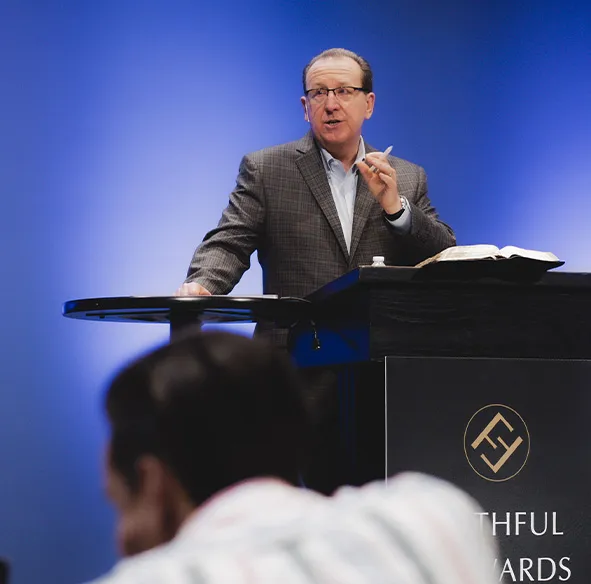
The preaching of God’s Word is central to the life of the church. Tom's pulpit ministry is dedicated to providing clear, biblical teaching to equip believers, strengthen faith, and exalt Christ.


Engage with the most recent teaching from God’s Word.
The preaching of God's Word is central to worship and of the utmost importance for the sanctification of every believer in Christ.

.jpg)
.jpg)

Explore messages organized to help you grow in Christ.
Search and filter sermons for quick access.
The Apostles' Proclamation - Part 1
Tom Pennington introduces his sermon series on 1 John, describing the letter's unique non-linear structure using analogies of a symphony with recurring themes or a spiral staircase revisiting three central "tests of eternal life": obedience, love, and faith in Christ. The sermon focuses on the prologue (1 John 1:1-4), which lays the ultimate foundation for fellowship with God, assurance of eternal life, and joy through the apostles' proclamation of the gospel. Pennington explains the prologue's grammatical complexity, where the apostles "proclaim" what they personally heard, saw, and touched concerning the "Word of Life," emphasizing Jesus Christ as the central focus, not merely an impersonal message. Key truths revealed about Jesus include His eternal pre-existence, true humanity (physically experienced by the apostles), identity as God's self-expression (the Word of Life), self-existence and life-giving power, manifestation in human flesh through the incarnation, eternal relationship "with the Father" as His unique Son, historical reality as "Jesus of Nazareth," and role as the promised "Christ" (Messiah and Savior) who saves from sins. This profound understanding of Jesus forms the sole basis for forgiveness, intimate fellowship with God, and eternal life, underpinning all Christian hope and joy.
An Introduction to 1 John
Tom Pennington introduces John's first letter, describing it as an irreplaceable New Testament gem known for its profound truths and accessible language. He confirms John the Apostle as its author, citing overwhelming external evidence from early church fathers and ancient manuscripts, alongside internal consistencies in style, vocabulary, themes, and John�s eyewitness claims. Written between 90-95 A.D. for churches in Asia Minor, 1 John acts as a circular letter for all believers. Its occasion was the defection of false teachers, likely pre-Gnostics or Cerinthians, who propagated heresies denying Jesus's full humanity or divinity, encouraging immorality, or claiming exclusive "higher knowledge." John combats these "progressives," urging believers to adhere to the foundational truths they initially received. The letter serves two main purposes: spiritual protection from deception and providing personal assurance of eternal life. John presents three recurring "tests of eternal life": a doctrinal test (believing correctly about Jesus's divine and human person, and His atoning work), a moral test (demonstrating consistent obedience to Christ, though not perfectly), and a social test (exhibiting genuine love for God and fellow believers).
Sardis: Dead Christianity
Pastor Tom Pennington�s sermon on Revelation 3:1-6, "Sardis: Dead Christianity," explains Jesus�s letter to the Sardis church within the context of Revelation's message that Christ remains sovereign despite challenging times. The seven churches represent types of churches throughout history. Sardis receives no initial commendation because it is spiritually "dead," possessing a reputation for life but lacking true vitality, a complacency mirrored by its city's historical downfall due to carelessness. Christ describes Himself as holding "the seven Spirits of God and the seven stars," signifying His omniscience, omnipresence, life-giving power, and authority over church leaders. Jesus's call for repentance to this dead church involves five imperatives: "Wake up" and be vigilant; "strengthen" the few spiritual activities that remain; crucially, "remember" and prioritize the apostolic teaching and Scripture, whose neglect is the root of spiritual death; "keep" (guard and obey) these truths; and finally, "repent" by altering their thinking and behavior. A dire warning accompanies this call: failure to repent will result in Christ's sudden and unexpected judgment, leading to the church's destruction. Despite the widespread spiritual deadness, Christ commends a "few people in Sardis who have not soiled their garments," signifying their faithfulness to the true gospel.
Is "Social Justice" Biblical Justice? - Part 2
Pastor Tom Pennington asserts that "Social Justice" and Critical Race Theory (CRT) are godless, Marxist ideologies rooted in concepts of oppressed versus oppressor, ultimately misidentifying the problem of injustice. He traces CRT's development from Marxism and its infiltration into academia, corporations, and even evangelical circles, urging discernment against its influence. Pennington acknowledges America's history of slavery by kidnapping and legally codified racism (like Jim Crow laws) as undeniable biblical sins with lasting effects. However, he rejects CRT's claims of unintentional systemic racism or collective guilt based on identity. Instead, the real problem is individual sin: partiality, prejudice, and hatred stemming from human depravity. The biblical correction focuses on God's impartial justice. The right goal is biblical justice, insisting on fair laws and treating all people with respect, mirroring God's character. The only real solution is the Gospel of Jesus Christ, which changes hearts and brings lasting peace between diverse individuals. Ultimately, perfect justice will only be established on earth by Jesus Christ in His future kingdom. Christians should prioritize biblical truth over cultural trends.
Is "Social Justice" Biblical Justice? - Part 1
Pastor Tom Pennington critically examines the "Social Justice Movement" (SJM), asserting it's a "devastating moral storm" distinct from Biblical justice. He argues the SJM, deeply rooted in Critical Race Theory (CRT) and Marxist philosophy, redefines core terms. For the SJM, justice entails destroying oppressive systems and redistributing power from the majority (oppressors) to minorities (oppressed), while racism is systemic, not individual, and primarily perpetuated by dominant groups. Key concepts include white privilege, white supremacy, and "wokeness." Pennington traces CRT's origins from Karl Marx's economic class struggle to the Critical Theory, which expanded the oppressor/oppressed dynamic to include ethnic, sex, and gender identities. CRT identifies "white, heteronormative males" as primary oppressors, advocating revolution and power redistribution as solutions. Spiritually, Pennington contends the SJM distorts Biblical justice, which assigns guilt individually for personal sin, not corporately based on ancestry or group affiliation. He emphasizes that racism's true source is radical human depravity within every fallen heart, not societal structures. Therefore, the only permanent solution to racism is individual conversion through the Gospel of Jesus Christ, offering lasting change beyond mere systemic reversal.
The Gender Question - Part 3
Pastor Tom Pennington's sermon "The Gender Question (Part 3)" addresses society's rejection of God's objective creation of humanity as male and female, in favor of subjective Gender Theory. He explains Gender Theory as separating gender identity from biological sex, tracing its philosophical roots to abandoning God, Darwinian evolution, the Sexual Revolution, and Cultural Marxism. Cultural expressions include adopting opposite-sex characteristics, same-sex relations, and societal affirmation of these, which Pennington attributes to rebellion against God's design. He outlines six biblical truths about sex and gender: God created humans in His image as two distinct yet equally valuable sexes (male and female), with differences designed for human flourishing. God sovereignly determines each person's biological sex at conception, intending it to dictate one's self-conception, and expects acceptance of this divine decree. Regarding roles, God alone defines manhood and womanhood, despite temptations from Satan and the flesh to reject this design. All Christians share the priorities of loving God and neighbor, and pursuing Christlikeness. However, God established specific character qualities and priorities for men (e.g., leadership, temperance) and women (e.g., nurturing, being helpers). Most are designed for marriage and children, while singleness is a valid gift for focused service to the Lord.
No Results Found.
We couldn’t find anything matching your search.
Explore The Word Unleashed
Our ministry brings together expository preaching, theological precision, and practical application for the good of Christ's church and the daily living of Christ's people.
.webp)
Sermons
Listen to expository sermons that clearly teach God’s Word and guide you in daily living.

Radio
Tune in to gospel-centered programs that share biblical truth and strengthen your daily walk with Christ.
Training
Join courses and workshops designed to deepen your faith and equip you to serve others with biblical wisdom.
.webp)
From the Pastor's Desk
Read pastoral messages that encourage, instruct, and help you apply God’s Word to every part of your life.
.webp)
Hymns
Discover timeless hymns that lift your heart in worship and remind you of God’s abounding grace and faithfulness.

Podcasts
Stay rooted in Scripture through our podcast series.