Sermons That Exalt Christ
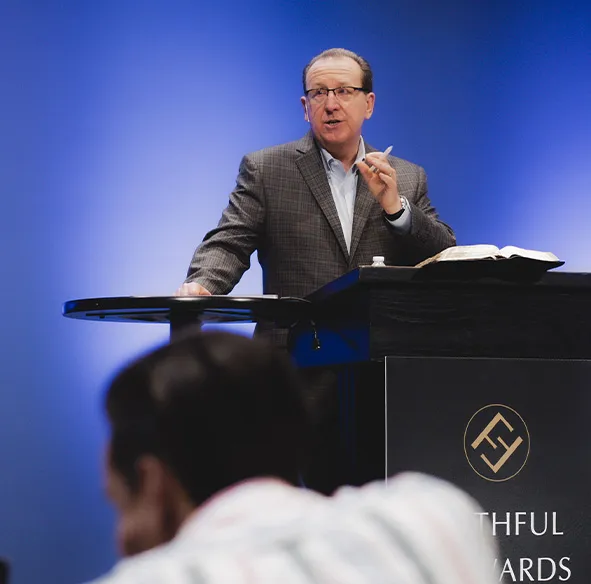
The preaching of God’s Word is central to the life of the church. Tom's pulpit ministry is dedicated to providing clear, biblical teaching to equip believers, strengthen faith, and exalt Christ.


Engage with the most recent teaching from God’s Word.
The preaching of God's Word is central to worship and of the utmost importance for the sanctification of every believer in Christ.

.jpg)
.jpg)

Explore messages organized to help you grow in Christ.
Search and filter sermons for quick access.
This Is Love - Part 1
Tom Pennington's sermon on 1 John 4:7-21, "This Is Love (Part 1)," emphasizes the importance of love as a "Test of Eternal Life," designed to assure true believers of their salvation. The book of 1 John repeatedly explores three tests: obedience, love, and faith, with this sermon focusing on the final cycle's examination of "Love for God and His People." John's central exhortation is "Beloved, let us love one another." This divine love, produced by the Holy Spirit, is sacrificial, practical, and relational, unlike natural human affection. This command is rooted in God's very nature: "love is from God" and "God is love" in His essence. This perfection is eternal, sovereign, infinite, and unselfish, manifested within the Trinity and toward humanity. Crucially, the presence of consistent, biblical love is a definitive sign that "everyone who loves is born of God and knows God." Conversely, "the one who does not love does not know God," revealing their profession of faith as false. The absence of such love indicates no new birth, regardless of theological knowledge or moral conduct.
Seven Bowls of Wrath - Part 1
The text details the Seven Bowls of Wrath in Revelation 16, God's final, intensely severe judgments unleashed at the close of the Seven-Year Tribulation, preceding Christ's return. These judgments are distinct from earlier ones, characterized by their universal scope and extreme suffering. God commands seven angels to pour out His wrath. The first five bowls bring: malignant sores upon those with the beast's mark; all oceans turning to congealed blood, killing marine life; all fresh water sources similarly turning to blood, causing immense thirst after drought; the sun scorching humanity with fierce heat; and finally, worldwide, tangible darkness, intensifying all previous pains. Despite these catastrophic plagues, people consistently blaspheme God, acknowledging His power but refusing to repent of their deeds or give Him glory. Heavenly voices affirm God's perfect justice, declaring these retributive punishments are righteous, fitting the crime of those who "poured out the blood of saints and prophets." The sermon concludes by stressing that God's judgments are perfectly just, and the sole path to escape this deserved judgment is to embrace the gospel of Jesus Christ, who endured God's wrath for all who believe, offering grace and forgiveness without cost.
The Foundation of Our Faith
The text, a sermon on 1 Corinthians 15 by Tom Pennington, establishes the resurrection of Jesus Christ as the indispensable foundation of the Christian faith. It highlights Christianity's uniqueness in claiming its founder permanently rose from the dead, leaving an empty tomb�a truth emphasized by reformers like Calvin. Paul addresses the Corinthian church's denial of bodily resurrection, influenced by Greek dualism, by logically demonstrating the devastating implications. If Christ was not raised, then five tragic consequences arise: the gospel is illegitimate and preaching vain; faith is unreasonable and worthless; God's revelation is unreliable, making apostles and Scripture false; there is no real forgiveness, leaving humanity in sin; and there is no eternal life, meaning believers who died have perished, rendering current believers "most to be pitied." Yet, the message pivots with "But now Christ has been raised from the dead." This triumphant declaration invalidates all negative scenarios, confirming the gospel's truth, faith's validity, God's trustworthy word, genuine forgiveness, and the assurance of eternal life. For non-believers, the resurrection proves Jesus' divine claims, is essential for salvation, and confirms He will be their judge if rejected.
Heaven Prepares for the End
This text delves into the nature of God's wrath, challenging various historical and theological views that deny or dilute its personal and active essence. It defines God's wrath as His "settled opposition to evil," His "holy displeasure against sinners," and His "determination to punish sin," emphasizing it as a personal, emotional attribute. The sermon identifies three primary human actions that provoke God's anger: failing to properly honor His person, disobeying His will and commands, and despising His love offered through the gospel. Revelation 15 is then presented as the heavenly preparation for the ultimate outpouring of God's wrath�the final seven bowl judgments that conclude the Tribulation and precede Christ's second coming. John witnesses a "great and marvelous sign" of seven angels carrying these decisive plagues. Victors over the Beast, representing tribulation saints, stand on a sea of glass mixed with fire, singing the "song of Moses and the Lamb," praising God's mighty works, righteous ways, and unique holiness, acknowledging His universal worship.
The Unlawful Arraignment of Jesus Christ
Pastor Tom Pennington's sermon, "The Unlawful Arraignment of Jesus Christ" from John 18:12-24, details the profound injustice Jesus faced during His initial hearing before Annas. This preliminary trial was the first in a series of illegal proceedings, orchestrated by corrupt Jewish leaders, including Annas and Caiaphas, who had already predetermined Jesus's death for political expediency. Annas, a powerful former High Priest, conducted the arraignment unlawfully, questioning Jesus directly and seeking self-incrimination instead of adhering to Jewish law, which required witnesses to bring charges. Jesus, however, demanded due process, asserting His public teaching was open and asking why Annas interrogated Him rather than calling those who heard Him. This lawful demand was met with a physical blow, further illustrating the court's disregard for justice. John's account highlights Jesus's absolute innocence, proving His arrest and trials were a "kangaroo court" and His death an unjustified murder, not capital punishment. This perfect, sinless innocence was crucial, establishing Jesus as the only qualified sacrifice to bear the sins of humanity. The sermon concludes by challenging listeners not to reject Jesus for personal power, wealth, or comfort, as Annas did, but to acknowledge Him as their ultimate Judge and Savior, accepting His redemptive sacrifice.
Recognizing False Teachers - Part 6
In "1 John Recognizing False Teachers," Pastor Tom Pennington emphasizes the crucial role of Scripture in discerning true from false teachers. Building on Reformation principles of *sola gratia* and *sola scriptura*, he asserts that one must test a teacher's doctrine, specifically their view and treatment of God's Word. Pennington outlines four essential qualities of Scripture, primarily from 2 Timothy 3:16-17: 1. **Inspiration:** Scripture is "God-breathed" (*theopneustos*), meaning every word, letter, and stroke is from God, making it verbally, plenarily, and inerrantly true. 2. **Relevancy:** It is inherently profitable for teaching, reproof, correction, and training in righteousness, always relevant to all generations. 3. **Sufficiency:** Scripture contains all necessary wisdom for salvation and fully equips believers for every good work, requiring no additions or subtractions. 4. **Authority:** It carries the ultimate authority of God Himself, commanding belief and obedience. False teachers, Pennington explains, typically deny these qualities through various heresies: denying inspiration (e.g., deconstruction), subtracting from Scripture (e.g., rejecting parts or miracles), adding to it (e.g., tradition, other "inspired" writings, or modern prophecies), or distorting its meaning (e.g., taking verses out of context to promote false gospels like the prosperity message, or proclaiming humans as "little gods").
No Results Found.
We couldn’t find anything matching your search.
Explore The Word Unleashed
Our ministry brings together expository preaching, theological precision, and practical application for the good of Christ's church and the daily living of Christ's people.
.webp)
Sermons
Listen to expository sermons that clearly teach God’s Word and guide you in daily living.

Radio
Tune in to gospel-centered programs that share biblical truth and strengthen your daily walk with Christ.
Training
Join courses and workshops designed to deepen your faith and equip you to serve others with biblical wisdom.
.webp)
From the Pastor's Desk
Read pastoral messages that encourage, instruct, and help you apply God’s Word to every part of your life.
.webp)
Hymns
Discover timeless hymns that lift your heart in worship and remind you of God’s abounding grace and faithfulness.
Podcasts
Stay rooted in Scripture through our podcast series.