Sermons That Exalt Christ
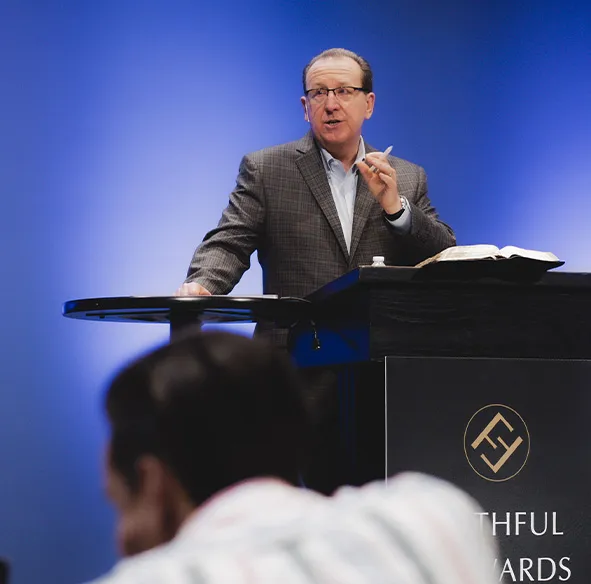
The preaching of God’s Word is central to the life of the church. Tom's pulpit ministry is dedicated to providing clear, biblical teaching to equip believers, strengthen faith, and exalt Christ.


Engage with the most recent teaching from God’s Word.
The preaching of God's Word is central to worship and of the utmost importance for the sanctification of every believer in Christ.

.jpg)
.jpg)

Explore messages organized to help you grow in Christ.
Search and filter sermons for quick access.
No One Like Him - Part 2
Pastor Tom Pennington opens by critiquing casual perceptions of God, asserting His unparalleled uniqueness, and reiterates God is a distinct, living, infinite, and spiritual being, not an impersonal force. He emphasizes that God is **personal**: rational, self-aware, and self-determining, consistently acting according to His will. God is also deeply relational, actively engaging with His creation, answering prayers, and comforting. Jesus Christ is presented as the greatest proof of God's personal nature, demonstrating divine relationality first within the Trinity and then with humanity, setting a pattern for our own relationships. The discourse then introduces the **Trinity**, explaining it as a profound mystery rather than a contradiction, supported by biblical data: God is one, Christ is God, and Christ is distinct from the Father. Pennington refutes common heresies, including Tritheism (three gods), Modalism (one God in three roles), and Subordinationism (denying Christ�s deity). The orthodox definition posits one divine being with three distinct "persons"�Father, Son, and Holy Spirit�each equally possessing God�s essence but having distinct centers of consciousness. Old Testament "hints" of this include plural pronouns like "Let Us make man" and the plural Hebrew word "Elohim" used with plural verbs.
Riches to Rags - Part 2
The sermon "Riches to Rags (Part 2)" emphasizes the crucial role of doctrine in Christian living, arguing against the modern view that it is irrelevant or divisive. Pastor Tom Pennington explains that doctrine, defined as articulate statements of biblical facts and their life implications, forms the foundation for practical application, with all sin ultimately traceable to doctrinal error. The central message of Philippians 2:5-8, a supreme doctrinal lesson, highlights Christ's profound humility through "four giant steps down." First, though "always" fully God and equal with God, He "chose" to empty Himself (kenosis), laying aside His glory and restricting His divine attributes. Second, He "became" a bond-servant, taking on full humanity�the "likeness of men." This "hypostatic union" means He was truly God and truly man, without sin, and without confusion or change of natures. Third, He "endured" ultimate humiliation, becoming obedient to the point of death, even the shameful and accursed death on a cross. This profound doctrine has significant implications for believers: Christ defeated death, serves as our High Priest, satisfied God's wrath, helps us in temptation, redeemed us from the law, reconciled us to God, sympathizes with our weaknesses, and revealed God to us.
Riches to Rags - Part 1
The sermon introduces the "riches to rags" narrative through the story of Russia's Grand Duchess Olga Romanov, who descended from immense privilege to die in poverty, contrasting it with our natural preference for "rags to riches" stories. Pastor Tom Pennington then presents Philippians 2:5-8 as the ultimate "riches to rags" account: the voluntary self-humbling of Jesus Christ. This passage is foundational for understanding unity and humility among believers, with Christ serving as the supreme example. Jesus, who eternally existed "in the form of God" and was "equal with God"�possessing all divine attributes�did not selfishly cling to these privileges. Instead, He "emptied Himself" (kenosis). This act wasn't a divestment of His deity, but rather a veiling of His pre-incarnate glory and a voluntary restriction of the independent use of His divine attributes for personal ease. He chose to pour Himself out, taking the "form of a bond-servant" and becoming "in the likeness of men," demonstrating profound condescension. This divine example yields three practical applications for believers: it reshapes our understanding of God as a giving Father, cultivates immense gratitude and motivates faithful service, and primarily, it compels us to adopt Christ's selfless mindset.
No One Like Him - Part 1
In "No One Like Him (Part 1)," Tom Pennington emphasizes God's unparalleled nature, drawing extensively from Isaiah to illustrate that there is no one like Him, contrasting Him sharply with lifeless pagan idols. He contends that idolatry encompasses not only worshipping false gods but also worshipping the true God in unprescribed ways or through images, asserting that thinking wrongly about God constitutes "mental idolatry." Pennington clarifies God's identity by first outlining what He is not, refuting atheism, pantheism (where God is synonymous with creation), polytheism, and other monotheistic faiths whose deities, he argues, are often influenced by demons. He then defines God's true nature: God is a distinct, living being, separate from creation. He is infinite, meaning His attributes are unlimited and perfect in quality. Crucially, God is Spirit�immaterial, invisible, incorruptible, and immortal, lacking physical form or parts, and therefore cannot be perceived by the senses or represented by human constructs. This spiritual nature necessitates that genuine worship must be "in spirit and in truth," demanding sincere engagement from the worshipper's entire being and strict adherence to God's revealed Word for both its components and our understanding of His character.
If Christ Had Not Been Raised
Pastor Tom Pennington emphasizes the foundational importance of Christ's physical resurrection, recalling how 1 Corinthians 15 profoundly impacted him during a personal tragedy. Addressing the Corinthian church's skepticism, influenced by Greek dualism, Paul systematically argues against the denial of resurrection. Pennington outlines five tragic consequences if Christ had not been raised: there would be no legitimate gospel, making preaching vain; no reasonable faith, rendering belief worthless; no reliable revelation, as all witnesses, including Christ and scripture, would be liars; no real forgiveness, leaving believers in their sins; and no eternal life, meaning those who died in Christ would have perished. This would make believers "of all men most to be pitied." However, the sermon pivots with "But now Christ has been raised from the dead." This reality reverses all negative implications, establishing a trustworthy gospel, reasonable faith, reliable divine revelation, genuine forgiveness, and the certainty of eternal life. This truth calls believers to be steadfast, immovable, and abound in the Lord's work, and urges non-believers to repent and embrace Christ as Savior before facing Him as Judge.
Knowing God
This sermon, "Systematic Theology: Knowing God," underscores the vital importance of genuinely knowing God, contrasting it with the frustration of choosing the wrong paths. Pastor Tom Pennington identifies common, unfulfilling routes to knowing God, such as mystic encounters, mere ritual, pure emotional experiences, or detached academic study. He explains that while God is incomprehensible, He has graciously revealed Himself personally in a necessary, truthful, and limited way, adapted for our finite understanding. Knowing God is presented as the essence of eternal life (John 17:3), a treasure highly valued by biblical figures like Moses, David, and Paul, and prized supremely by God Himself. To truly know God means entering a father-child relationship through salvation and then diligently deepening that communion through spiritual growth, moving from spiritual infancy to maturity (1 John 2). This journey involves shifting focus from merely knowing doctrine to intimately knowing God's person. Ultimately, we can only know God through Jesus Christ, and this profound relationship is cultivated by diligently engaging with God's Word, fervent prayer for discernment, and fostering an intense, consuming desire for Him, akin to a desperate thirst for water in a desert.
No Results Found.
We couldn’t find anything matching your search.
Explore The Word Unleashed
Our ministry brings together expository preaching, theological precision, and practical application for the good of Christ's church and the daily living of Christ's people.
.webp)
Sermons
Listen to expository sermons that clearly teach God’s Word and guide you in daily living.

Radio
Tune in to gospel-centered programs that share biblical truth and strengthen your daily walk with Christ.
Training
Join courses and workshops designed to deepen your faith and equip you to serve others with biblical wisdom.
.webp)
From the Pastor's Desk
Read pastoral messages that encourage, instruct, and help you apply God’s Word to every part of your life.
.webp)
Hymns
Discover timeless hymns that lift your heart in worship and remind you of God’s abounding grace and faithfulness.
Podcasts
Stay rooted in Scripture through our podcast series.