Sermons That Exalt Christ
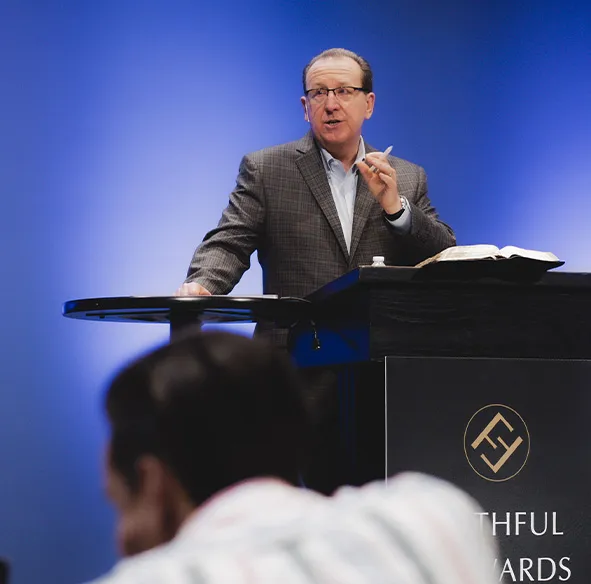
The preaching of God’s Word is central to the life of the church. Tom's pulpit ministry is dedicated to providing clear, biblical teaching to equip believers, strengthen faith, and exalt Christ.


Engage with the most recent teaching from God’s Word.
The preaching of God's Word is central to worship and of the utmost importance for the sanctification of every believer in Christ.

.jpg)
.jpg)

Explore messages organized to help you grow in Christ.
Search and filter sermons for quick access.
Somebody's Going to Pay!
The sermon highlights humanity's innate longing for justice, contrasting it with the pervasive injustice in a fallen world and the danger of doubting God's absolute righteousness. Pastor Tom Pennington asserts three inviolable principles of divine justice. First, no sin will ever undermine God's justice; He is the perfect Lawgiver, establishing a holy standard, and the righteous Judge, distributing deserved consequences. Second, no sin will ever escape God's notice; He is omniscient, aware of every action, word, and even secret thought, maintaining a precise record of all transgressions. Third, no sin will ever go unpunished. The speaker explains that people often doubt this due to misinterpreting God's patience as apathy or His goodness as sentimentality, forgetting His impartial judgment based on absolute obedience and internal motives. However, the good news of the Gospel offers a solution: because God's justice demands payment for every sin, individuals can either pay eternally themselves, or Christ can pay in their place. Through repentance and faith, believers receive forgiveness, as Christ's sacrifice on the cross cancelled their debt, demonstrating amazing grace in response to God's unwavering justice.
Did You Hear What I Said? - Part 1
Pastor Tom Pennington's sermon, "Did You Hear What I Said?", emphasizes communication as a foundational yet challenging aspect of marriage and family life. Beyond mere misstatements, the core issue lies in sinful and unwise speech choices. Drawing from Ephesians 4:25-32, particularly verse 29, Pennington outlines two essential mandates for Christian communication. Firstly, individuals must "carefully control" their mouths, allowing "no unwholesome word" to proceed. Citing Matthew 15, he explains that words originate from the heart, meaning genuine control requires addressing underlying sins like anger, vengeance, and selfishness. "Unwholesome" refers to anything rotten or unedifying, including critical words, gossip, and slander, which Christians are called to abandon. Secondly, the ultimate goal of Christian words must be "edification"�building others up for their spiritual growth. This involves speaking timely, appropriate, and even difficult truths, always "aimed at the problem, not the person." Such edifying communication necessitates active, empathetic listening, free from self-centered motives. Ultimately, our speech should "give grace to those who hear," serving as conduits of God's redemptive love. Pennington warns that failing to speak in this manner grieves the Holy Spirit, and our words, as a direct reflection of our souls, will ultimately justify or condemn us before God.
The Dark Side: The Truth about Satan and Demons
Tom Pennington's sermon "The Dark Side: The Truth about Satan and Demons" explores the biblical reality of these entities, contrasting it with modern disbelief. He highlights that while most Americans believe in God, far fewer believe Satan is a real being, a perception shift partly attributed to historical attempts to ridicule the devil. The sermon asserts that Satan and demons are real, powerful, and intelligent fallen angels. Satan, once a beautiful cherub, fell due to pride and self-promotion, leading a rebellion that included many angels who became demons. Their core activities involve encouraging sin, establishing a counterfeit kingdom by controlling worldly mindsets and values, promoting all false religions as demonic deceptions, perverting true worship by introducing false Christs and gospels, hindering the spread and comprehension of the gospel, and undermining the faith of true Christians. Pennington cautions against three dangers: denying their existence, seeing them behind every minor trouble, and believing they operate outside God's control. He emphasizes that God is completely sovereign, using Satan as a "dog on a leash." Satan's ultimate defeat was prophesied, accomplished at the cross, and will be fully executed in the future.
Diamonds Aren't Forever
This Mother's Day sermon contrasts society's ever-shifting ideals for women with God's blueprint for a "woman of excellence" found in Proverbs 31. The speaker emphasizes that a noble woman is characterized by unwavering trustworthiness in her marriage, diligently working for her family with delight, and demonstrating financial wisdom in her household. Beyond her immediate family, she makes generous provision for the poor and needy. She embodies excellence in all her endeavors, which brings honor to her husband and household. Her character is marked by moral strength, dignity, faith, and kind wisdom, reflecting diligent attention to her soul. Ultimately, her dedication to fearing the Lord, rather than pursuing deceptive charm or vain beauty, earns her praise from her children, husband, and most importantly, from God himself, whose commendation is truly lasting. The sermon challenges women to abandon cultural pressures and embrace this biblical mission, striving to become the kind of woman God honors, whose worth far surpasses jewels.
Angels: The Ministers of God
The sermon introduces the doctrine of angels, opening with a compelling story of their unseen protection during the Mau Mau uprisings. Angels are presented as real, created spirit beings, affirmed by Christ and mentioned over 250 times in the Bible. They are innumerable, powerful, intelligent, emotional, moral, finite yet immortal, and highly organized into classes like archangels (Michael), cherubim (God�s throne bearers), and seraphim (constant worshipers). Their ministry is multifaceted: they worship and obey God, were deeply involved in Christ's earthly life, announce and execute God's judgment on unbelievers, and serve believers as "ministering spirits." For us, angels provide physical protection and provision, assist with prayer and gospel dissemination, offer encouragement, observe our lives, and escort souls to heaven. The doctrine underscores that an unseen world is profoundly real, with angels actively observing our lives and serving as examples of obedience and worship. Their existence also demonstrates God's sovereign electing grace and highlights humanity�s unique, privileged place in God�s redemptive plan�a salvation angels long to understand but will never experience. We are called to appreciate these divine ministers, not to worship them.
The Ultimate Husband - Part 2
In "The Ultimate Husband (Part 2)," Pastor Tom Pennington explores Ephesians 5:25-33, challenging Christian husbands to model their love for their wives after Christ's love for the church. This "mega-mystery" of marriage serves as a profound object lesson, vividly depicting Christ's relationship with His church. Pennington outlines four essential qualities of this Christ-like love. First, husbands are to demonstrate a **sacrificial love**, selflessly giving themselves up for their wives, just as Christ served the church. Second, a **sanctifying love** requires husbands to lead by personal holiness, actively protecting their wives from sin and temptation, and diligently promoting their spiritual growth by being the spiritual leaders and "resident theologians" in their homes. Third, a **nourishing love** means caring for wives as one cares for one's own body, providing for all physical needs, including food, clothing, and sexual intimacy, recognizing the husband's primary role as provider. Finally, a **cherishing love** involves treating wives with tenderness, like a nursing mother. This practical application includes living with understanding, showing honor and respect, and consistently expressing love and appreciation, remembering that neglecting these aspects can hinder one's prayers.
No Results Found.
We couldn’t find anything matching your search.
Explore The Word Unleashed
Our ministry brings together expository preaching, theological precision, and practical application for the good of Christ's church and the daily living of Christ's people.
.webp)
Sermons
Listen to expository sermons that clearly teach God’s Word and guide you in daily living.

Radio
Tune in to gospel-centered programs that share biblical truth and strengthen your daily walk with Christ.
Training
Join courses and workshops designed to deepen your faith and equip you to serve others with biblical wisdom.
.webp)
From the Pastor's Desk
Read pastoral messages that encourage, instruct, and help you apply God’s Word to every part of your life.
.webp)
Hymns
Discover timeless hymns that lift your heart in worship and remind you of God’s abounding grace and faithfulness.

Podcasts
Stay rooted in Scripture through our podcast series.