Sermons That Exalt Christ
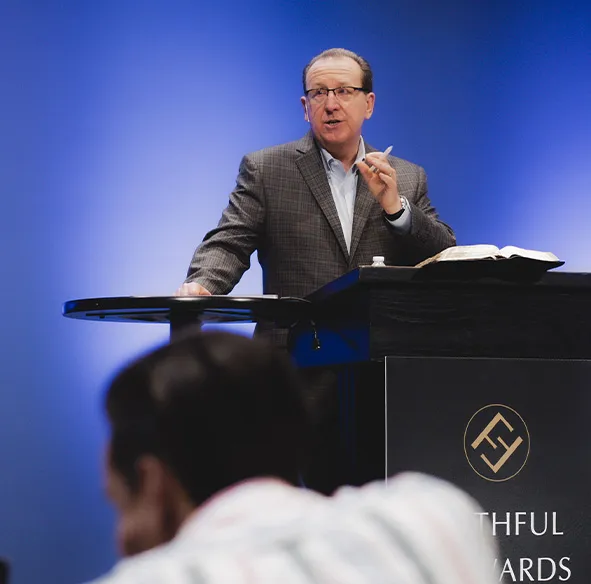
The preaching of God’s Word is central to the life of the church. Tom's pulpit ministry is dedicated to providing clear, biblical teaching to equip believers, strengthen faith, and exalt Christ.


Engage with the most recent teaching from God’s Word.
The preaching of God's Word is central to worship and of the utmost importance for the sanctification of every believer in Christ.

.jpg)
.jpg)

Explore messages organized to help you grow in Christ.
Search and filter sermons for quick access.
Bad to the Bone: A Study of Human Depravity - Part 1
Pastor Tom Pennington's sermon, "Bad to the Bone: A Study of Human Depravity (Part 1)," examines the immediate consequences of Adam and Eve's sin in Genesis 3. He uses the analogy of rapidly spreading yeast to illustrate how sin permeates everything with deadly results. The Fall led to several profound changes for humanity. First, the image of God in man was marred; moral accountability became a desire for freedom, truth was suppressed, worship redirected, minds darkened, creativity perverted, and relationships fractured. Second, real guilt and personal shame emerged, leading Adam and Eve to hide from each other and God. Third, their nature became morally corrupt, shifting from selfless concern to selfishness, evident in blaming God and each other. Fourth, fellowship with God was broken, resulting in mutual alienation and Adam's expulsion from Eden. Fifth, creation itself was cursed; the ground yielded thorns, and the entire cosmos was subjected to futility and corruption. Finally, divine punishment included: pain in childbirth and a desire for dominance for women; difficult, toilsome work for men; and physical death and spiritual separation from God for all mankind.
Don't Focus on the Family
Pastor Tom Pennington's sermon, "Don't Focus on the Family," based on Ephesians 6, argues that the ultimate goal for Christian families is to be God-centered, not self-centered or even family-centered. He highlights how parents often lose focus, prioritizing trivial rules or unbiblical objectives like skill development or academic achievement over spiritual formation. Pennington outlines two fundamental commands for achieving a God-centered family. First, children are commanded to "obey and honor parents in the Lord" (Ephesians 6:1-3). This involves willing submission to parental authority as an act of obedience to Christ, characterized by promptness, respect, and a wholehearted attitude, acknowledging that disobedience to parents is ultimately disobedience to God. Second, fathers (and mothers) are instructed "not to provoke your children to anger, but bring them up in the discipline and instruction of the Lord" (Ephesians 6:4). Parents are responsible for raising children with respect, avoiding common pitfalls such as inconsistent discipline, constant criticism, neglect, or an unhealthy focus on worldly achievements. Crucially, all discipline and instruction must reference God's authority, teaching children that their actions have eternal implications.
Our Darkest Hour
Pastor Tom Pennington's sermon "Our Darkest Hour" (Genesis 3:1-24) establishes that understanding humanity's fall is crucial for appreciating the gospel. He outlines five stages of sin's progression, beginning in Eve's heart: doubt of God's goodness, resentment of His restrictions, unbelief in His Word, pride in desiring to be like God, and finally, the act of disobedience by eating the forbidden fruit. This single act introduced sin and death into the world for all mankind. Despite this profound tragedy, Genesis 3 concurrently reveals three glimmers of God's grace. First, the proto-gospel promise of a "seed" (Christ) from the woman who will crush Satan's head (Genesis 3:15). Second, God's mercy is evident in suspending immediate physical death, allowing Adam and Eve to live and have children. Third, God provided garments of skin, symbolizing salvation through the substitutionary death of an innocent for the guilty. These foundational truths in Genesis 3 represent the "seed form" of the cross and the gospel message, which believers celebrate at the Lord's table.
Did You Hear What I Said? - Part 3
In his sermon "Did You Hear What I Said? (Part 3)," Pastor Tom Pennington addresses the critical importance of conflict resolution in marriage and family, rooted in Ephesians 4:25-32. He explains that conflict is an inevitable part of human relationships, originating from simple disagreements, sin, pride, selfish desires, and our fallen nature. Pennington illustrates how seemingly trivial disputes can tragically escalate into devastating, long-lasting feuds, damaging churches, families, and marriages by fostering "confirmed hostility" and isolation. The destructive force underlying all conflict, he states, is ungodly anger. The biblical solution involves two key principles: first, "don't allow sinful anger to begin." Most human anger is sinful and counterproductive; instead, individuals should respond gently and humbly to prevent escalation. Second, "don't allow sinful anger to grow." This means resolving conflicts promptly, not letting "the sun go down on your anger." Unresolved anger, whether it leads to outbursts or silent resentment, builds walls between people and offers the devil an "opportunity" for destruction through bitterness, revenge, and even spiritual peril. Pennington critiques unbiblical conflict resolution methods like winning at all costs, withdrawing, pretending, yielding out of fear, or superficial compromise. True resolution, he argues, requires "coming to be of one mind.
In His Image
This text delves into the systematic theology of man, focusing on the profound truth that humanity is uniquely created "in God's image" (**imago Dei**). This concept signifies that humans, unlike any other creation, possess inherent dignity and reflect God's character. The "image" and "likeness" are presented as a singular, emphatic concept, not distinct attributes. The pastor advocates for the Reformed view, which identifies two aspects of the imago Dei: natural endowments (rationality, emotion, moral responsibility), which were marred but retained after the Fall, and spiritual endowments (original righteousness, including true knowledge of God, moral rightness, and holiness), which were lost but are being restored through Christ. Regarding human composition, the sermon argues for dichotomy�man comprises a material body and an immaterial soul/spirit (terms used interchangeably), rejecting trichotomy (body, soul, spirit). This position emphasizes that the body is not inherently evil and that sanctification affects the entire person, while also cautioning against mysticism that separates spiritual experience from reason. Practically, being made in God's image means all people possess infinite dignity and equal value before God, surpassing the rest of creation in significance.
Did You Hear What I Said? - Part 2
In "Did You Hear What I Said? (Part 2)," Pastor Tom Pennington uses the tragic 1917 Halifax explosion, caused by a communication failure, to highlight the devastation ungodly speech can bring to relationships. Drawing from Ephesians 4:25-32, he outlines three foundational principles for Christian communication within marriage and family. First, "Choose your words carefully" (v. 29). Every word should edify, build up, and convey God's grace, recognizing that our mouths are instruments of Christ. Second, "Always speak the truth" (v. 25). Rejecting cultural dishonesty, believers must continually speak truth in love, using it to build others up, not to harm. Lying often arises from fear, pride, or guilt. Third, "Watch your attitude" (v. 31-32). Communication is poisoned by heart-rooted issues like bitterness, wrath, anger, shouting (clamor), slander, and malice. These destructive attitudes must be replaced by kindness, tenderheartedness, and forgiveness, reflecting God's profound forgiveness in Christ. This transformation requires surrendering to Christ's power, renewing our minds with His Word, and deliberately cultivating these godly attitudes.
No Results Found.
We couldn’t find anything matching your search.
Explore The Word Unleashed
Our ministry brings together expository preaching, theological precision, and practical application for the good of Christ's church and the daily living of Christ's people.
.webp)
Sermons
Listen to expository sermons that clearly teach God’s Word and guide you in daily living.

Radio
Tune in to gospel-centered programs that share biblical truth and strengthen your daily walk with Christ.
Training
Join courses and workshops designed to deepen your faith and equip you to serve others with biblical wisdom.
.webp)
From the Pastor's Desk
Read pastoral messages that encourage, instruct, and help you apply God’s Word to every part of your life.
.webp)
Hymns
Discover timeless hymns that lift your heart in worship and remind you of God’s abounding grace and faithfulness.

Podcasts
Stay rooted in Scripture through our podcast series.