Sermons That Exalt Christ
The preaching of God’s Word is central to the life of the church. Tom's pulpit ministry is dedicated to providing clear, biblical teaching to equip believers, strengthen faith, and exalt Christ.

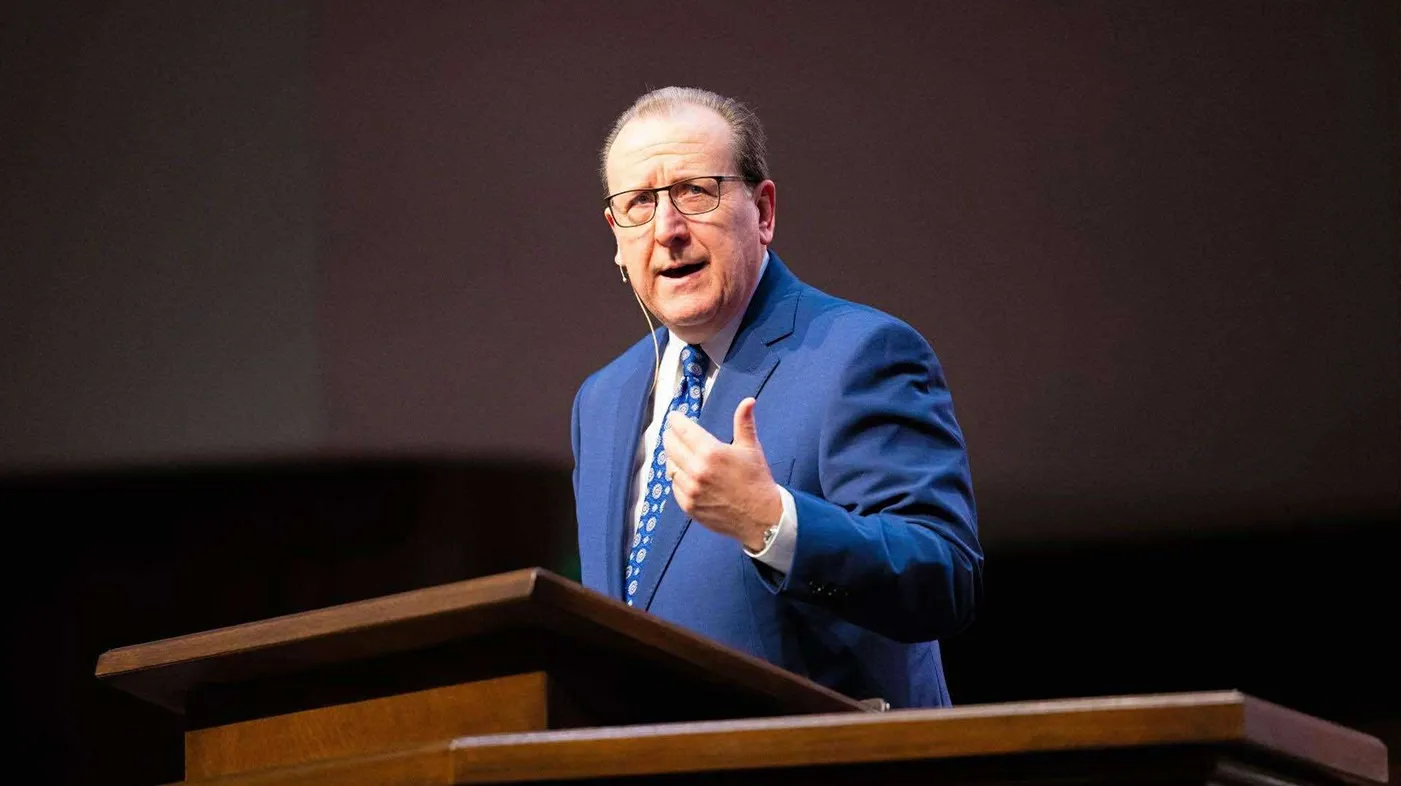
Engage with the most recent teaching from God’s Word.
The preaching of God's Word is central to worship and of the utmost importance for the sanctification of every believer in Christ.


Explore messages organized to help you grow in Christ.
Search and filter sermons for quick access.
Lord, Teach Us To Pray - Part 4
The sermon "Lord, Teach Us to Pray (Part 4)" from Matthew 6:5-15 underscores prayer's vital role in Christian life, focusing on the preface "Our Father who is in heaven." Pennington highlights three crucial attitudes for approaching God. First, we should pray as a **member of a family** ("Our Father"), recognizing our connection to others and praying for their needs, not just our own. It also means praying with Christ. Second, prayer must embody the spirit of a **child of a father** ("Our Father"). This involves awareness of our adoption, confident expectation of His gracious, loving response (surpassing any earthly father's), and humble submission to His will, as Jesus demonstrated. Third, we are to pray as a **subject of a king** ("who is in heaven"). This acknowledges God's transcendent majesty, absolute sovereignty, and infinite power, inspiring awe and a deep sense of unworthiness. Yet, it also fosters joyous expectation of His generosity. Cultivating these three attitudes ensures our prayers honor God and reflect our profound relationship with Him.
Declared Righteous!
Tom Pennington emphasizes that justification is the most crucial doctrine, the "hinge and pillar of Christianity," vital for the church's health and individual believers' spiritual well-being. Defined as "to declare righteous," justification is a singular, objective legal decision by God, the Judge, rather than an internal process of becoming righteous. Scripturally, it is evident that God justifies the "ungodly," meaning He declares them righteous while they are still ungodly, highlighting it as a declaration, not an inherent change. In justification, God performs three essential acts: He credits our sins to Christ, imputes Christ's perfect righteousness to us, and then legally declares us pardoned of all sins and forever righteous in His sight. This means we are treated not merely as if we had never sinned, but as if we had lived a perfectly obedient life. This "alien righteousness," which is not our own, is received solely through faith, not by any human effort, merit, or infused righteousness. Faith acts as an empty hand, receiving God's free gift made possible by Christ's sacrificial death and perfect life.
Lord, Teach Us To Pray - Part 3
This sermon, "Lord, Teach Us to Pray (Part 3)," from Matthew 6:5-15, emphasizes the profound importance and privilege of prayer. Inspired by George Mueller's miraculous life of prayer and personal experiences, Pastor Tom Pennington highlights that despite witnessing God's answers, believers often lack consistency in prayer. Jesus' teaching clarifies that prayer should not be motivated by seeking human reputation or divine merit, but by aligning with God's will, cooperating in His plan, and expressing utter dependence. The Lord's Prayer is presented as both a *model* or *pattern* for all prayers, encompassing essential categories, and as *acceptable words* for direct recitation, provided it's done thoughtfully, not as meaningless repetition. This segment specifically focuses on the prayer's preface: "Our Father who is in heaven." This biblical pattern of beginning with an invocation teaches believers to approach God with thoughtful "recollection," avoiding rushed, casual prayers. Approaching God "as a member of a family" means praying *for others* (emphasizing "us" over "me"), *with others* (following the early church's example of corporate prayer), and critically, *with Christ as our older brother*, whose concerns and intercessions align with these petitions for us.
Me? A Saint? A Study of Definitive Sanctification
This sermon by Tom Pennington explores definitive or positional sanctification, an event occurring at the moment of a believer's salvation. Contrasting with the Roman Catholic process of earning sainthood, Pennington emphasizes that every genuine believer is instantly a "saint"�a holy one set apart by God. This sanctification is distinct from progressive (ongoing) or ultimate (future) sanctification. Biblical arguments for this truth include the consistent labeling of believers as "saints," scriptural references to believers "having been sanctified" as a past event, and the declaration that believers have "died to sin" through union with Christ. Definitive sanctification involves three key elements: believers are set apart from sin unto God (like a special possession), the dominion and mastery of sin over their lives is broken, and they are granted a new ability and desire to obey God and pursue righteousness. The practical implication, highlighted in Romans 6, is foundational for pursuing holiness. Paul argues that because believers have died to sin with Christ and been raised to new life, they are commanded to "consider" themselves dead to sin and alive to God, and to "present" their bodies as instruments of righteousness.
Lord, Teach Us To Pray - Part 2
The speaker identifies widespread confusion about prayer, exemplified by "emerging church" practices like the labyrinth. He emphasizes that despite common ignorance, Scripture, particularly Matthew 6:5-15 (the Lord's Prayer), clearly teaches how to pray. This sermon focuses on two wrong motives for prayer. First, seeking a reputation with others, as hypocrites do by praying publicly to be seen. Jesus warns against loving attention for self-promotion, urging private prayer in an "inner room" to the Father who sees in secret, promising His reward. Second, seeking to gain merit with God through "meaningless repetition" or "babbling," mistakenly believing many words obligate God to listen. This is seen in practices like the prophets of Baal or modern prayer wheels. Jesus clarifies that God hears prayers not due to our efforts, but by His grace, through Christ, who makes us acceptable. Prayer doesn't change God's immutable plan but changes *us*, aligning us with His eternal purpose. Our motives should be to cooperate with God's sovereign plan through our requests and to express our absolute dependence on Him for everything. The depth of our humility is reflected in what we bring to God in prayer.
Lord, Teach Us To Pray - Part 1
In "Lord, Teach Us to Pray (Part 1)," Tom Pennington initiates a New Year's focus on prayer, noting that despite God's ever-attentive ear, most Christians pray very little. He dismisses common excuses like lack of time, feeling, focus, or visible results as superficial. Instead, Pennington identifies the true reasons for prayerlessness: a failure to grasp prayer's immense importance, a lack of diligence in disciplined practice and meditation on God's Word, and fundamentally, simple disobedience to clear biblical commands. Drawing insights from Luke 11:1, he highlights four implications from Jesus' prayer life: prayer was crucial to Christ's earthly ministry, it requires deliberate time, it does not come naturally to us, and it is a learnable skill. Jesus consistently modeled a life immersed in prayer, demonstrating its necessity even for the "perfect man." The sermon anticipates an upcoming study of the Disciples' Prayer (Matthew 6, Luke 11) to teach believers *how* to pray effectively. Pennington urges listeners to make a New Year's resolution to commit to daily, deliberate prayer at set times, acknowledging that this spiritual discipline ultimately benefits the individual by fostering dependence on God.
No Results Found.
We couldn’t find anything matching your search.
Explore The Word Unleashed
Our ministry brings together expository preaching, theological precision, and practical application for the good of Christ's church and the daily living of Christ's people.

Sermons
Listen to expository sermons that clearly teach God’s Word and guide you in daily living.

Radio
Tune in to gospel-centered programs that share biblical truth and strengthen your daily walk with Christ.
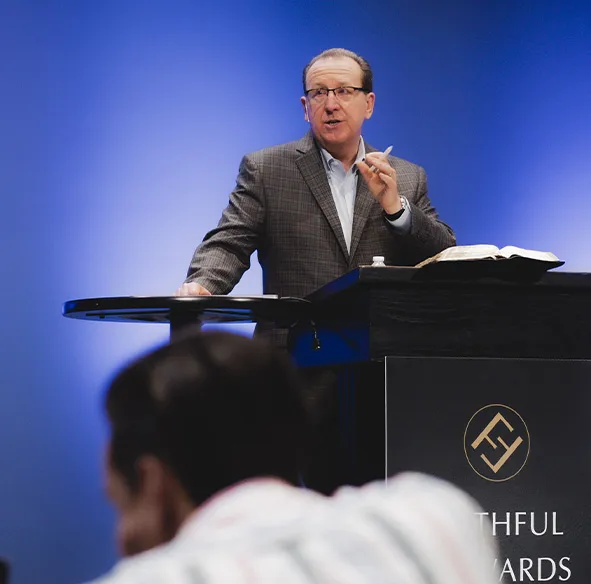
Training
Join courses and workshops designed to deepen your faith and equip you to serve others with biblical wisdom.

From the Pastor's Desk
Read pastoral messages that encourage, instruct, and help you apply God’s Word to every part of your life.

Hymns
Discover timeless hymns that lift your heart in worship and remind you of God’s abounding grace and faithfulness.
Podcasts
Stay rooted in Scripture through our podcast series.