Sermons That Exalt Christ
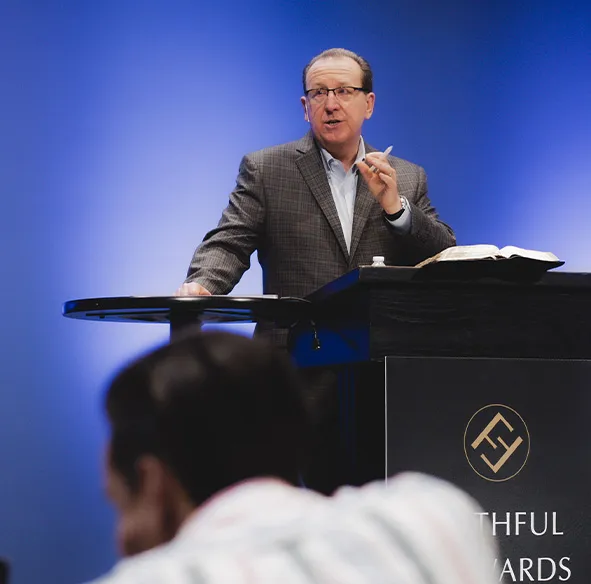
The preaching of God’s Word is central to the life of the church. Tom's pulpit ministry is dedicated to providing clear, biblical teaching to equip believers, strengthen faith, and exalt Christ.


Engage with the most recent teaching from God’s Word.
The preaching of God's Word is central to worship and of the utmost importance for the sanctification of every believer in Christ.

.jpg)
.jpg)

Explore messages organized to help you grow in Christ.
Search and filter sermons for quick access.
Sanctification: The Process of True Biblical Change - Part 2
Tom Pennington defines sanctification as the "process of true biblical change," distinct from spiritual activities, emotional experiences, rule-following, or avoiding overt sin. It's not merely accumulating knowledge or outward reformation, which he calls "utterly defeating." Instead, sanctification involves both a definitive setting apart at salvation and a progressive, ongoing work of God's grace to morally purify a believer's entire nature. Pennington outlines nine biblical propositions: it's made possible by Christ's work, entirely a work of God (we cannot change ourselves at a heart level), yet demands maximum human effort. Sanctification is a lifelong process, not a sudden event, and involves a constant inner spiritual war that continues until death or Christ's return; perfection is not achieved in this life. It's a means to an end�to glorify God and enjoy fellowship with Him�and fundamentally a renovation of the heart, not just behavior. Finally, our sanctification is guaranteed by God as the ultimate goal of our salvation. Crucially, God produces this change *through means*, specifically "the truth" or His Word.
Your Will Be Done
Pastor Tom Pennington's sermon, "Lord, Teach Us to Pray (Part 7)," explores the third petition of the Lord's Prayer: "Your will be done." Citing the martyrdom of missionaries John and Betty Stam, Pennington highlights this as a prayer centered on God's glory, not human desires, alongside "Hallowed be Your name" and "Your kingdom come." To genuinely pray "Your will be done" means to seek three spiritual results. First, a deliberate rejection of all other wills�Satan's, others', and crucially, our own will, which is often the greatest antagonist to God's plan and requires daily self-denial. Second, it signifies an unconditional acceptance of God's sovereign will, His eternal and unchangeable plan. This involves trusting God's character and purposes in all circumstances, from major life events to daily interruptions, even when understanding is lacking, as exemplified by Habakkuk. Third, it demands willing obedience to God's revealed will, which is clearly laid out in Scripture. The phrase "on earth as it is in heaven" emphasizes a desire for perfect obedience to God's commands, mirroring the obedience of angels in heaven. God's revealed will includes being saved, Spirit-filled, sanctified, submissive, grateful, and willing to suffer for Christ.
Sanctification: The Process of True Biblical Change - Part 1
In "Sanctification: The Process of True Biblical Change (Part 1)," Pastor Tom Pennington highlights the inadequacy of many common approaches to spiritual growth by comparing them to outdated 18th-century medical remedies. He asserts that true biblical change, or sanctification, is *not* achieved through mere participation in spiritual activities, having emotional experiences, adhering to a set of rules, avoiding overt sins, performing good deeds, or simply accumulating biblical knowledge. These methods, Pennington argues, are often superficial and fail to bring genuine inner transformation. Instead, sanctification is defined as God's ongoing work, through His Spirit, that continuously delivers justified believers from the pollution of sin, renews their nature in the image of God, and enables them to increasingly die to sin and live righteously. This profound process is made possible solely by the work of Christ and is entirely a work of the Triune God (Father, Son, and Spirit). However, Pennington emphasizes that sanctification also demands maximum human effort and discipline, as believers are commanded to "discipline yourself for the purpose of godliness" and "work out your own salvation." This creates a crucial dynamic where God produces the change as humans expend their utmost effort.
Your Kingdom Come
Pastor Tom Pennington's sermon, "Lord, Teach Us to Pray (Part 6)," explores the second petition of the Lord's Prayer: "Your kingdom come" (Matthew 6:10). He posits that truly praying this petition requires understanding three crucial spiritual realities. First, we must acknowledge the "clash of kingdoms." This includes Satan's kingdom, which exerts influence over the world's values, systems, and unbelievers, and the "kingdom of self," where individuals prioritize their own desires over God's. Both stand in opposition to God's divine rule. Second, the "character of God's kingdom" has both a present and a future dimension. The present aspect is God's spiritual rule in the hearts of those who repent and believe in Jesus Christ, the "realm of salvation." Praying "Your kingdom come" in this sense is an evangelistic prayer, seeking the conversion of more souls. The future aspect anticipates Christ's literal, physical reign on Earth for a thousand years, followed by an eternal kingdom, for which believers eagerly await His return.
Adopted By God
This sermon unpacks the doctrine of adoption, a central tenet of Christian systematic theology, emphasizing it as an amazing act of God's redeeming love. It highlights that while God is the creator of all, before conversion, humanity is spiritually aligned with Satan, identified as "children of wrath," and in desperate need of a new spiritual family. Adoption is a legal and divine act, predestined in eternity past, accomplished through Christ's death, and applied to believers at the moment of salvation through faith. The Holy Spirit, referred to as the "spirit of adoption," assures believers of their new status, enabling them to cry out, "Abba! Father!" The full realization of this adoption awaits the future glorification of their bodies. This profound privilege brings immense benefits: God becomes a loving, compassionate Father; Christ becomes our older brother and co-heir; and believers become members of God's eternal family, inheriting eternal life and God Himself. The Holy Spirit provides confidence in God's love and guidance, and even God's discipline is a sign of His fatherly care.
Hallowed Be Your Name
The sermon, "Lord, Teach Us to Pray (Part 5)," begins by highlighting God's demand for holiness from those who approach Him, exemplified by the swift judgment on Nadab and Abihu for offering "strange fire" in Leviticus. This principle underpins Jesus' model prayer in Matthew 6:9-13, which is structured around six petitions: God's glory, work, and will, followed by our daily needs, sin confession, and pursuit of holiness. The speaker emphasizes that the first three petitions focus entirely on God, stressing the critical importance of prioritizing His glory. "Hallowed be Your Name," the initial petition, means to sanctify, set apart, and glorify God's entire being�His person, essence, attributes, and actions. This petition is paramount because God judges severely those who fail to honor Him (e.g., Nadab and Abihu, Moses, Belshazzar), and His glory is the ultimate purpose of both creation and redemption. We are called to hallow God's name by speaking reverently of Him, praising and thanking Him, thinking rightly about Him, responding in faith to Jesus Christ, living righteously, loving and serving other Christians, trusting Him through trials, and committing our lives to His glory.
No Results Found.
We couldn’t find anything matching your search.
Explore The Word Unleashed
Our ministry brings together expository preaching, theological precision, and practical application for the good of Christ's church and the daily living of Christ's people.
.webp)
Sermons
Listen to expository sermons that clearly teach God’s Word and guide you in daily living.

Radio
Tune in to gospel-centered programs that share biblical truth and strengthen your daily walk with Christ.
Training
Join courses and workshops designed to deepen your faith and equip you to serve others with biblical wisdom.
.webp)
From the Pastor's Desk
Read pastoral messages that encourage, instruct, and help you apply God’s Word to every part of your life.
.webp)
Hymns
Discover timeless hymns that lift your heart in worship and remind you of God’s abounding grace and faithfulness.
Podcasts
Stay rooted in Scripture through our podcast series.