Sermons That Exalt Christ
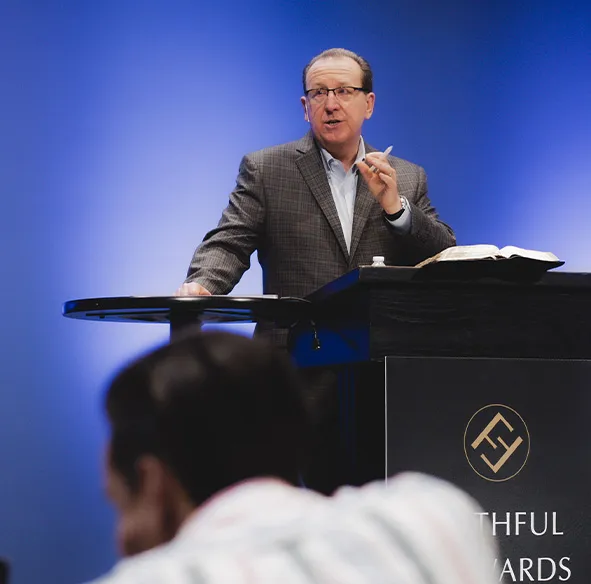
The preaching of God’s Word is central to the life of the church. Tom's pulpit ministry is dedicated to providing clear, biblical teaching to equip believers, strengthen faith, and exalt Christ.


Engage with the most recent teaching from God’s Word.
The preaching of God's Word is central to worship and of the utmost importance for the sanctification of every believer in Christ.

.jpg)
.jpg)

Explore messages organized to help you grow in Christ.
Search and filter sermons for quick access.
Lost & Found: The Biblical Priority of Church Discipline
Pastor Tom Pennington's sermon, "Lost & Found: The Biblical Priority of Church Discipline," highlights the often-neglected practice outlined in Matthew 18:15-20 as a crucial rescue mission for believers caught in sin. He asserts that this "counterintuitive" command must be prioritized over cultural comfort or personal preferences, emphasizing obedience to biblical teaching. Church discipline applies when a professing Christian sins within one's sphere of influence, with exceptions for forgivable personal wrongs, non-clear biblical violations, or the confronter's unrepented sin. The process demands attitudes of genuine love, eagerness to forgive, gentleness, and humility. The four-step process involves: 1) Private confrontation, urging repentance. 2) Private confirmation with one or two witnesses if the initial attempt fails. 3) Public proclamation to the church (via elders) if the individual remains rebellious, prompting collective persuasion. 4) Final excommunication, where unrepentant individuals are treated as unbelievers by the church. This discipline aims to restore the sinning Christian, create shame, deliver them to Satan for the destruction of their flesh (ultimately to save their soul), keep the church pure, and instill a healthy fear of sin among members.
Sanctification: The Process of True Biblical Change - Part 4
Tom Pennington's sermon defines sanctification as God's ongoing work of grace, delivering justified sinners from sin's pollution, renewing them in God's image, and enabling them to live righteously. He contrasts this biblical process with ineffective "homemade remedies" and "crisis moments" for change. Drawing from John 17:17 ("Sanctify them in the truth; Your word is truth") and Ephesians 4:22-24, Pennington outlines three essential steps: "put off" the old, sinful self; "be renewed in the spirit of your minds"; and "put on" the new, Christ-like self. The "renewal of the mind" is crucial�it's the hinge distinguishing true biblical change from mere self-reformation. This continuous, passive work of the Holy Spirit, occurring through consistent reading, study, and meditation on Scripture, transforms our thinking. Sanctification operates on a "replacement principle": every vice has a corresponding biblical virtue. To overcome a sin (e.g., lying), one must actively replace it with its opposite virtue (truth-telling). Practically, this involves identifying personal vices and their heart-level roots, thoroughly studying Scripture concerning both the vice and its virtue, journaling to understand sin patterns, and creating a concrete plan to "put off" old habits and "put on" new, godly ones.
Lead Us Not Into Temptation
In the tenth and final part of a series on the Lord's Prayer, Pastor Tom Pennington focuses on Matthew 6:13: "Lead us not into temptation, but deliver us from evil." This petition is a fervent prayer for personal holiness. Pennington identifies temptation as the chief enemy, clarifying it as a "solicitation to sin" rather than a divine test. Its three sources are our own sinful flesh, Satan and his demonic forces, and the world's organized system of evil (manifested as the lust of the flesh, eyes, and pride of life). To genuinely pray this petition, believers must cultivate a hatred for sin, a spirit of dependence on God, and a deep longing for holiness. The prayer's negative side asks God for providential protection, preventing us from succumbing to temptations He permits. The positive side, "deliver us from evil," is a plea for God to actively transform us, producing righteousness and the fruit of the Spirit in our lives. Practical applications include developing these prerequisite attitudes, identifying and avoiding temptations, and consistently praying for both personal and corporate holiness, using the Lord's Prayer as a daily guide.
Sanctification: The Process of True Biblical Change - Part 3
This sermon, "Sanctification: The Process of True Biblical Change," defines sanctification as God's free grace continuously delivering justified sinners from sin's pollution, renewing their nature, and enabling them to live righteously. It emphasizes that this is a lifelong work of God, yet requires maximum human effort, involves an ongoing internal struggle, and is ultimately guaranteed. The speaker critiques flawed views, such as Wesleyan perfectionism and Keswick teaching, which suggest sudden, effortless spiritual transformation. The biblical view asserts that God typically uses means for sanctification, rejecting unbiblical methods like isolation (e.g., monasticism, avoiding unbelievers) or asceticism (depriving oneself of good gifts or inflicting pain). The primary means God uses is "the truth"�His entire Word. While other life circumstances and spiritual activities can contribute, their sanctifying effect is only realized when interpreted and applied through the Word of God. The Word itself is a tool in God's hand, effective only as the Holy Spirit causes it to work. The practical process of biblical change, outlined in Ephesians 4, involves three steps. First, believers must "lay aside" (put off) the old self�the person and sinful habits associated with life before Christ, recognizing that this old self died with Christ.
Forgive Us Our Debts
Pastor Tom Pennington's sermon on Matthew 6:12, "Forgive Us Our Debts," highlights that our spiritual debt to God is a far more critical issue than financial indebtedness. He explains that Jesus outlines three crucial elements for properly addressing sin in our lives. First, we must acknowledge our ongoing sinfulness. "Debts" metaphorically represents our constant failure to render perfect obedience to God, leading to spiritual bankruptcy through both sins of omission and commission. Even after receiving the "bath" of justification at salvation, daily sin necessitates a "foot washing"�daily confession to maintain close fellowship with God, our Father. Second, understanding the nature of forgiveness is vital. Forgiveness means God "sends away" or "lets go" of our debt. God is inherently good, eager, and faithful to forgive, but this forgiveness is entirely based on Christ's atoning death, which paid the price for our sins, not on human merit. Third, a non-earning condition for receiving daily forgiveness is our willingness to forgive others. This act doesn't earn God's grace but serves as evidence that we have truly experienced His saving forgiveness. An unforgiving heart, Jesus warns, indicates a lack of genuine understanding of God's mercy towards oneself.
Give Us Our Daily Bread
In his sermon "Give Us Our Daily Bread" (Matthew 6:11), Pastor Tom Pennington dissects the fourth petition of the Lord's Prayer, revealing four essential spiritual lessons for believers. First, it�s a **lesson in grace** ("Give"). Everything we have, including the ability to work and the sustenance for life, is a direct gift from God's undeserved kindness, not solely our own effort. Second, it's a **lesson in love** ("Give us"). The plural "us" mandates praying not only for personal needs but also for the needs of family, fellow believers, and all humanity, fostering a communal responsibility. Third, it's a **lesson in reliance** ("Give us this day"). We are called to depend humbly on God for each day's necessities, rejecting worry for tomorrow or trust in material possessions, which are transient. Our confidence should be solely in Him. Finally, it's a **lesson in contentment** ("our daily bread"). "Bread" symbolizes all physical needs. We should be content with God's daily provision, avoiding excessive accumulation. If blessed with abundance, the Christian response is generosity and good works. This petition underscores God's deep and personal care for our everyday lives.
No Results Found.
We couldn’t find anything matching your search.
Explore The Word Unleashed
Our ministry brings together expository preaching, theological precision, and practical application for the good of Christ's church and the daily living of Christ's people.
.webp)
Sermons
Listen to expository sermons that clearly teach God’s Word and guide you in daily living.

Radio
Tune in to gospel-centered programs that share biblical truth and strengthen your daily walk with Christ.
Training
Join courses and workshops designed to deepen your faith and equip you to serve others with biblical wisdom.
.webp)
From the Pastor's Desk
Read pastoral messages that encourage, instruct, and help you apply God’s Word to every part of your life.
.webp)
Hymns
Discover timeless hymns that lift your heart in worship and remind you of God’s abounding grace and faithfulness.

Podcasts
Stay rooted in Scripture through our podcast series.