Sermons That Exalt Christ
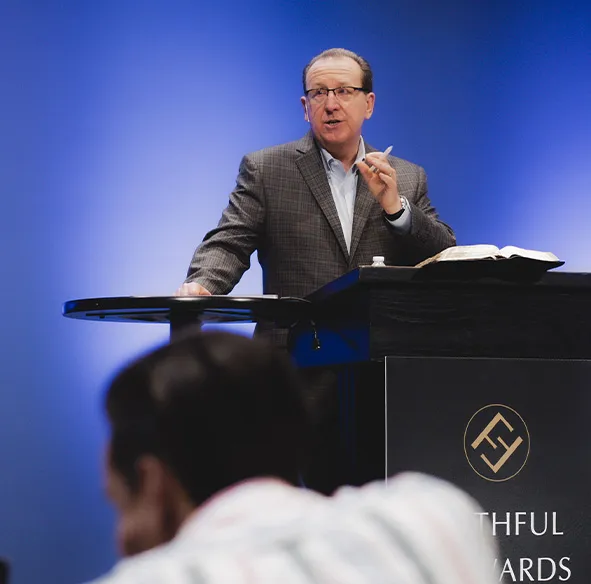
The preaching of God’s Word is central to the life of the church. Tom's pulpit ministry is dedicated to providing clear, biblical teaching to equip believers, strengthen faith, and exalt Christ.


Engage with the most recent teaching from God’s Word.
The preaching of God's Word is central to worship and of the utmost importance for the sanctification of every believer in Christ.

.jpg)
.jpg)

Explore messages organized to help you grow in Christ.
Search and filter sermons for quick access.
The Cross' Commentary on Man
Tom Pennington's sermon on Matthew 27:33-44 presents the crucifixion not as Jesus's trial, but as humanity's, where diverse groups converged, united by their hatred or indifference towards Christ. The gospel writers emphasize the crowd's reactions, inviting readers to see themselves reflected in this scene. Pennington identifies five categories of people present: the **distracted**, too busy with life to care; the **profane** Roman soldiers, who callously mocked Jesus; the **fickle** passersby, who previously praised Him but quickly turned hostile when He didn't meet their expectations; the **religious** leaders, whose deep-seated hatred persisted despite witnessing His miracles; and even the **robbers**, condemned men who joined in insulting Him. This widespread animosity, Jesus explains, stems from His presence revealing humanity's sin, leaving no excuse. Despite this overwhelming hatred, the sermon concludes with a powerful message of grace: individuals from each of these condemned groups�from Jerusalem's masses at Pentecost to the Centurion, one of the robbers, and many priests�later came to embrace Jesus as Lord and Savior. We are therefore urged to recognize our own place in that crowd and, through repentance and faith, find grace and forgiveness at the same cross that indicted humanity.
Assurance: Beyond the Shadow of a Doubt?
This text delves into the vital concept of assurance of salvation, asserting its foundational importance for spiritual growth and effective ministry, as exemplified by figures like John Wesley and C.H. Spurgeon. It establishes that while false assurance exists and true believers can experience doubt, God intends and commands His followers to possess certainty of their salvation. The author outlines several wrong paths to assurance, including reliance on religious rituals (like baptism), subjective feelings ("I just know I'm saved"), the affirmations of others (easy-believism), or past singular experiences. Instead, the biblical path involves two key elements: first, **resting in the clear promises of the gospel**, trusting God's word and Christ's finished work; and second, **examining the evidence in one's life**. This examination includes consistent obedience to God's word (covering theological accuracy, moral righteousness, and love for fellow believers, as detailed in 1 John) and the visible fruit of the Spirit (Galatians 5). The text warns against over-emphasizing either aspect, as focusing solely on promises can lead to superficiality, while exclusive self-examination can breed legalism and diminish joy. Doubt, even for genuine believers, may stem from disobedience, unaddressed guilt, or ignorance of salvation's depths.
Watch Your Mouth! - Part 2
This sermon on James 3:1-12 by Tom Pennington profoundly underscores the immense and lasting power of the tongue. He presents five critical reasons why controlling our speech is paramount for believers. First, our words condemn us, inviting stricter divine judgment, especially for those who teach. Second, the tongue controls us, acting like a small bit or rudder that directs the entire course of our lives, indicating that self-control in speech leads to overall life control. Third, our words corrupt us; the tongue is likened to a "fire" and "world of iniquity" that defiles our whole being and life's trajectory, fueled by hell itself, devastating both the speaker and others. Fourth, the tongue confronts us because, unlike any wild animal, it cannot be fully tamed; it remains a "restless evil" and "deadly poison" demanding constant vigilance. Finally, our tongues characterize us, revealing the true state of our hearts. It is utterly inconsistent for individuals to bless God and simultaneously curse fellow humans made in His image. Just as a single fountain cannot produce both fresh and bitter water, or a fig tree olives, our speech ultimately exposes our spiritual nature.
Watch Your Mouth! - Part 1
In his sermon on James 3:1-12, "Watch Your Mouth!", Tom Pennington stresses the profound importance of controlling our speech, arguing it's the most troublesome issue we face. He links an unbridled tongue to "worthless religion" (James 1:26), asserting that speech reliably indicates a transformed heart and genuine faith. Pennington presents two compelling reasons for this control. First, "Our tongues condemn us." Teachers face stricter judgment, and Jesus warns that every careless word will be accounted for, potentially leading to condemnation (Matthew 12). For believers, words impact rewards at the Judgment Seat of Christ (1 Corinthians 3). Second, "Our tongues control us." Mastering the tongue, James suggests, signifies spiritual maturity, enabling self-control in all life areas. Using analogies of a horse's bit and a ship's rudder, Pennington illustrates how a small part can direct the entire entity. He explains that the tongue, though tiny, boasts of controlling and guiding our entire lives, shaping our future actions and spiritual path. Unchecked speech reflects an untransformed heart and actively propels us towards sin, making conscious effort to control our words a vital strategy for pursuing Christ-likeness and overall godliness.
Kept by God: the Perseverance of the Saints
Tom Pennington's sermon, "The Perseverance of the Saints," emphasizes that salvation, from eternal election to eventual glorification, is entirely God's work of grace, ensuring true believers remain secure to the end. This doctrine does not mean believers are immune to sin, nor does it apply to all who merely profess Christ; many claim faith without truly knowing Him. Unlike Roman Catholic or Arminian views, the Reformed perspective teaches that God actively preserves those He genuinely saves. Perseverance involves both God's preservation and the believer's active perseverance in faith. God's divine role is evident in His unbreakable promises: Jesus will lose none the Father gives Him, no one can snatch believers from God's hand, and God will complete the good work He started. The Holy Spirit seals believers as a pledge of their inheritance, and Christ continuously intercedes for them. Biblical warnings about falling away are not meant to imply that true believers can lose salvation. Instead, they serve as divine *means* to ensure believers *will* persevere, prompting diligence in faith and obedience. Just as Paul warned sailors to stay on the ship despite a promise of survival, these warnings encourage genuine believers to remain on the path to heaven.
Drawing Near: The Daily Discipline of Time with God
Pastor Tom Pennington addresses the widespread struggle among Christians to maintain a consistent daily discipline of spending time with God, vital for progressive sanctification. He establishes its biblical priority by referencing Deuteronomy 17, which commanded kings to daily engage with God's law, and highlights the historical practice of godly figures like Martin Luther and the early church's continual devotion to teaching and prayer (Acts 2:42). Scripture, he emphasizes, is a God-given desire for believers (1 Peter 2:2) and is profitable for equipping them for every good work (2 Timothy 3:16-17). Practically, Pennington advises scheduling this time as a first morning activity in a quiet, light, and focused location, setting a reasonable duration, and committing to consistency for several months to establish a lasting habit. Essential elements include broad Bible reading, in-depth Bible study with meditation, varied prayer, and music. He suggests an order: a brief prayer, reflection on a Psalm, reading a significant Scripture portion, detailed study of a paragraph, and an extended prayer session. This daily discipline, rather than a spiritual shortcut, is God's primary method for fostering spiritual growth and victory in believers' lives.
No Results Found.
We couldn’t find anything matching your search.
Explore The Word Unleashed
Our ministry brings together expository preaching, theological precision, and practical application for the good of Christ's church and the daily living of Christ's people.
.webp)
Sermons
Listen to expository sermons that clearly teach God’s Word and guide you in daily living.

Radio
Tune in to gospel-centered programs that share biblical truth and strengthen your daily walk with Christ.
Training
Join courses and workshops designed to deepen your faith and equip you to serve others with biblical wisdom.
.webp)
From the Pastor's Desk
Read pastoral messages that encourage, instruct, and help you apply God’s Word to every part of your life.
.webp)
Hymns
Discover timeless hymns that lift your heart in worship and remind you of God’s abounding grace and faithfulness.

Podcasts
Stay rooted in Scripture through our podcast series.