Sermons That Exalt Christ
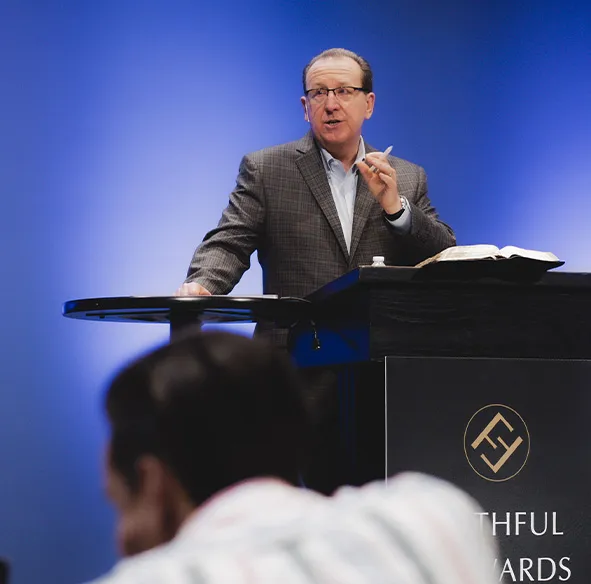
The preaching of God’s Word is central to the life of the church. Tom's pulpit ministry is dedicated to providing clear, biblical teaching to equip believers, strengthen faith, and exalt Christ.


Engage with the most recent teaching from God’s Word.
The preaching of God's Word is central to worship and of the utmost importance for the sanctification of every believer in Christ.

.jpg)
.jpg)

Explore messages organized to help you grow in Christ.
Search and filter sermons for quick access.
Wisdom from Hell vs. Wisdom from Heaven - Part 2
The text, "Wisdom from Hell vs. Wisdom from Heaven," highlights our inability to objectively evaluate our own culture or lives, akin to a fish not knowing it's wet. This necessitates an external, objective standard: God's eternal Word. The sermon examines James 3:13-18, contrasting "wisdom from heaven" with "wisdom from hell." Godly wisdom is paramount, defined by fearing God, understanding His ways, and practically applying them�essentially, a genuine relationship with Christ. It's acquired through a saving knowledge of Jesus, thorough study of the Bible, the influence of wise companions, and prayer. This true wisdom is evident in consistent "good behavior" (obedience to God's Word) and a heart characterized by "gentleness." This gentleness involves humble submission to God's will, accepting circumstances without complaint, and a gracious, kind spirit toward others, even in times of wrongdoing. In stark contrast, "wisdom from hell" (worldly wisdom) appears rational but is ultimately destructive. It encompasses every thought, attitude, and act contrary to God. Contemporary examples include self-fulfillment, self-sufficiency, self-definition, self-absorption, and moral relativism. This pervasive mindset, though seemingly wise, leads to foolishness.
Wisdom from Hell vs. Wisdom from Heaven - Part 1
Pastor Tom Pennington's sermon "Wisdom from Hell vs. Wisdom from Heaven, Part 1" highlights the cultural gap in understanding biblical texts, comparing it to humorous cross-cultural communication mishaps. Introducing James 3:13-18, which contrasts earthly and divine wisdom, Pennington first establishes the "categorical priority" of godly wisdom. He explains that biblical wisdom was historically valued above all earthly possessions, exemplified by Solomon's request and emphasized throughout scripture as crucial for protection, success, and divine favor. Biblical wisdom is defined not as mere academic knowledge (like Greek philosophy), but as a God-centered, practical "skill in living" that pleases Him. This includes three elements: fearing God as the life's controlling principle, understanding His revealed ways and attributes, and possessing the practical ability to apply God's Word to one's life, resulting in righteous conduct. This essential wisdom is acquired through a saving knowledge of Jesus Christ, diligent study of God's Word, cultivating relationships with wise companions, and consistent prayer. Prioritizing and actively seeking this divine wisdom is paramount for every believer.
The Great Debate: Calvinism & Arminianism
The text explores the historical and theological debate between Calvinism and Arminianism, emphasizing its contentious nature. It traces the roots of the discussion from Augustine vs. Pelagius, through the Reformation figures like Calvin, to the Synod of Dort (1618), which codified the "five points of Calvinism" (TULIP) as a response to Arminian articles. At its core, the debate asks who initiates salvation, who is sovereign over it, and who accomplishes regeneration. Calvinism posits God's sole initiative and sovereignty (monergism), while Arminianism emphasizes human free will and cooperation (synergism). The TULIP acronym summarizes Calvinist doctrines: **Total Depravity** (humanity is spiritually dead and unable to save itself without God); **Unconditional Election** (God chose individuals for salvation based solely on His will, not foreseen merit); **Limited (Definite) Atonement** (Christ's death effectively secured salvation for the elect); **Irresistible (Effectual) Grace** (God's Spirit infallibly draws the elect, making them willing to believe); and **Perseverance of the Saints** (God preserves the elect in faith to the end). Arminianism contrasts these points by emphasizing man's ability to believe through "prevenient grace," election based on foreseen faith, Christ's death making salvation possible for all, grace that can be resisted, and the possibility of losing salvation.
Drawing Near: A Prayer and Praise Service
Pastor Tom Pennington's service, "Sermons Drawing Near," systematically explores the six petitions of the Lord's Prayer, integrating praise, theological reflection, and various forms of prayer. The first petition, "Hallowed be Your name," focuses on God's glory, prompting reverence, praise for His character and deeds, a mind informed by His Word, and a commitment to live righteously. "Your kingdom come" calls for the advancement of God's spiritual rule in individual hearts through evangelism and prioritizing His kingdom, alongside a longing for Christ's literal return. "Your will be done" encourages rejecting all wills contrary to God's, unconditionally accepting His sovereign design in all life circumstances, and actively obeying His revealed commands. "Give us this day our daily bread" is a prayer for daily provision, promoting humility, contentment, and gratitude, while also seeking forgiveness for discontentment. "Forgive us our debts" necessitates acknowledging personal sin, understanding forgiveness based on Christ's sacrifice, and extending forgiveness to others, urging confession of specific sins and acceptance of responsibility. Finally, "Do not lead us into temptation but deliver us from evil" is a plea for protection from sin and a deep desire for personal holiness, praying for God's providential guidance to reduce sin and cultivate increasing righteousness.
God's Commentary on the Cross
Tom Pennington's sermon, "God's Commentary on the Cross," delves into Matthew 27:45-54, interpreting Jesus' crucifixion through seven divine miracles. Matthew's account, unlike modern interpretations, focuses on the profound meaning of Christ's death rather than physical torture. God's commentary begins with **supernatural darkness** from noon to 3 PM, a sign of His judgment against sin being poured out on His Son. This is followed by Jesus' cry, "**My God, My God, why have You forsaken Me?**," revealing a divine separation as the Father abandoned Christ who bore humanity's sin. Jesus' **unique death** then occurred as He sovereignly yielded His spirit with a loud voice, choosing the moment, rather than being overcome by crucifixion, thus becoming the perfect Passover lamb. Further miracles include the **torn temple curtain**, ripped from top to bottom, symbolizing the removal of the barrier between humanity and God, opening a direct way to His presence through Christ's sacrifice. A **major earthquake** accompanied His death, signifying God's presence and judgment. An **unexplained resurrection** of saints after Jesus' own resurrection foreshadowed the future resurrection of all believers. Finally, a **miraculous conversion** saw a hardened Roman Centurion and his soldiers declare, "Truly this was the Son of God!
Just Like Him: the Promise of Glorification
Tom Pennington's sermon "The Promise of Glorification" details the future culmination of Christian salvation, emphasizing the ultimate defeat of death and sin, resulting in believers being made like Jesus Christ. This glorification occurs in two stages: at death, the soul is perfected and enters God's presence; and at Christ's return, the body is resurrected and transformed. Old Testament saints, like Job and Abraham, held this hope. The resurrected body, described in 1 Corinthians 15 and exemplified by Christ's own glorified body, will be imperishable, glorious, powerful, and spiritual. This means it will be free from decay, shame, weakness, and temporal limitations, yet remain physical and recognizable. This complete transformation of both soul and body into Christ's image is God's ultimate design for His people. Understanding glorification should motivate believers to not lose heart amid struggles, to purify themselves, to adopt a Christian perspective on aging and death as a prologue to eternity, to grieve with hope, and to live in eager anticipation of this final and perfect conformity to Christ.
No Results Found.
We couldn’t find anything matching your search.
Explore The Word Unleashed
Our ministry brings together expository preaching, theological precision, and practical application for the good of Christ's church and the daily living of Christ's people.
.webp)
Sermons
Listen to expository sermons that clearly teach God’s Word and guide you in daily living.

Radio
Tune in to gospel-centered programs that share biblical truth and strengthen your daily walk with Christ.
Training
Join courses and workshops designed to deepen your faith and equip you to serve others with biblical wisdom.
.webp)
From the Pastor's Desk
Read pastoral messages that encourage, instruct, and help you apply God’s Word to every part of your life.
.webp)
Hymns
Discover timeless hymns that lift your heart in worship and remind you of God’s abounding grace and faithfulness.
Podcasts
Stay rooted in Scripture through our podcast series.