Sermons That Exalt Christ
The preaching of God’s Word is central to the life of the church. Tom's pulpit ministry is dedicated to providing clear, biblical teaching to equip believers, strengthen faith, and exalt Christ.

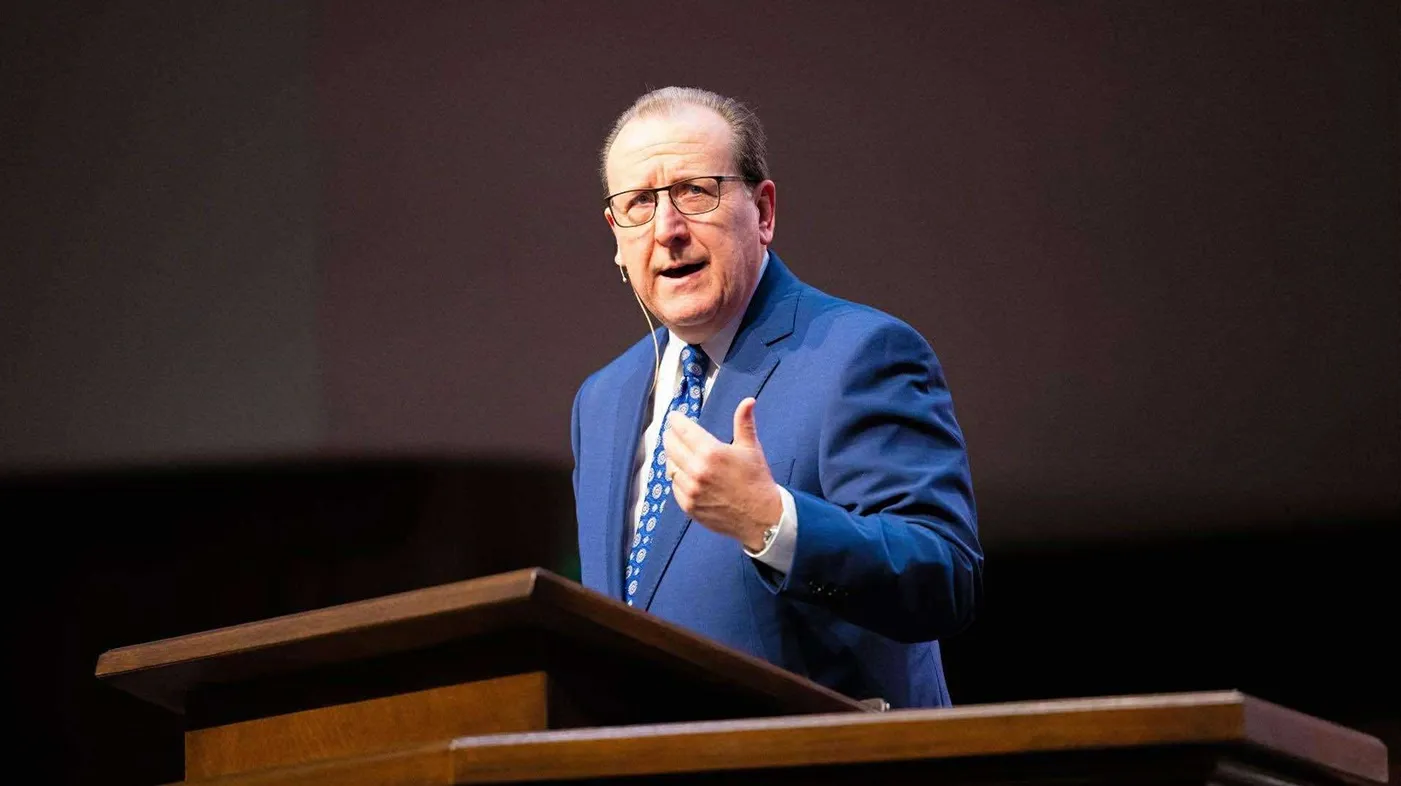
Engage with the most recent teaching from God’s Word.
The preaching of God's Word is central to worship and of the utmost importance for the sanctification of every believer in Christ.

.jpg)
.jpg)

Explore messages organized to help you grow in Christ.
Search and filter sermons for quick access.
God Rules! - Part 3
Pastor Tom Pennington's sermon "God Rules! (Part 3)" from James 4:13-17 urges believers to humbly acknowledge and submit to God's absolute sovereignty over their lives. Using an anecdote of a sudden sinkhole, Pennington illustrates humanity's inherent lack of control over circumstances, contrasting this with the illusion of self-control that James seeks to dismantle. The sermon focuses on the biblical response to God's rule, presenting two crucial aspects: 1. **Humble acceptance of God's providence:** This involves genuinely saying, "If the Lord wills," not as a superstitious phrase, but as a deep acknowledgment of God's sovereign, eternal plan for every detail of our existence and future activities. Biblical examples from David, Jeremiah, Jesus, and Paul demonstrate this posture. 2. **Humble obedience to God's revealed will:** True submission to God's will necessitates aligning our plans with His moral commands, making it impossible to genuinely say "if the Lord wills" while intending to sin. Pennington argues that refusing this biblical response is "cosmic arrogance"�boasting in our self-sufficiency�and "deliberate sin," particularly a sin of omission by failing to do what God requires. This highlights our desperate need for God's grace and the perfect righteousness of Christ, as we are incapable of consistently fulfilling God's demands.
Recognizing a Healthy Church
In his sermon, Tom Pennington outlines seven biblical marks to recognize a truly healthy church, distinguishing it from weak or unhealthy congregations. First, a healthy church is **founded on the Scripture**, demonstrating full confidence in its sufficiency, prioritizing expository preaching, adhering to correct biblical theology, and consistently practicing its teachings. Second, it is **captivated by God's transcendence**, fostering an atmosphere of reverence for God's unrivaled majesty in private conversation and corporate worship, and embracing His sovereignty. Third, it is **centered on Christ**, evident through a burning devotion, constant reference to Jesus, and a greater concern for pleasing Him than pleasing men. Fourth, it is **gripped by the gospel**, clearly and biblically defining its core truths (grace, faith, Christ alone) and actively engaging in evangelism. Fifth, a healthy church is **directed toward holiness**, requiring a profession of faith for membership, insisting on changed lives, and faithfully practicing church discipline. Sixth, it is **filled with true, genuine love** among its members, who enjoy fellowship and serve one another practically.
Recognizing a Real Church
Pastor Tom Pennington addresses how to identify a real church, beginning by distinguishing a church from a general Christian gathering. A true church requires a mutual commitment among its members to be a church, regular participation in corporate worship on the Lord's Day, and consistent practice of baptism and the Lord's Supper. He then explores the critical difference between a true and a false church. Drawing from Reformation theology, Pennington notes that reformers identified three marks: the true preaching of God's Word, the right administration of ordinances, and faithful church discipline. However, he asserts that the singular, essential mark distinguishing a true church is the accurate proclamation of the Gospel of Jesus Christ. A church becomes false when it denies the Person and work of Christ or the biblical means of salvation (faith alone in Christ alone). Applying this standard, cults like Mormonism and Jehovah's Witnesses, as well as most liberal Protestant denominations and the Roman Catholic Church as a whole, are identified as false churches due to their false gospels or Christs. Conversely, a church proclaiming the true Christ and Gospel remains a true church, even if it exhibits other doctrinal weaknesses or spiritual immaturity.
God Rules! - Part 2
In "God Rules! Part 2," Pastor Tom Pennington explores James 4:13-17, urging Christians to acknowledge and submit to God's absolute sovereignty and providence, rejecting self-determinism. He illustrates this by recalling Herbert Hoover's optimistic 1928 speech, which predated the Great Depression, highlighting humanity's limited control. Pennington explains that while Christians may doctrinally affirm God's rule, they often subtly deny it in daily life by making plans without reference to Him. James condemns merchants who confidently outline business ventures ("Today or tomorrow we will go... make a profit") without acknowledging divine will. This isn't about planning itself, but the "arrogance" of self-sufficiency. Such an independent mindset is irrational because humans cannot know what tomorrow holds (as demonstrated by Captain Smith of the Titanic) and life itself is fleeting, like a "vapor." This self-reliant pride obstructs God's grace. Therefore, the sermon implores believers to cultivate humility and seek God's will in all decisions�daily schedules, future plans, career choices, and major life changes�understanding that true wisdom and grace stem from constant dependence on Him.
God Rules! - Part 1
The sermon "God Rules!" by Tom Pennington (James 4:13-17) challenges worldly philosophies that deny God's ultimate control over life. Pennington refutes naturalistic determinism (genetics/environment), fatalism (predetermined events), causalism (random chance), and self-determinism (individual will), asserting they contradict biblical truth. Instead, the sermon emphasizes God's absolute sovereignty and providence. Sovereignty means God maintains perfect, total, and ultimate control over all things. Providence describes how this divine rule manifests in every aspect of existence. Drawing heavily from the Old Testament, Pennington illustrates that God directs our birth, death, and all life circumstances, including our successes and failures. Crucially, God is also sovereign over our free actions and decisions, and even uses human sin to accomplish His ultimate purposes (e.g., Joseph's story, Christ's crucifixion), without being the author of sin. This divine control, termed "concurrence," means God, as the first cause, superintends secondary causes (human actions, natural laws) to fulfill His eternal plan. For Christians, this foundational truth brings immense comfort and confidence, affirming God is on His throne, orchestrating every detail of existence.
Defining the Church - Part 4
Tom Pennington's sermon, "Defining the Church (Part 4)," outlines four primary biblical attributes of the church: one, holy, catholic, and apostolic. The church is "one" because all genuine believers are inherently united to Jesus Christ and, therefore, to each other. This unity is not organizational but essential, calling for love and fellowship among Christians, visible unity for the world, and mutual responsibility. It is "holy" in two ways: believers are positionally set apart for God at salvation and are progressively becoming more righteous. This demands personal growth in holiness and the practice of church discipline. The church is "catholic," meaning universal. It transcends geographical, social, and chronological limitations, encompassing all true believers across time and nations. This universality compels the church to welcome diverse people and maintain continuity with its past and future generations. Finally, the church is "apostolic" because it is founded upon the teachings of Christ's apostles, as recorded in Scripture. This requires the church to order its life, proclaim, defend, and faithfully pass on the Word of God. Understanding these attributes reveals the true nature and responsibilities of the church.
No Results Found.
We couldn’t find anything matching your search.
Explore The Word Unleashed
Our ministry brings together expository preaching, theological precision, and practical application for the good of Christ's church and the daily living of Christ's people.
.webp)
Sermons
Listen to expository sermons that clearly teach God’s Word and guide you in daily living.

Radio
Tune in to gospel-centered programs that share biblical truth and strengthen your daily walk with Christ.
Training
Join courses and workshops designed to deepen your faith and equip you to serve others with biblical wisdom.
.webp)
From the Pastor's Desk
Read pastoral messages that encourage, instruct, and help you apply God’s Word to every part of your life.
.webp)
Hymns
Discover timeless hymns that lift your heart in worship and remind you of God’s abounding grace and faithfulness.
Podcasts
Stay rooted in Scripture through our podcast series.