Sermons That Exalt Christ
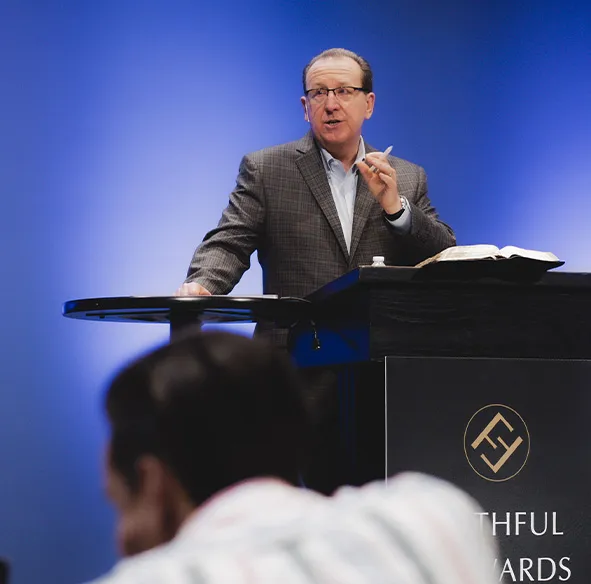
The preaching of God’s Word is central to the life of the church. Tom's pulpit ministry is dedicated to providing clear, biblical teaching to equip believers, strengthen faith, and exalt Christ.


Engage with the most recent teaching from God’s Word.
The preaching of God's Word is central to worship and of the utmost importance for the sanctification of every believer in Christ.

.jpg)
.jpg)

Explore messages organized to help you grow in Christ.
Search and filter sermons for quick access.
A Rush to Judgment
Based on James 4:11-12, Pastor Tom Pennington warns against the sinful tendency to "rush to judgment." He argues that "speaking against" a fellow believer is an act of slander rooted in pride, directly opposing the humility God commands. While acknowledging that Scripture permits judging in specific contexts�such as civil justice, church discipline, and identifying false doctrine�Pennington clarifies that James forbids judging the genuineness of a believer's salvation, their hidden motives, or their choices regarding doubtful matters of conscience. This critical behavior is destructive because it harms the church family and disregards the "royal law" to love one�s neighbor. Furthermore, placing oneself as a judge over others effectively puts one above the law, leading to disobedience. Ultimately, Pennington emphasizes that judgmentalism is an arrogant attempt to usurp God�s authority, as He alone is the Lawgiver and Judge with the power to save and destroy. Believers are therefore called to examine their own hearts rather than condemning others.
War and Peace: Learning to Deal with Personal Conflict - Part 6
The sermon on James 4:1-10 addresses sinful conflict by outlining three steps. First, identify the true source: the heart's craving for sinful pleasures, not external factors. Second, recognize the real sin: "spiritual adultery," loving worldly pleasures more than God. Third, embrace the solution: God's grace, which is available only through humility. To humble oneself and receive this grace, genuine repentance is essential. Repentance involves submitting to God and making oneself low. It has three core components: 1) Turning one's heart to God by resisting the devil and drawing near to the Lord, severing ties with sin. 2) Turning from all known sin, cleansing hands (deeds) and purifying hearts (thoughts/attitudes) by actively ceasing ungodly behavior and rejecting sinful thoughts. 3) Cultivating godly sorrow, a deep, miserable grief over sin, fostered by contemplating God's goodness, holiness, and one's own sinfulness. This sorrow, distinct from worldly regret, produces eagerness to deal with sin. God consistently responds to genuine repentance with abundant grace, exalting those who humbly turn to Him.
Defining the Church - Part 3
Pastor Tom Pennington's sermon, "Defining the Church (Part 3)," explores powerful scriptural metaphors to illustrate the church's nature, emphasizing Christ's central role in each. Firstly, the church is a **building or temple**, founded on Christ, who is its cornerstone, architect, and builder. This stresses the church's purpose of worship, its holy character, the ongoing need for evangelism (adding "living stones"), and leaders' responsibility, warning against divisiveness. Secondly, the church is a **household or family**. Believers are adopted by God, becoming spiritual siblings, which calls for profound love, commitment, and practical care among members. Lastly, the church is the **bride of Christ**. This metaphor showcases Christ's deep love and sacrifice for His church, highlighting its exalted position and demanding absolute loyalty, personal holiness, and loving submission. Crucially, it impels believers to eagerly anticipate Christ's return, much like a bride awaiting her wedding feast. These images provide a comprehensive and vivid understanding of the church's identity and mission.
War and Peace: Learning to Deal with Personal Conflict - Part 5
Tom Pennington's sermon, "War and Peace: Learning to Deal with Conflict, Part 5" (James 4:1-10), explores the growing cultural acceptance of pride, contrasting it with biblical teaching. He attributes societal conflict to our selfish desires and "spiritual adultery" against God (James 4:1-5). The solution, found in James 4:6, states: "God is opposed to the proud, but gives grace to the humble." Pride, a core human sin, involves exalting oneself above others, manifesting in arrogance about accomplishments, status, or even spiritual activities. God actively "takes up arms" against the proud, as demonstrated by figures like King Uzziah. Grace, by definition, is undeserved, but God sovereignly bestows it on those who humble themselves. True humility means recognizing one's desperate spiritual need, much like the tax collector in Jesus' parable. This humble posture, acknowledging spiritual poverty, is the prerequisite for receiving God's forgiveness and sanctifying grace. Conversely, clinging to pride puts one on a collision course with God, inviting His opposition and blocking His grace for both forgiveness and holiness.
Defining the Church - Part 2
The provided text defines the church as a "mystery" central to God's eternal plan, revealed to display His "manifold wisdom" to heavenly beings. Biblically, the Greek word "ekklesia" signifies "an assembly summoned or called together," encompassing both local gatherings of professing believers and the universal body of all true believers�the "invisible universal church" as God sees it. To deepen understanding, Scripture employs various metaphors, with "the body of Christ" being a prominent one. Key principles for interpreting these images include: acknowledging that the church exists solely "in and because of Jesus Christ"; recognizing that all metaphors are necessary for a complete picture; understanding them as figurative, not literal; and viewing them as permanently accurate descriptions. The "body of Christ" metaphor emphasizes Christ as the unrivaled Head, providing authority and direction through His Word and appointed leaders. True believers are spiritually baptized into this single body, fostering unity and mutual dependence among members. It highlights the importance of appreciating the diverse strengths and spiritual gifts within the church, where each member plays a divinely assigned, essential role. The church's spiritual growth hinges on every part fulfilling its unique function, making it a complex and wonderful living organism, intricately connected to Christ.
Defining the Church - Part 1
This sermon addresses the widespread confusion and redefinition of "the church" in modern evangelicalism, citing various non-traditional models like seeker-sensitive, house, cyber, and emergent churches. Pastor Pennington argues these innovations, influenced by societal trends like materialism and individualism, as well as internal church issues like the decline of expository preaching, have obscured the church's true nature. He stresses the necessity of returning to a biblical definition, as Christ committed to building only one institution: His church. The English word "church" originates from the Greek "kuriakon," meaning "belonging to the Lord," initially referring to the meeting place and later the people. More critically, the Greek "ekklesia" signifies "an assembly summoned or called together." While used for secular gatherings or the Old Testament "qahal" (assembly), the New Testament primarily applies "ekklesia" to the local church�a specific assembly of professing believers�and the universal church, comprising all professing believers worldwide. The latter is further distinguished as "visible" (all who claim faith) and "invisible" (only true believers, as God knows them). Notably, "ekklesia" never refers to a building or denomination.
No Results Found.
We couldn’t find anything matching your search.
Explore The Word Unleashed
Our ministry brings together expository preaching, theological precision, and practical application for the good of Christ's church and the daily living of Christ's people.
.webp)
Sermons
Listen to expository sermons that clearly teach God’s Word and guide you in daily living.

Radio
Tune in to gospel-centered programs that share biblical truth and strengthen your daily walk with Christ.
Training
Join courses and workshops designed to deepen your faith and equip you to serve others with biblical wisdom.
.webp)
From the Pastor's Desk
Read pastoral messages that encourage, instruct, and help you apply God’s Word to every part of your life.
.webp)
Hymns
Discover timeless hymns that lift your heart in worship and remind you of God’s abounding grace and faithfulness.

Podcasts
Stay rooted in Scripture through our podcast series.