Sermons That Exalt Christ
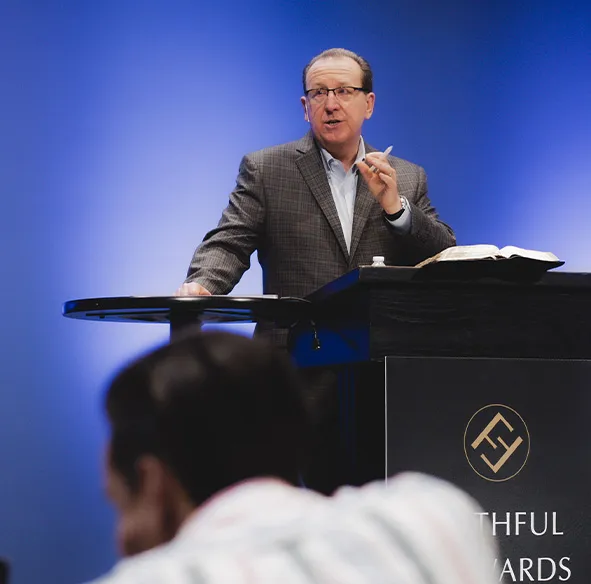
The preaching of God’s Word is central to the life of the church. Tom's pulpit ministry is dedicated to providing clear, biblical teaching to equip believers, strengthen faith, and exalt Christ.


Engage with the most recent teaching from God’s Word.
The preaching of God's Word is central to worship and of the utmost importance for the sanctification of every believer in Christ.

.jpg)
.jpg)

Explore messages organized to help you grow in Christ.
Search and filter sermons for quick access.
The Cross Is the Ultimate Sacrifice
Tom Pennington's sermon "Hebrews: The Cross is the Ultimate Sacrifice" argues that Jesus's death on the cross represents the ultimate and final sacrifice, far surpassing the Old Testament animal sacrificial system. He establishes that God is holy, humanity is sinful, and access to God has always required sacrifice, initially illustrated by animal offerings. However, Old Testament sacrifices were merely a "shadow," continually reminding people of their sins and God's wrath, yet unable to provide true perfection or lasting atonement. Their constant repetition proved their insufficiency. In contrast, Jesus's sacrifice on the cross offers three critical distinctions: 1. **Complete Satisfaction:** Christ's death fully satisfied God's holy wrath against sin, a "fragrant aroma" that truly appeased divine justice, cleansing believers and providing a perfect standing before God that animal sacrifices could never achieve. 2. **Perfect Substitution:** While animal sacrifices were substitutionary, an imperfect animal could not truly replace a human made in God's image. Jesus, the sinless, voluntary God-man, offered His own body, becoming the perfect human substitute and fulfilling God's will. 3. **Permanent Solution:** Old Testament priests constantly ministered because their work was never finished.
Search & Rescue: Every Believer's Mission
Pastor Tom Pennington's sermon on James 5:19-20, "Every Believer's Mission," concludes the letter by urging Christians to engage in spiritual "search and rescue." He highlights the inherent value of human life, arguing that if we expend vast resources for physical rescue, we should do even more for those in spiritual danger. James's mandate involves three parts: First, **recognize a straying brother**�identify professing believers who have deviated from the truth and God's path, understanding that objective truth exists. Second, **attempt a spiritual rescue**�turn them back to righteousness through repentance. This process, outlined in Matthew 18, requires approaching them with genuine love, eagerness to forgive, gentleness, and humility, urging them to abandon their sinful ways. Third, **consider serious consequences**�acting can save a soul from "death" (eternal or divine chastening/physical death) and secure divine forgiveness for a "multitude of sins." Failure to act leaves them exposed to these perils. Ultimately, James encourages mutual care and warns that any believer can stray. He exhorts taking sin seriously under Christ's Lordship but closes with a powerful message of grace.
Church Government: Monarchy, Anarchy, or Democracy? - Part 4
Tom Pennington's sermon defines greatness in God's kingdom as servant leadership, sharply contrasting it with worldly standards of fame, wealth, and power. Drawing from Matthew 20, he highlights Jesus' teaching that true greatness lies in becoming a servant, mirroring Christ's own example. The New Testament church appoints two leadership offices: elders and deacons. The term "deacon" (Greek "diakonos") means "servant," representing an office new to the church, prototyped in Acts 6 by men chosen to serve neglected widows. Deacons are primarily focused on serving, not teaching, and function under the elders' oversight. Qualifications in 1 Timothy 3 demand spiritual maturity, dignity, moral integrity (e.g., not greedy or double-tongued), sound doctrine, a good reputation, and effective household management. Deacon duties, adaptable to each church, often involve caring for the needy, managing church finances/property, and supporting worship. Pennington clarifies that deacons are distinct from elders, not a corporate board, nor a police force for pastors. Regarding 1 Timothy 3:11, the speaker interprets "women likewise" as deacons' wives, though acknowledging other views. The office of deacon ultimately elevates serving gifts, emphasizing that all believers are called to faithful service, which brings divine commendation and true greatness in God's kingdom.
Prayer For All Seasons - Part 3
This sermon on James 5:13-18 reveals prayer's priority and power. It teaches prayer is vital in all circumstances (v.13) and for serious illness due to divine chastening for unrepentant sin (v.14-16a), where elders' prayer, anointing, and genuine repentance can bring healing and forgiveness. The text asserts, "The effective prayer of a righteous man can accomplish much" (v.16b). This "righteous man" is a confessed, repentant believer, not living in unconfessed sin, which hinders divine response. Elijah, an ordinary man, illustrates this power: his earnest prayer initiated a 3.5-year drought (chastening for idolatry); later, after repentance, his prayer brought rain, ending the discipline, demonstrating prayer's power to invoke and end God's chastening. Ultimately, the sermon urges believers to prioritize and schedule prayer daily and corporately, recognizing its spiritual vitality, and trusting God's power and wisdom to accomplish His sovereign purposes through it.
Prayer For All Seasons - Part 2
In "Prayer for All Seasons (Part 2)" from James 5:13-18, Pastor Tom Pennington opens with the historical resistance to Ignas Semmelweis's handwashing discovery, drawing a parallel to simple biblical solutions like prayer. He outlines a five-point biblical theology of illness: all sickness stems from the Fall, God is its ultimate cause, He sometimes permits Satan to inflict it, God is always the healer (either directly or through means like medicine and doctors), and illness invariably serves His purposes (e.g., glory, humility, dependence, discipline for sin). Focusing on James 5:14-16, the sermon identifies a specific scenario: a seriously ill believer who suspects their condition is divine discipline for unrepentant sin. The **diagnosis** is this specific type of illness. The **prescription** involves calling church elders to pray over the individual, anointing them with oil (symbolizing consecration to God's service, not medicine). The **prognosis** is an absolute promise of forgiveness and divine healing for a repentant believer, facilitated by the elders' prayer of faith.
No Results Found.
We couldn’t find anything matching your search.
Explore The Word Unleashed
Our ministry brings together expository preaching, theological precision, and practical application for the good of Christ's church and the daily living of Christ's people.
.webp)
Sermons
Listen to expository sermons that clearly teach God’s Word and guide you in daily living.

Radio
Tune in to gospel-centered programs that share biblical truth and strengthen your daily walk with Christ.
Training
Join courses and workshops designed to deepen your faith and equip you to serve others with biblical wisdom.
.webp)
From the Pastor's Desk
Read pastoral messages that encourage, instruct, and help you apply God’s Word to every part of your life.
.webp)
Hymns
Discover timeless hymns that lift your heart in worship and remind you of God’s abounding grace and faithfulness.
Podcasts
Stay rooted in Scripture through our podcast series.