Sermons That Exalt Christ
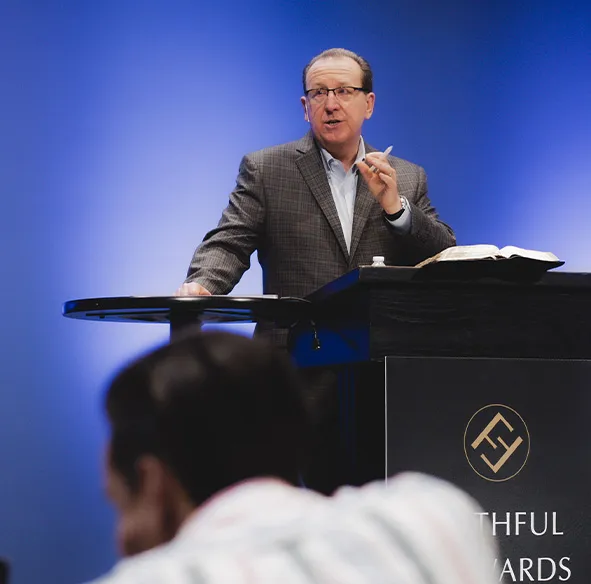
The preaching of God’s Word is central to the life of the church. Tom's pulpit ministry is dedicated to providing clear, biblical teaching to equip believers, strengthen faith, and exalt Christ.


Engage with the most recent teaching from God’s Word.
The preaching of God's Word is central to worship and of the utmost importance for the sanctification of every believer in Christ.

.jpg)
.jpg)

Explore messages organized to help you grow in Christ.
Search and filter sermons for quick access.
Tear Down Every Idol - Part 4
Pastor Tom Pennington defines idolatry not merely as worshipping physical objects, but as giving any human desire precedence over God's Word and will. He explains that the human heart is an "idol factory," capable of turning anything�from comfort and relationships to possessions and circumstances�into an idol. To identify personal idols, one must honestly assess what they are willing to sin to acquire, or what they sin over because they lack it. Pennington stresses the severe biblical warning that lives characterized by such idolatry will not inherit God's kingdom. He outlines five biblical responses to dismantle idols: First, **get rid of everything connected to your idolatry**, removing physical items or relationships that facilitate sin, even taking radical steps. Second, **avoid anything that draws you back** to idolatrous desires, actively fleeing people, places, or circumstances that encourage them. Third, **don't associate with those who prioritize other things before God**, guarding against influences that foster idolatry. Fourth, **pursue biblical sanctification** by actively putting off sinful tendencies, renewing your mind with God's Word, and embracing godly virtues.
What in the World Should the Church Be Doing? - Part 2
Tom Pennington's sermon, "What in the World Should the Church be Doing?", outlines the church's mission, emphasizing that all members share duties focused on serving. This follows a fourfold plan: Christ appoints leaders, who equip members, who then serve, leading to church growth. The church's mission unfolds in three critical directions: 1. **To God:** This involves worship through corporate activities like reading, praying, singing, and preaching the Bible, giving, and practicing ordinances like baptism and the Lord's Table. Additionally, the church serves as the "pillar and ground of the truth" by proclaiming, guarding, and passing on sound doctrine. 2. **To the Church Itself:** Internally, the church governs its affairs, equips saints for service, practices church discipline for restoration and purity, encourages mutual edification among members, and provides mutual care for the needy within its fellowship, including widows, orphans, the sick, strangers, prisoners, and the poor. 3. **To the World:** This external mission comprises evangelism�making disciples, being Christ's witnesses, and acting as ambassadors of reconciliation�and benevolence/mercy, showing compassion and practical care to all needy individuals, regardless of their faith, without diminishing the primary evangelistic call.
Tear Down Every Idol - Part 3
This sermon, "Worship: Tear Down Every Idol (Part 3)," defines biblical idolatry as anything that rivals allegiance to the one true God, as commanded in Exodus 20:3. The pastor critiques modern culture's narrow view of idolatry as only physical statues, asserting that it extends beyond explicit denials of God. Seven forms of idolatry are presented: 1. Worshiping nature or unexplained forces. 2. Worshiping false personal gods, whether or not localized in images (e.g., Baal, Allah, Mormonism). 3. Deifying abstract concepts or forces (e.g., Fortune, Destiny, Buddhism). 4. Improperly venerating something attached to true worship (e.g., Gideon's ephod, religious icons, saints, or Mary in Catholicism). 5. Refusing to recognize Jesus as Lord, which is fundamentally idolatrous as God and Christ are one. 6. Holding wrong or deficient views of the true God, conceiving Him as less than His revealed character, thereby creating an "idol in the mind." This is deemed a prevalent and serious form in modern evangelicalism. 7. Giving any human desire precedence over God's Word and will. This "idolatry of the heart" is identified as the most insidious for Christians. Covetousness, as Paul states in Colossians 3:5, is idolatry, encompassing any strong craving for something that displaces God.
Tear Down Every Idol - Part 2
The sermon, "Worship: Tear Down Every Idol (Part 2)," asserts that humanity's chief responsibility is worship, grounded in three principles: God created for His glory, man's chief end is to glorify God, and everyone is hard-wired to worship. If not the true God, then something else, which is idolatry�a pervasive problem today, even among believers. True worship requires tearing down every idol first. Idolatry's inherent appeal stems from self-centered gratification, manifesting as a pursuit of violence, sexual fulfillment, or financial prosperity, and from self-rule, allowing individuals to create "designer gods" and avoid accountability. Its sources include personal rebellion against God, the powerful influence of surrounding culture, humanity's innate fallenness (making idolatry a "deed of the flesh"), and the work of demonic forces behind false religions. Given these strong predispositions, humanity is naturally idolatrous. The shocking reality that anyone worships the true God is not due to personal merit or intelligence, but solely to divine grace. Through Christ's sacrifice, God forgives idolaters, cleanses them from their idols, and regenerates their hearts, enabling true worship.
What in the World Should the Church Be Doing? - Part 1
The text criticizes the modern church's widespread confusion regarding its mission, citing examples of churches adopting secular businesses or unconventional worship styles, often prioritizing cultural engagement over Christ's message of redemption. The central question posed is: What should the church be doing according to Christ's design? The author asserts Christ's design is a three-fold mission�upward to God, inward to the church, and outward to the world�all equally essential. This mission is built on two foundational principles: first, all church members equally share responsibilities, rejecting the unbiblical clergy-laity distinction that arose historically. Jesus condemned titles fostering superiority, emphasizing that ministry is a universal call to service for every member, mirroring Christ's own example. Second, the church's overarching plan, derived from Ephesians 4:11-12, outlines four parts: Christ appoints leaders (evangelists, pastor-teachers) who equip all members through teaching God's Word and prayer. These equipped members then accomplish the "work of service," actively using their spiritual gifts within the church. This biblical process ultimately results in the growth and building up of the body of Christ, a divine plan destined for victory and glory to God.
Tear Down Every Idol - Part 1
Tom Pennington�s sermon, "Worship Tear Down Every Idol (Part 1)," establishes three foundational principles for understanding worship. Firstly, God created the world for His own glory, a truth evident throughout Scripture. Secondly, humanity's chief purpose is to glorify God through worship; our failure to do so is a primary sin. Thirdly, humans are innately "hard-wired" to worship. If we do not worship the true God, we will inevitably worship something else, leading to idolatry. Pennington argues that idolatry is not merely an ancient practice but a pervasive modern problem, affecting individuals globally and subtly influencing contemporary culture and even the church. He traces its biblical history from Abraham's family and Israel's struggles with Egyptian and Canaanite gods, to the apostasy of kings like Solomon, ultimately showing how idolatry led to Israel's downfall. Emphasizing that modern believers are just as susceptible as those in the past, Pennington warns that our hearts are "factories of idols" (Calvin). He stresses that idolatry takes many insidious forms beyond bowing to physical objects, posing a supreme threat to faith.
No Results Found.
We couldn’t find anything matching your search.
Explore The Word Unleashed
Our ministry brings together expository preaching, theological precision, and practical application for the good of Christ's church and the daily living of Christ's people.
.webp)
Sermons
Listen to expository sermons that clearly teach God’s Word and guide you in daily living.

Radio
Tune in to gospel-centered programs that share biblical truth and strengthen your daily walk with Christ.
Training
Join courses and workshops designed to deepen your faith and equip you to serve others with biblical wisdom.
.webp)
From the Pastor's Desk
Read pastoral messages that encourage, instruct, and help you apply God’s Word to every part of your life.
.webp)
Hymns
Discover timeless hymns that lift your heart in worship and remind you of God’s abounding grace and faithfulness.
Podcasts
Stay rooted in Scripture through our podcast series.