Sermons That Exalt Christ
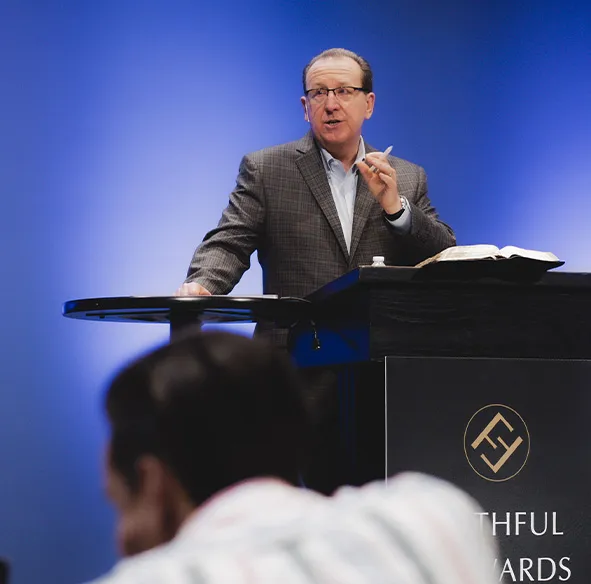
The preaching of God’s Word is central to the life of the church. Tom's pulpit ministry is dedicated to providing clear, biblical teaching to equip believers, strengthen faith, and exalt Christ.


Engage with the most recent teaching from God’s Word.
The preaching of God's Word is central to worship and of the utmost importance for the sanctification of every believer in Christ.

.jpg)
.jpg)

Explore messages organized to help you grow in Christ.
Search and filter sermons for quick access.
The Heart of Worship - Part 2
Pastor Tom Pennington's sermon, "The Heart of Worship (Part 2)," examines the core principles of biblical worship, emphasizing that not all perceived worship is truly acceptable to God. He highlights four foundational truths: God created all for His glory, humanity's chief end is to glorify God, we were made to worship, and God alone dictates how we worship Him. This leads to the crucial question: how does God prescribe worship? Pennington focuses on Jesus' encounter with the Samaritan woman in John 4. This woman, an ethnic and social outcast, tries to deflect Jesus' personal insight into her life by asking about the correct place of worship: Mount Gerizim or Jerusalem. Jesus responds by declaring that "an hour is coming when neither in this mountain nor in Jerusalem will you worship the Father," because "true worshipers will worship the Father in spirit and truth." This profound statement introduces the first "inviolable law of worship": true worship is not external but must rise from the heart. Pennington supports this with Old Testament examples, demonstrating that God has always prioritized a humble, contrite heart over mere outward rituals or location.
From Here to Eternity: a Biblical Order of Coming Events
Pastor Tom Pennington introduces eschatology, the study of end-time events, emphasizing that despite its often-perceived complexity, God's character demands an orderly divine plan for the future. He notes broad Christian agreements on fundamental truths like death, heaven and hell, Christ's literal return, general resurrection, and eternal judgment, while acknowledging disagreements on issues like the rapture's timing or the millennium's nature. Pennington outlines four major eschatological views�Post-millennialism, A-millennialism, Historic Pre-millennialism, and his preferred Pre-tribulational Pre-millennialism�and explains his futurist interpretive approach to Revelation, viewing chapters 6-22 as literal, future prophecies. From this, he constructs a "biblical order of last things" (ordo eschatos): the Tribulation, followed by Christ's Second Coming, a literal 1,000-year Millennium, the Great White Throne Judgment, and finally, the New Heaven and New Earth. His view places the church's rapture before the Tribulation, with believers returning with Christ at His Second Coming. Understanding this divine sequence serves as a powerful impetus for holiness, a profound cause for worship, and a vital reason for courage, knowing that Christ's ultimate victory is secured.
A First Look at Last Things: an Introduction to Eschatology
Tom Pennington introduces a sermon series on "last things," or eschatology, aiming to bring biblical "sanity" to a topic often sensationalized. He defines prophecy as new revelation from God, primarily predictive, and eschatology as a discourse about "last things"�encompassing all future events for individuals and world history. Pennington warns against common pitfalls, including preoccupation with eschatology, seeking mere curiosity without personal application, sensationalism, being overly dogmatic about minor details, and setting dates, which Jesus explicitly forbade. He also cautions against ignoring or refusing to interpret prophecy altogether. Despite these dangers, eschatology is crucial. It comprises about 25% of the Bible and was central to Jesus's and the apostles' teachings, even for new converts. Prophecy serves vital purposes: it rebukes sin and calls for repentance, produces purity of life, provides comfort, creates spiritual stability, stimulates a desire for service, and can even lead to conversion, as exemplified by the pastor's personal testimony. Therefore, studying prophecy is an essential aspect of the Christian life.
The Heart of Worship - Part 1
Tom Pennington's sermon, "The Heart of Worship (Part 1)," argues that humans are inherently "hard-wired to worship," a universal phenomenon that, while observed by scientists, is biblically understood as a result of God's creation and self-revelation. Building on the principles that God's ultimate purpose is His own glory and man's chief end is to glorify Him through worship, Pennington introduces a crucial fourth principle: God alone possesses the right to prescribe how He is to be worshipped. This principle is supported by biblical accounts. God's rejection of Cain's offering in Genesis 4 and the strict prohibitions against idolatry and human-invented worship in Exodus 20 (including the golden calf incident) demonstrate His serious concern for the *method* of worship. Further examples like Nadab and Abihu, Saul, and the Pharisees reinforce that man-made worship is unacceptable. Pennington outlines practical implications: individuals must not redefine God to suit their preferences or use any images as channels for worship. Furthermore, the church's corporate gathering purpose must not be redefined, and only elements explicitly prescribed by Scripture should be included. This aligns with the "Regulative Principle," which asserts that only practices commanded or sanctioned by God's Word are permissible in worship.
In Light of the Cross
Pastor Tom Pennington, in "Galatians In Light of the Cross," argues that the cross of Jesus Christ must be the radical, central truth of a believer's entire life, not merely an initial step. He highlights that Paul�s boast in the cross (Galatians 6:14) was revolutionary in the first century, where crucifixion was a despised act, and directly countered Judaizers who diluted the Gospel with works. This "message of the cross" holds transformative power, leading to three radical life changes. Firstly, one must **trust in the work of Christ alone**. Unlike the self-reliant Judaizers, true believers renounce all personal merit, counting their achievements as "rubbish," and finding complete confidence solely in Christ�s finished work on the cross. Salvation, though free, demands this total self-renunciation. Secondly, one must **live for the kingdom of Christ alone**. The cross "crucifies the world" (its fallen values and desires) to the believer. We die to self-centered pursuits like money, status, and comfort, choosing instead to advance Christ�s kingdom, living for Him who died for us. Finally, one must **aim for the glory of Christ alone**. This means being "crucified to the world," willingly enduring contempt and losing worldly status, as Paul did.
Building an Appetite for God's Word
Pastor Tom Pennington's sermon, "Building an Appetite for God's Word" (Psalm 119:1-8), stresses Scripture's vital role in a believer's growth, equating being "filled with the Spirit" to being "permeated by the Word of God." He introduces Psalm 119, noting its unique acrostic structure, various synonyms for Scripture (law, testimonies, precepts), and its central theme: the believer's pursuit of a life dominated by God's Word. Pennington outlines four steps from Psalm 119's first stanza to cultivate this hunger: 1. **Recognize its benefits:** Scripture fosters integrity, devotion to God, and obedience, leading to right relationships. 2. **Embrace God's authority:** Understand that God's commands are serious and require diligent obedience, not merely for personal gain, but because He demands it. 3. **Seek God's grace:** Acknowledge personal failure, cultivate a deep desire for holiness, and pray for God's enabling grace to understand and obey His Word. 4. **Anticipate God's response:** Expect positive results like a decreasing pattern of sin, a heart of worship, and an increasing spirit of dependence on God.
No Results Found.
We couldn’t find anything matching your search.
Explore The Word Unleashed
Our ministry brings together expository preaching, theological precision, and practical application for the good of Christ's church and the daily living of Christ's people.
.webp)
Sermons
Listen to expository sermons that clearly teach God’s Word and guide you in daily living.

Radio
Tune in to gospel-centered programs that share biblical truth and strengthen your daily walk with Christ.
Training
Join courses and workshops designed to deepen your faith and equip you to serve others with biblical wisdom.
.webp)
From the Pastor's Desk
Read pastoral messages that encourage, instruct, and help you apply God’s Word to every part of your life.
.webp)
Hymns
Discover timeless hymns that lift your heart in worship and remind you of God’s abounding grace and faithfulness.
Podcasts
Stay rooted in Scripture through our podcast series.