Sermons That Exalt Christ
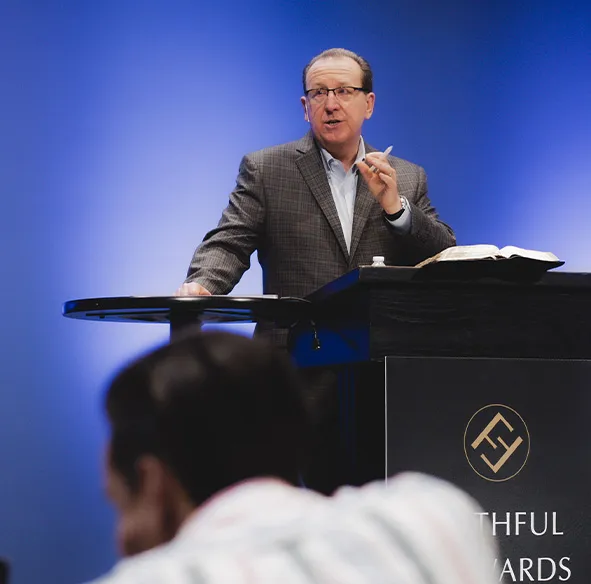
The preaching of God’s Word is central to the life of the church. Tom's pulpit ministry is dedicated to providing clear, biblical teaching to equip believers, strengthen faith, and exalt Christ.


Engage with the most recent teaching from God’s Word.
The preaching of God's Word is central to worship and of the utmost importance for the sanctification of every believer in Christ.

.jpg)
.jpg)

Explore messages organized to help you grow in Christ.
Search and filter sermons for quick access.
The Heart of Worship - Part 4
This sermon, "The Heart of Worship (Part 4)," argues that worship is the "missing jewel" in modern evangelicalism, often overlooked in favor of self-centered agendas. Drawing from A.W. Tozer, Pastor Tom Pennington emphasizes that humans were created to worship, and neglecting this is a significant loss. Citing David's desire (Psalm 27:4) and Jesus's commendation of Mary over Martha (Luke 10), the sermon establishes worship as the singular, most necessary priority, preceding even service. Continuing a study of John 4, the speaker reminds listeners that true worship isn't external or merely emotional, but must occur "in spirit and truth." This installment focuses on the "in truth" aspect, asserting that true worship is not intuitive but must be directed by God's revealed truth. The sermon's core message is that worship is fundamentally a *response* to God's self-revelation. Numerous biblical examples, from Israel's response to God's compassion in Exodus to the disciples' worship after Jesus walked on water, demonstrate this consistent pattern: encountering God's glory, character, or Word invariably leads to worship. The sermon concludes that if Christians lack a passion for worship, it's often due to an insufficient knowledge or accurate perception of God, for "to know God is to worship Him."
What Happens After Death? - Part 1
This sermon, "What Happens After Death? (Part 1)," examines the intermediate state of the soul after physical death, emphasizing biblical clarity over speculation and near-death experiences. The speaker refutes several "aberrant views." First, "soul sleep" suggests the soul becomes unconscious until resurrection. This is countered by arguing "sleep" is a metaphor for the body, and relevant scriptures describe the cessation of earthly activities, not consciousness itself. Second, Roman Catholic "purgatory" posits a place of suffering for post-death cleansing of venial sins. The primary defense comes from 2 Maccabees. The speaker argues this contradicts canonical Scripture, the sufficiency of Christ's "once for all" sacrifice, and the doctrine of justification, which declares believers fully righteous through grace. Third, "limbo" includes "limbus infantum" for unbaptized infants (eternally excluded from heaven) and "limbus patrum" (where Old Testament saints were held until Christ's resurrection). These are refuted by reinterpreting supporting texts like John 3:5 (spiritual regeneration, not water baptism) and Ephesians 4/1 Peter 3 (referring to Christ's incarnation or preaching through Noah, not a descent to hell to release saints).
No Fear: A Christian Perspective on Death - Part 2
This sermon, "No Fear: A Christian Perspective on Death," emphasizes that death, though an enemy that separates body and spirit, was personally conquered by Jesus Christ through His resurrection. This victory means death's "sting" is removed for believers, transforming it into a defeated foe completely under Christ's authority, who fixes the day and means of every person's passing. Ultimately, death itself will be destroyed. Christians should respond to an unbeliever's death with sorrow and appreciation for their virtues, maintaining hope without unfounded assurances of salvation. When a fellow believer dies, grief is appropriate but is tempered by joy and worship, knowing they are in Christ's presence. For our own impending death, the message encourages desiring the *outcome* � being with the Lord is "gain" � while acknowledging fear of the *process* is normal. We should be confident in God's transcending love and presence through death. Our mortality should motivate diligence, steadfastness in life, and an opportunity to exalt Christ by living faithfully, even risking our lives for Him. The sermon concludes with a powerful testimony of a dying father-in-law's anticipation of perfect holiness and joyous reunion with Christ.
Conspiracy! The Plot That Proves the Resurrection
The sermon emphasizes the resurrection of Jesus Christ as the unique and foundational event of Christianity, distinguishing it from other major religions whose founders remain in their tombs. Jesus Himself staked His authority on His resurrection, and the Apostle Paul declared that without it, Christian faith is futile. The text then delves into Matthew 28:11-15, revealing an initial "conspiracy" to deny the resurrection. Jewish leaders, after securing Jesus' tomb with Roman guards to prevent body theft, were horrified when the guards reported the angelic appearance and the empty tomb. Driven by political ambition to maintain power, the Sanhedrin bribed the soldiers with "a large sum of money" to spread a false story: that Jesus' disciples stole the body while the guards were asleep. They also promised to protect the soldiers from the severe penalty for sleeping on duty. Ironically, this very conspiracy inadvertently proves the resurrection's historical reality. The empty tomb was undeniable, and the "stolen body" theory was illogical: disciples lacked the courage, Roman military discipline made sleeping on watch a deadly offense, and logically, sleeping guards couldn't know who stole the body. The sermon concludes by differentiating "historical faith"�mere intellectual agreement with Christian truths�from "saving faith.
The Heart of Worship - Part 3
The text, "The Heart of Worship (Part 3)" by Pastor Tom Pennington, addresses the challenge of authentic worship in an "internet age" culture that promotes personalization and comfort over divine truth. Analogizing with Google's vast, unfiltered information, Pennington warns against a "daily me" approach to worship, where individuals prioritize personal preference rather than God's prescribed way. Drawing from Jesus's conversation with the Samaritan woman in John 4, the sermon emphasizes that true worship is not merely emotional but must result from knowledge. Jesus illustrates this by noting the Samaritans worshipped "what they did not know," unlike the Jews who were entrusted with God's revelation. He declares, "God is spirit," underscoring His immaterial nature, which transcends physical locations or human sentiments. Therefore, genuine worship necessitates a deep understanding of God's character and His plan of salvation, which is exclusively found in Scripture. The sermon critiques modern trends in the church that downplay biblical knowledge in favor of emotional experience, arguing that while sincerity and emotion are components of worship, they are insufficient on their own. Citing Proverbs 2, Pennington stresses that acquiring this vital knowledge requires a diligent and intense search of God's Word.
No Fear: A Christian Perspective on Death - Part 1
The sermon, "No Fear: A Christian Perspective on Death," defines death not as annihilation, but as the cessation of the body's life and the temporary separation of the immaterial soul from the physical body. This universal human experience, originating as a divine sentence from God due to Adam's sin, is a crucial eschatological reality. For Christians, biblical illustrations portray death as a peaceful "sleep" or "rest," a temporary "tent" being broken down for a permanent heavenly home, a fleeting "shadow," or a ship "departing" for its destination. This understanding helps replace the inherent fear of death with anticipation. The message offers two primary applications for believers: first, to actively cherish loved ones and express appreciation now, rather than waiting until their death; and second, to live each day with a constant, purposeful awareness of mortality, dedicating one's time and actions to Christ's glory and the advancement of His kingdom. Ultimately, a Christian perspective transforms death from an object of dread into a profound gain, motivating a life lived fully for God's purposes.
No Results Found.
We couldn’t find anything matching your search.
Explore The Word Unleashed
Our ministry brings together expository preaching, theological precision, and practical application for the good of Christ's church and the daily living of Christ's people.
.webp)
Sermons
Listen to expository sermons that clearly teach God’s Word and guide you in daily living.

Radio
Tune in to gospel-centered programs that share biblical truth and strengthen your daily walk with Christ.
Training
Join courses and workshops designed to deepen your faith and equip you to serve others with biblical wisdom.
.webp)
From the Pastor's Desk
Read pastoral messages that encourage, instruct, and help you apply God’s Word to every part of your life.
.webp)
Hymns
Discover timeless hymns that lift your heart in worship and remind you of God’s abounding grace and faithfulness.
Podcasts
Stay rooted in Scripture through our podcast series.