Sermons That Exalt Christ
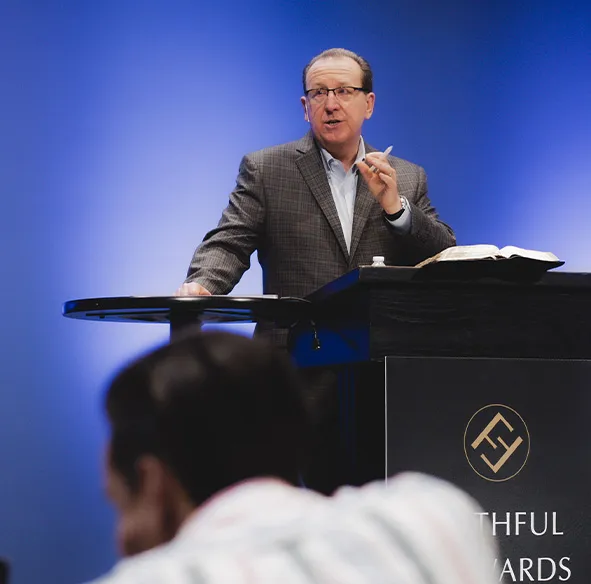
The preaching of God’s Word is central to the life of the church. Tom's pulpit ministry is dedicated to providing clear, biblical teaching to equip believers, strengthen faith, and exalt Christ.


Engage with the most recent teaching from God’s Word.
The preaching of God's Word is central to worship and of the utmost importance for the sanctification of every believer in Christ.

.jpg)
.jpg)

Explore messages organized to help you grow in Christ.
Search and filter sermons for quick access.
A Voice Crying - Part 2
The sermon "The Memoirs of Peter A Voice Crying (Part 2)" details John the Baptist's crucial role as the prophetic forerunner to Jesus Christ, setting the stage in Mark's Gospel. Fulfilling Old Testament prophecies, John preached a baptism of repentance for the forgiveness of sins in the wilderness, attracting thousands from all over Israel who publicly confessed their sins and were immersed in the Jordan. John's austere lifestyle�dressed in camel's hair with a leather belt and subsisting on locusts and wild honey�was intentional. It marked him as a Nazirite set apart for God, served as a rebuke to the materialistic culture, and distinctly identified him as the prophet "like Elijah" before the Messiah. John�s core message wasn't about himself but emphatically pointed to "the One who is coming," highlighting Jesus's immense superiority in might, worth (John deemed himself unworthy of even the lowest servant's task), and ministry. While John�s baptism was external, Jesus would baptize with the Holy Spirit, signifying true internal transformation.
The Divine Pattern of Confession
Tom Pennington's sermon on Psalm 51, "The Divine Pattern of Confession," guides Christians on how to confess their sins. While believers are justified, they continue to sin, now against God as their Father. David's public confession in Psalm 51, prompted by Nathan's confrontation, provides a divinely intended pattern for genuine, heartfelt confession. The sermon outlines five key principles: 1. **Appeal to God's Character (verses 1-2):** Confession must begin by pleading for God's undeserved grace, compassion, and steadfast love ("hesed"), acknowledging our lack of merit. David asks God to "blot out" his transgressions (erase a criminal record), "wash thoroughly" his iniquity (cleanse a deeply stained soul), and "cleanse" him from sin (ceremonially purify for renewed fellowship). 2. **Accept Full Responsibility (verses 3-5):** This involves recognizing every sin as a personal affront to God ("Against You, You only"), agreeing with God's just verdict, and understanding that sin stems from our inherently sinful nature, not external factors. It demands abandoning all excuses. 3. **Hope in God Alone (verses 6-9):** We must trust solely in God for true wisdom, cleansing, and the restoration of joy. 4.
A Voice Crying - Part 1
Tom Pennington's sermon on Mark 1:2-8 highlights the profound first-century Jewish expectation of the Messiah, tracing this anticipation through numerous Old and New Testament passages. Mark's Gospel immediately introduces John the Baptist as the prophesied forerunner, fulfilling ancient prophecies from Malachi and Isaiah, thereby authenticating Jesus' Messiahship. John's ministry centered on "preaching" repentance�a radical change of heart and life demonstrated through changed actions. He required an outward sign: a "baptism of repentance." This was a "proselyte baptism" for Jews, symbolizing their admission of sin, renunciation of self-privilege, and unworthiness to belong to God's true Israel without spiritual transformation, preparing them for the Messiah. The spiritual result was "forgiveness of sins," which John clarified was only possible through "the Lamb of God who takes away the sin of the world"�Jesus Christ. John's role as the messenger was to prepare hearts, proclaiming Jesus as the one who would provide redemption.
Our Union with Christ: Three Compelling Illustrations - Part 3
In his sermon on Ephesians 2, Pastor Tom Pennington illuminates the profound union believers share with Christ and each other, contrasting the church with Ephesus's ancient Temple of Artemis. He presents Paul's three compelling illustrations of this union. Firstly, Christians are "fellow citizens" of God's kingdom, acknowledging Him as their King. Secondly, they are "members of God's household," belonging to His family with God as their Father. The third and most developed image portrays believers as "living stones in God's temple." The "foundation" is the revelation of apostles and prophets, centered on Jesus. Christ Himself is the "cornerstone," the essential measure and core of all authentic church life and individual faith. Without Christ at its center, no organization is truly Christian. Individual believers, as "stones," are carefully "fitted together" by God, underscoring that the church is not narcissistic or consumeristic, but requires active participation from all members. This "growing" temple, an organism of intentional variety, is built by leaders who equip saints through God's Word and prayer. The church is God's "new Holy of Holies," the unique place where He manifests His presence on earth.
Our Union with Christ: Three Compelling Illustrations - Part 2
In his sermon "Our Union with Christ: Three Compelling Illustrations (Part 2)," Tom Pennington explores Ephesians 2:19-22, emphasizing Christian unity in stark contrast to contemporary narcissism. He highlights a culture obsessed with self-love, contrasting it with the Christian calling to live for God and others. Paul illustrates this unity through three images: citizens of God's kingdom, members of God's family, and stones in God's temple. The temple metaphor signifies a profound, interdependent unity, where the removal of one "stone" risks the entire structure's collapse. Pennington focuses on the church's foundation: "the apostles and prophets." Apostles were Christ's hand-picked eyewitnesses, empowered to communicate His word, which ultimately formed the New Testament. Prophets in the early church delivered fresh revelation from God. Thus, the church's foundation is the completed New Testament revelation. He outlines four key ramifications: every authentic church must build upon this unchanging foundation, true unity among believers rests solely on New Testament doctrine, the foundation is complete with no further apostolic or prophetic revelation, and finally, every individual Christian life must also be solidly built upon this same, unchanging truth.
The Memoirs of Peter: An Introduction to the Gospel of Mark
This text introduces the Gospel of Mark, emphasizing its unique perspective on Jesus Christ. Authored by John Mark, a close companion and "interpreter" of Peter, it's considered Peter's memoirs. Though not an eyewitness himself, Mark accurately recorded Peter's accounts, writing primarily for Roman Christians around the mid-50s to 60s AD. Evidence includes early church testimony, internal linguistic cues like Latinisms and Aramaic translations, and a vivid focus on Jesus as a man of action. Mark's central purpose is twofold: to reveal "Who is Christ?" and to teach "discipleship." He presents Jesus as the divine Messiah and Son of God, a claim supported by four key confessions: Mark's own (1:1), Jesus's use of "Son of Man" to claim divine authority, Peter's confession ("You are the Christ"), and the Roman centurion's declaration ("Truly this man was the Son of God!") at the cross. This highlights Jesus as the suffering Servant who achieves victory through sacrifice, as encapsulated in Mark 10:45, where Jesus gives his life as a ransom for many. The second theme calls disciples to radical self-denial, cross-bearing, and humble service, mirroring Christ's example. Ultimately, Mark's Gospel demands a profound and costly commitment to follow Jesus.
No Results Found.
We couldn’t find anything matching your search.
Explore The Word Unleashed
Our ministry brings together expository preaching, theological precision, and practical application for the good of Christ's church and the daily living of Christ's people.
.webp)
Sermons
Listen to expository sermons that clearly teach God’s Word and guide you in daily living.

Radio
Tune in to gospel-centered programs that share biblical truth and strengthen your daily walk with Christ.
Training
Join courses and workshops designed to deepen your faith and equip you to serve others with biblical wisdom.
.webp)
From the Pastor's Desk
Read pastoral messages that encourage, instruct, and help you apply God’s Word to every part of your life.
.webp)
Hymns
Discover timeless hymns that lift your heart in worship and remind you of God’s abounding grace and faithfulness.
Podcasts
Stay rooted in Scripture through our podcast series.