Sermons That Exalt Christ
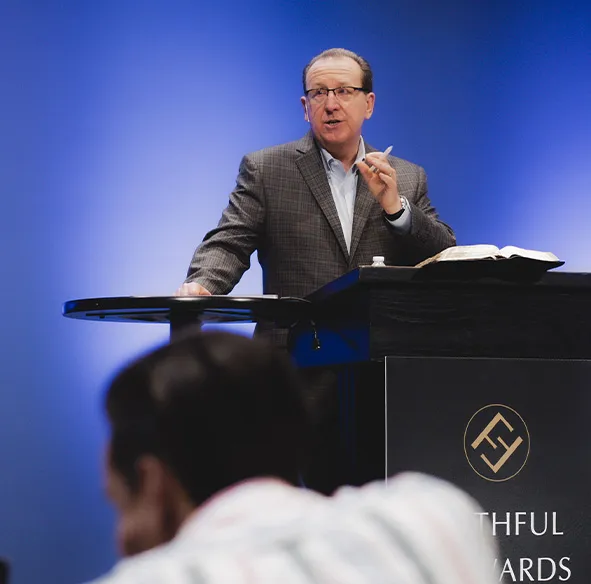
The preaching of God’s Word is central to the life of the church. Tom's pulpit ministry is dedicated to providing clear, biblical teaching to equip believers, strengthen faith, and exalt Christ.


Engage with the most recent teaching from God’s Word.
The preaching of God's Word is central to worship and of the utmost importance for the sanctification of every believer in Christ.

.jpg)
.jpg)

Explore messages organized to help you grow in Christ.
Search and filter sermons for quick access.
A Day in the Life of Jesus - Part 2
This sermon, "A Day in the Life of Jesus (Part 2)," contrasts the fictional account of *The Exorcist* with Jesus' real authority over demonic powers in Mark 1:21-34. It focuses on a Sabbath day in Capernaum where Jesus demonstrated His authority through both teaching and miraculous actions. During His teaching in the synagogue, Jesus encountered a man possessed by an "unclean spirit." The demon, recognizing Jesus as "the Holy One of God," challenged His presence. Unlike human exorcists who used rituals and charms, Jesus simply commanded, "Be quiet and come out of him!" The demon convulsed the man but departed, leaving him unharmed. The people were astonished by Jesus' unique authority, especially His power over evil spirits, and news of Him spread rapidly. The sermon explains three key reasons for Jesus' demon casting: it confirmed the truth of His message about the Kingdom of God, affirmed His deity (even demons recognized Him), and powerfully illustrated His ability to free people from spiritual slavery. This demonstration of authority offers hope, showing that Jesus can liberate even the most "enslaved" or "hard-hearted" individuals with a single word.
Hard Call: When the Bible Is Silent - Part 2
In "Conscience Hard Call: When The Bible Is Silent (Part 2)," Pastor Tom Pennington examines Romans 14, addressing Christian liberty and issues of conscience not explicitly commanded or forbidden by Scripture. He cites historical examples of extra-biblical convictions like prohibitions against ruffled shirts or specific foods, noting that while humorous in hindsight, such differences can cause serious disunity in a church. Pennington explains that Paul defines "weak in faith" as someone adding requirements or prohibitions beyond what Scripture explicitly teaches, feeling compelled to do or not do something on religious grounds. Conversely, the "strong in faith" understand the completeness of grace and sufficiency of God's Word. Paul's primary concern in Romans 14 isn't about particular choices in these matters, but preventing disunity. The sermon outlines three expressions of Christian liberty: freedom from earning salvation by law (non-negotiable), freedom from Old Testament ceremonial law, and freedom from man-made spiritual rules. While the first requires firm opposition, the latter two demand patience and tolerance. Disunity arises when legitimate differences escalate into sinful dissension, with the weak judging the strong and the strong regarding the weak with contempt. The biblical cure for this disunity involves correcting our thinking: 1.
Hard Call: When the Bible Is Silent - Part 1
Pastor Tom Pennington initiates a study on conscience, focusing on moral decisions when the Bible is silent. He explains that conscience, an internal faculty distinguishing right from wrong, judges our actions. For believers, it addresses issues not explicitly commanded or forbidden by Scripture, such as alcohol consumption, music styles, or entertainment choices, where Christians often hold differing views. Conscience functions based on knowledge. While everyone possesses an innate moral sense, external influences like family, culture, or personal sin can distort it, leading to either insensitivity (excusing wrong actions) or over-sensitivity (condemning biblically permissible ones). Therefore, educating one's conscience with God's Word is vital for its accuracy. An "issue of conscience" is characterized by the absence of a clear biblical command or prohibition. This concept underpins Christian liberty�freedom from the law as a means of salvation, from Old Testament ceremonial laws, and from man-made rules. However, this liberty is not boundless; it becomes dangerous if it causes disunity, leads others to sin, violates one's own conscience, serves as an excuse for sin, fosters legalism, or prioritizes self over others, all of which will be explored in forthcoming lessons from Romans 14 and 1 Corinthians 8-10.
A Day in the Life of Jesus - Part 1
This sermon focuses on Jesus� genuine authority, contrasting it with the internet's tendency to create false authorities. The speaker delves into Mark 1:21-34, detailing a single Sabbath day in Jesus' ministry in Capernaum. After being rejected in Nazareth, Jesus strategically chose Capernaum as His new home base. Located on a vital international highway from Egypt to Mesopotamia, Capernaum's crossroads position ensured that news of His teachings and miracles would travel widely, making it an ideal center for His ministry. Jesus regularly taught in the Capernaum synagogue, a community hub for worship and scriptural explanation. His teaching "amazed" the people, who noted He spoke "as one having authority, and not as the scribes." Unlike the scribes, who relied on traditions, convoluted reasoning, and personal interpretations, Jesus' authority stemmed from His divine person and His faithful exposition of God's actual Word. He explained the Scriptures directly, rather than fabricating messages or citing endless human opinions. This profound authority mandates our obedience to Jesus, our diligent listening to God�s authoritative Word, the church�s insistence on biblical teaching, and for teachers, the faithful delivery of God's message, relying on the Holy Spirit to transform human effort into divine revelation.
The Court of Conscience
Tom Pennington's sermon, "The Court of Conscience," explains how God universally reveals His moral law, rendering all humanity guilty. Referencing Romans 1, he highlights that general revelation in creation leaves people "without excuse" regarding God's power and divine nature. Romans 2 further reveals that even those without written law possess an inherent conscience, an internal "courtroom within the soul" that instinctively knows God's ordinances. Pennington identifies four key characteristics of conscience: it is universal, meaning everyone has it and is accountable; natural, an innate part of human nature; legal, pre-loaded with the basic "work of the Law" on the heart; and judicial, perpetually accusing or defending one's thoughts. This internal record of guilt, unerasable by human effort, will be exposed at Christ's final judgment, confirming humanity's condemnation. However, the sermon provides profound hope through Jesus Christ. Drawing from Hebrews, Pennington explains that unlike Old Testament sacrifices, Christ's blood effectively cleanses the believer's conscience from "dead works." This divine cleansing removes the indelible record of guilt, ensuring that for those in Christ, their conscience's past accusations will never lead to condemnation before God, allowing them to serve Him with a pure conscience.
Follow Me!
Pastor Tom Pennington's sermon on Mark 1:16-20, titled "The Memoirs of Peter Follow Me," explores Jesus' compelling call to discipleship and service. Focusing on Jesus' interaction with four successful fishermen�Simon, Andrew, James, and John�the message highlights their immediate response to His command: "Follow Me, and I will make you become fishers of men." Pennington explains that while these men had previously encountered Jesus, this particular call was for them to accompany Him on a short-term preaching tour, signifying a call to active service and evangelism rather than an immediate, permanent full-time ministry. Their swift obedience in leaving their lucrative businesses, nets, and even their father underscores Jesus' authority and the absolute priority of His kingdom. The sermon draws several lessons about Christ: He delights in using ordinary people, demands absolute submission, equips His followers for their tasks, requires ultimate loyalty above all else, and determines the roles each disciple will fill. For believers today, the application is clear: Jesus and His kingdom must be our highest priority. We are called to actively serve Him, be characterized by obedience, and diligently seek to bring others to Christ.
No Results Found.
We couldn’t find anything matching your search.
Explore The Word Unleashed
Our ministry brings together expository preaching, theological precision, and practical application for the good of Christ's church and the daily living of Christ's people.
.webp)
Sermons
Listen to expository sermons that clearly teach God’s Word and guide you in daily living.

Radio
Tune in to gospel-centered programs that share biblical truth and strengthen your daily walk with Christ.
Training
Join courses and workshops designed to deepen your faith and equip you to serve others with biblical wisdom.
.webp)
From the Pastor's Desk
Read pastoral messages that encourage, instruct, and help you apply God’s Word to every part of your life.
.webp)
Hymns
Discover timeless hymns that lift your heart in worship and remind you of God’s abounding grace and faithfulness.
Podcasts
Stay rooted in Scripture through our podcast series.