Sermons That Exalt Christ
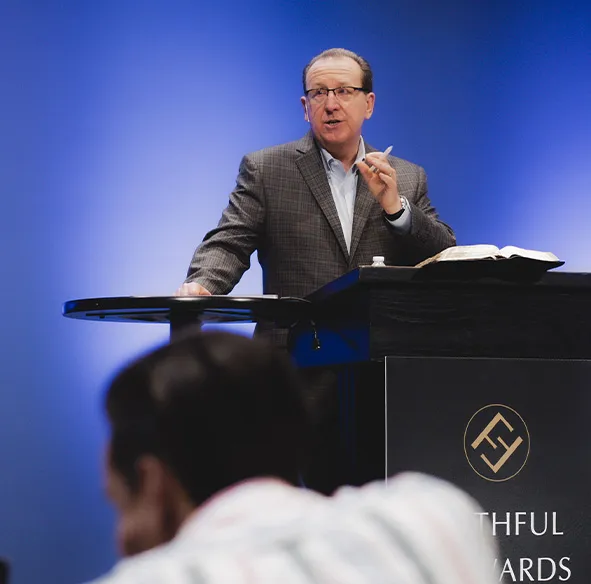
The preaching of God’s Word is central to the life of the church. Tom's pulpit ministry is dedicated to providing clear, biblical teaching to equip believers, strengthen faith, and exalt Christ.


Engage with the most recent teaching from God’s Word.
The preaching of God's Word is central to worship and of the utmost importance for the sanctification of every believer in Christ.

.jpg)
.jpg)

Explore messages organized to help you grow in Christ.
Search and filter sermons for quick access.
Every Nation Under God
Addressing anxieties surrounding an upcoming election, Pastor Tom Pennington outlines God's absolute sovereignty over all nations, presenting six biblical declarations. First, God established nations (post-Babel) to restrain evil, punish wrongdoing, commend good behavior, provide societal order for tranquil lives, and ultimately, to lead people to seek Him. Second, God determines the specific circumstances of every nation, including its lifespan, geographical boundaries, and even its form of government; there is no single "inspired" system. Third, God decides which nations will rise to dominate and which will fall, often using one to judge another. Fourth, God sovereignly chooses every ruler, placing them in power as either a blessing or a judgment, emphasizing that Jesus Christ is the ultimate "ruler of the kings of the earth." Fifth, God dictates clear expectations for leaders: they must fear Him, demonstrate character and integrity, rule with wisdom, justice, and righteousness, live under the law, serve their people, and align with God's moral standards. Finally, God defines our responsibilities: to obey the law, pay taxes, honor those in authority (even unpopular ones), and crucially, to pray for their salvation.
Hard Call: When the Bible Is Silent - Part 4
Tom Pennington's sermon, "Conscience Hard Call-When the Bible is Silent (Part 4)," emphasizes the responsible exercise of Christian liberty, particularly concerning decisions not explicitly commanded or forbidden by Scripture. Drawing from Romans 14 and 1 Corinthians 8-10, he outlines three foundational principles. Firstly, Christians must never allow their liberty to cause disunity within the church, whether by strong believers contemptuously judging the weak, or weak believers judging the strong. Secondly, liberty should never lead others to sin by causing them to violate their own conscience. Thirdly and most extensively, Christians must never allow their liberty to cause *themselves* to sin. This occurs in three ways: 1. **Violating one's own conscience:** Doing something you personally believe God has forbidden, even if it's not explicitly in Scripture. Paul stresses the importance of re-educating a weak conscience through consistent study of God's Word. 2. **Using liberty as an excuse for clear sin:** Stretching freedom into license for actions clearly condemned by God, like drunkenness or engaging with explicit content, which dishonors Christ. 3.
Unforgiven!
Pastor Tom Pennington's sermon on Matthew 18:21-35 addresses Peter's question about the limits of forgiveness, to which Jesus responds with the Parable of the Unforgiving Slave. In the parable, a king forgives a slave an astronomical, unpayable debt, which Pennington equates to billions of dollars and 150,000 years of labor, representing humanity's immeasurable sin against God. This act of pure grace illustrates God's unconditional forgiveness of our spiritual debt through Christ. However, the same slave, having been shown such immense mercy, immediately encounters a fellow slave who owes him a comparatively tiny amount (a few months' wages). He relentlessly demands repayment, even having his debtor imprisoned. This profound wickedness highlights the sinfulness of withholding forgiveness from others when one has received such boundless grace. The king, enraged by the unforgiving slave's actions, revokes his forgiveness and hands him over to torturers until his original debt is repaid. Jesus applies this by warning, "My heavenly Father will also do the same to you, if each of you does not forgive his brother from your heart." Pennington clarifies that while God does not retract salvation, true believers must forgive others out of gratitude for their own forgiveness.
Divine Healing
This sermon provides a biblical perspective on sickness and divine healing, dispelling common misunderstandings. Pastor Tom Pennington emphasizes God's ultimate sovereignty over all illnesses, which He permits for multifaceted purposes: chastening sin, allowing the Fall's effects, humbling believers, strengthening endurance, and bringing Himself glory. Though Satan may be an immediate cause, he acts only with God's consent, and God uses all for good. Pennington stresses God as the sole healer but clarifies He doesn't promise universal healing, as biblical figures show. Misinterpreted verses (Exodus 15:26, Isaiah 53:4) are conditional or metaphorical for sin, not atonement-guaranteed health. Perfect health is reserved for eternity. God primarily heals through means like the immune system, doctors, medical aids, and medicines. Miraculous healing gifts were concentrated in specific historical periods to confirm God's word, with modern claims often having other explanations. God can still heal directly without means. Christians facing illness should acknowledge God's sovereignty, confess sin, use medical help while trusting God, pray for healing aligned with His will, and accept His providential plan.
A Day in the Life of Jesus - Part 3
Tom Pennington's sermon, "A Day in the Life of Jesus (Part 3)," delves into Mark 1, portraying Jesus' day in Capernaum as a "reality show" of divine authority against extraordinary, supernatural challenges. Drawing from Peter's eyewitness account, Mark 1:21-34 describes Jesus teaching in the synagogue with unparalleled authority, immediately casting out a demon that recognized Him as the Holy One of God. Subsequently, in Peter's home (whose archaeological site is nearly certain), Jesus instantly and completely heals Peter's mother-in-law from a severe fever. This act highlights His profound compassion and authenticates His healing ministry, contrasting with fraudulent claims. As the Sabbath concludes at sunset, the entire city gathers at Peter's door, and Jesus heals many people with various diseases and casts out numerous demons, who, knowing His identity as the Son of God, are silenced. The sermon emphasizes Jesus' limitless power and compassion. However, it concludes with a sobering warning: despite witnessing these profound miracles, many in Capernaum did not repent. Jesus later denounced these cities, stating their judgment would be worse than Sodom's, because they consumed His benefits without accepting Him as Lord.
Hard Call: When the Bible Is Silent - Part 3
The text outlines three categories for all moral decisions: explicitly forbidden by the Bible, explicitly commanded by the Bible, or issues of Christian liberty/conscience (where the Bible is silent). While Christians enjoy liberty in the third category, this freedom comes with crucial principles for its wise exercise. Firstly, Christian liberty must never cause disunity among believers. Secondly, and as the sermon's main focus, it must never cause others to sin. The speaker uses the metaphors of an "obstacle" and "stumbling block" (scandalon � a trap's bait stick) to illustrate how one's freedom can lead another into sin. A "weaker" brother, who believes a certain action is wrong but observes a "stronger" brother doing it, might imitate the action against their own conscience, thus sinning. To prevent this, Christians are taught three ways to wisely wield their liberty: 1. **Love your brother:** Prioritize a fellow Christian's spiritual well-being over personal freedom. If you truly love, you will limit your liberty to protect them from sin, remembering Christ died for them. For a weaker conscience, an action believed to be sinful *is* sinful for them if they proceed. 2.
No Results Found.
We couldn’t find anything matching your search.
Explore The Word Unleashed
Our ministry brings together expository preaching, theological precision, and practical application for the good of Christ's church and the daily living of Christ's people.
.webp)
Sermons
Listen to expository sermons that clearly teach God’s Word and guide you in daily living.

Radio
Tune in to gospel-centered programs that share biblical truth and strengthen your daily walk with Christ.
Training
Join courses and workshops designed to deepen your faith and equip you to serve others with biblical wisdom.
.webp)
From the Pastor's Desk
Read pastoral messages that encourage, instruct, and help you apply God’s Word to every part of your life.
.webp)
Hymns
Discover timeless hymns that lift your heart in worship and remind you of God’s abounding grace and faithfulness.
Podcasts
Stay rooted in Scripture through our podcast series.