Sermons That Exalt Christ
The preaching of God’s Word is central to the life of the church. Tom's pulpit ministry is dedicated to providing clear, biblical teaching to equip believers, strengthen faith, and exalt Christ.

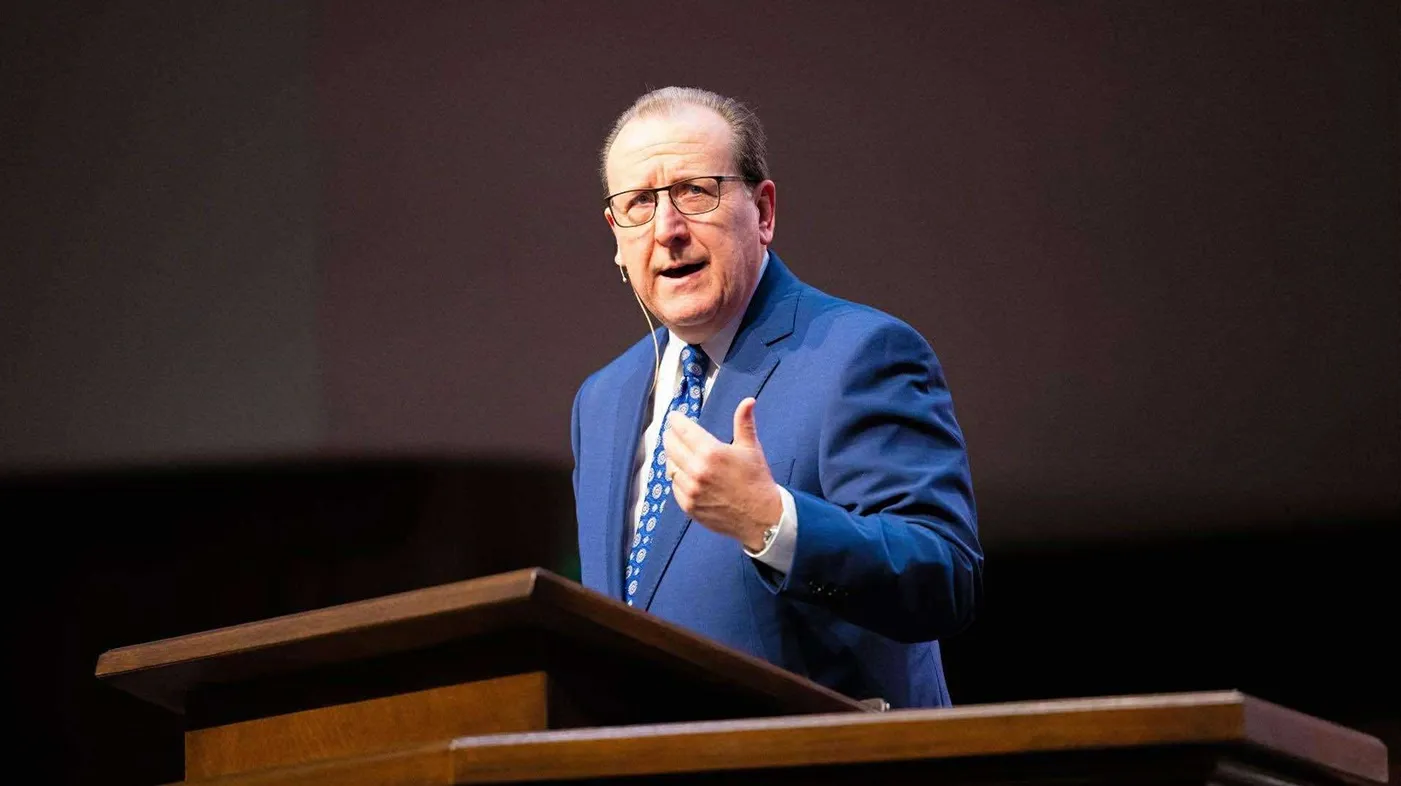
Engage with the most recent teaching from God’s Word.
The preaching of God's Word is central to worship and of the utmost importance for the sanctification of every believer in Christ.

.jpg)
.jpg)

Explore messages organized to help you grow in Christ.
Search and filter sermons for quick access.
The Great Commission
Pastor Tom Pennington begins a 2009 sermon series focused on evangelism, calling it the church's New Year's resolution, rooted in Matthew 28:16-20, the Great Commission. He outlines four essential components of this mission. First, the mission's **importance** is paramount, tracing back to God's plan for global redemption from Abraham through Israel and Christ, and now through the church. Matthew's placement of this command as Christ's final instruction, Jesus� deliberate calls for this gathering, and the presence of over 500 followers underscore its weight. Second, the **authority** behind the mission is Christ's absolute power "in heaven and on earth," granted by the Father. This comprehensive authority empowers Him to issue such a command, to call sinners, forgive sins, and guide His followers. Third, the **details** involve "going and making disciples of all the nations." This means actively sharing the gospel to bring people into an obedient, pupil-teacher relationship with Christ. This process includes public confession through baptism and subsequent teaching to "observe all that I commanded you"�emphasizing complete obedience to Christ's teachings. Finally, the mission's **support** rests on Christ's unwavering promise: "I am with you always, even to the end of the age.
The Return of the King - Part 2
This sermon on Matthew 2:1-12, "The Return of the King (Part 2)," establishes Jesus as the only rightful King. It focuses on the Magi's journey, pagan astrologers from the East whom God providentially led to Jerusalem to find the newborn King. Their arrival exposed three "unworthy reactions" in Jerusalem. The general populace showed "settled indifference," too preoccupied with daily life to investigate the King's birth. The religious leaders displayed "religious distraction," knowing prophecies of the Messiah's Bethlehem birth but failing to seek Him out, absorbed in their religious duties. King Herod exhibited "angry defiance," a paranoid usurper who feigned worship while secretly plotting the Child's murder. Conversely, the Magi modeled "unrestrained worship." Upon finding Jesus, they were filled with exceeding joy, fell to the ground in submission, and honored Him with costly gifts: gold for a King, frankincense for God, and myrrh for His destined death. They left spiritually transformed. God sent the Magi for their salvation, as a testimony to Israel, to confirm prophecy, and as an invitation for all to respond to Jesus as their rightful King. The sermon concludes by challenging listeners to choose between indifference, religious distraction, angry defiance, or the Magi's joyful, submissive worship.
The Nativity: A Virtual Tour
Pastor Tom Pennington led a virtual tour of the Nativity, tracing Mary and Joseph�s journey from Nazareth to Bethlehem. Nazareth, their small, isolated hometown, was where the angel Gabriel announced Jesus' miraculous birth to Mary. After visiting her pregnant cousin Elizabeth, Mary returned, and Joseph, initially contemplating a private divorce upon learning of Mary's pregnancy, was divinely instructed in a dream to marry her. Nine months pregnant, Mary and Joseph embarked on a challenging 60-mile, at least three-day journey to Bethlehem for a Roman census. Bethlehem was historically significant as King David's birthplace and prophesied as the Messiah's. Jesus was born there in humble circumstances, laid in a manger "because there was no room for them in the inn." Pennington explained that "inn" (*katalyma*) might refer to a public lodging or a relative's guest chamber. He proposed possibilities for the lack of space: late arrival, fully booked lodgings, or even social rejection by relatives due to the perceived shame of an unwed pregnancy. Regardless of the precise reason, the circumstances underscored Jesus� profound condescension.
The Return of the King - Part 1
In "The Return of the King," Pastor Tom Pennington redefines Jesus' first coming as a return, emphasizing His divine pre-existence as the Second Person of the Trinity, active throughout the Old Testament, now uniquely manifest as fully human. The sermon primarily analyzes Matthew 2:1-12, highlighting the core theme that Jesus is the only rightful King for all people. Pennington explains that the Magi, influential Persian "king makers" and scholars, arrived in Jerusalem between 40 days and two years after Jesus' birth, guided by a supernatural "star." Dispelling common myths, he clarifies they were not necessarily three kings, nor are their traditional names biblical. Their profound understanding of a coming King of the Jews, despite being pagan astrologers, is attributed to the long-standing Jewish presence in Babylon and Persia following the exile. Crucially, Daniel, as the chief of Babylon's wise men, would have imparted prophecies about a divine Messiah, His everlasting kingdom, and His arrival at a specific time. The sermon concludes by stressing that whether humble shepherds or powerful Gentile magi, the only appropriate response to Jesus, the promised Divine Messiah, is to acknowledge His sovereignty and worship Him, submitting every aspect of one's life to His rightful rule.
The Ties that Bind
Pastor Tom Pennington's sermon on Ephesians 4:4-6 underscores the paramount importance of Christian unity, illustrating the damage disunity causes with a story of a church divided over a trivial matter. He explains that unity is not something we create, but rather a God-given reality we must diligently preserve. The passage outlines seven "realities" or "pillars" that form the objective basis of this unity: 1. **One Body:** Christians share a common life, being organically united to Christ and each other, akin to a human body. 2. **One Spirit:** All believers share a common divine source, the Holy Spirit, who regenerates and indwells them. 3. **One Hope:** They share a common, certain future hope of ultimate salvation, resurrection, and Christ's return. 4. **One Lord:** Jesus Christ is their common Master, dissolving all societal and ethnic differences among fellow slaves. 5. **One Faith:** Believers embrace a common Gospel, founded on the true person and work of Christ and salvation by faith alone. 6. **One Baptism:** This signifies a common public confession of allegiance to Jesus Christ as Savior and Lord. 7. **One God and Father:** All Christians share a common relationship with God as their Father through Christ.
Authority to Forgive - Part 2
This sermon from Mark 2:1-12 explores Jesus' divine authority to forgive sins, challenging the common "sanitized" view of Christ. The passage recounts Jesus healing a paralyzed man whose friends lowered him through a roof. Instead of immediately healing him, Jesus declared, "Son, your sins are forgiven." This provoked internal accusations of blasphemy from religious leaders (scribes), who rightly believed only God could forgive sins. Jesus, demonstrating divine omniscience by knowing their thoughts, challenged them: "Which is easier, to say, 'Your sins are forgiven,' or to say, 'Get up and walk'?" To objectively prove His authority to forgive the invisible sin, Jesus then commanded the paralytic to rise and walk. The man was instantly and completely healed, astounding the crowd. This incident yields three crucial conclusions. First, Jesus possesses ultimate authority to forgive sins on Earth, offering an eternal spiritual healing far greater than physical recovery. Second, He exercises this authority sovereignly, granting forgiveness to the humble paralytic while the hostile religious leaders remained unforgiven due to their hardened hearts.
No Results Found.
We couldn’t find anything matching your search.
Explore The Word Unleashed
Our ministry brings together expository preaching, theological precision, and practical application for the good of Christ's church and the daily living of Christ's people.
.webp)
Sermons
Listen to expository sermons that clearly teach God’s Word and guide you in daily living.

Radio
Tune in to gospel-centered programs that share biblical truth and strengthen your daily walk with Christ.
Training
Join courses and workshops designed to deepen your faith and equip you to serve others with biblical wisdom.
.webp)
From the Pastor's Desk
Read pastoral messages that encourage, instruct, and help you apply God’s Word to every part of your life.
.webp)
Hymns
Discover timeless hymns that lift your heart in worship and remind you of God’s abounding grace and faithfulness.
Podcasts
Stay rooted in Scripture through our podcast series.