Sermons That Exalt Christ
The preaching of God’s Word is central to the life of the church. Tom's pulpit ministry is dedicated to providing clear, biblical teaching to equip believers, strengthen faith, and exalt Christ.

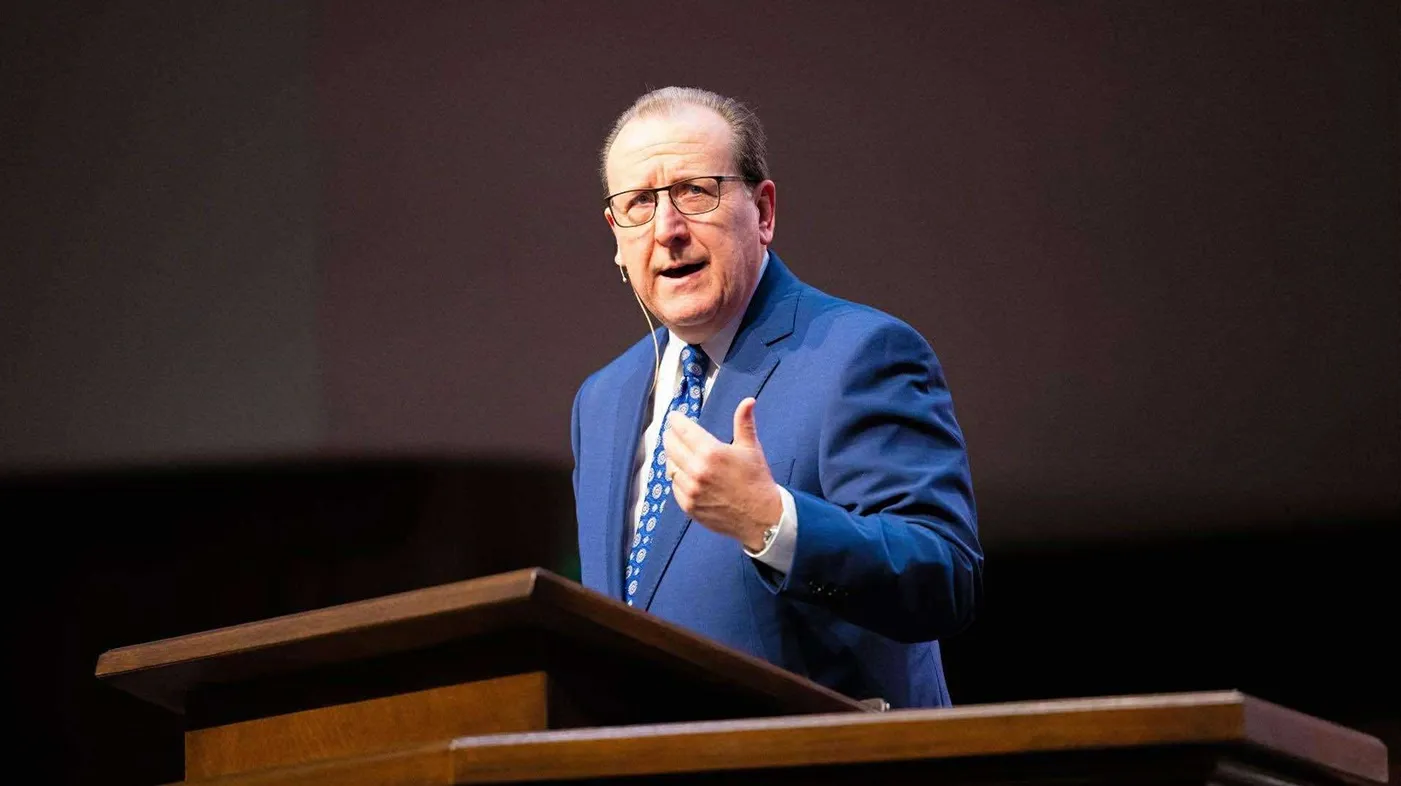
Engage with the most recent teaching from God’s Word.
The preaching of God's Word is central to worship and of the utmost importance for the sanctification of every believer in Christ.

.jpg)
.jpg)

Explore messages organized to help you grow in Christ.
Search and filter sermons for quick access.
Q & A
Pastor Tom Pennington conducted a Q&A session addressing various theological questions from his congregation. He explained that while Christ, as master of all, voluntarily submitted to death, Romans 6:9 indicates that death no longer holds power over Him, signifying His control over it. Regarding angels, holy angels continue to exist and worship God eternally, while fallen angels (demons) face ultimate judgment in the Lake of Fire; angels engage in spiritual battles but are eternal beings, not subject to annihilation. Pennington clarified that God is called the "God and Father of our Lord Jesus Christ" in 1 Peter 1:3 in the context of Jesus' humanity, as Christ, though eternally divine, willingly embraced full human nature and submitted to the Father. Jesus was "made perfect through suffering" not due to sinfulness, but by demonstrating His flawless obedience and character, qualifying Him as the perfect High Priest. His temptations were purely external, unlike human temptations which arise from both external stimuli and internal desires. The pastor also addressed Satan's release in Revelation 20 as a final act of rebellion by an inherently evil being, proving that even a perfect millennial environment doesn't guarantee human repentance.
Christ's Goal for His Church
Pastor Tom Pennington's sermon on Ephesians 4:13 outlines Christ's ultimate goal for the church: for "we all" to attain "the unity of the faith, and of the knowledge of the Son of God, to a mature man, to the measure of the stature which belongs to the fullness of Christ." This destination isn't reached through sudden events or spiritual fads, but through a lifelong, often slow and painful, process likened to a long journey or physical growth. Every true Christian will ultimately reach this goal, not by their own efforts alone, but by God's faithfulness and Christ's preservation until His return, when all believers will be made perfect in Him. The multifaceted goal involves three key objectives. Firstly, "unity of the faith" signifies agreement on fundamental Christian doctrines, fostering unity based on truth. Secondly, "unity of the knowledge of the Son of God" refers to a growing, intimate devotion to Jesus Christ himself, moving beyond mere intellectual knowledge to a personal relationship. Finally, the church is to become "a mature man" reaching "the measure of the stature which belongs to the fullness of Christ," meaning a moral resemblance to Christ, embodying His virtues.
The Sabbath & the Heart of God - Part 2
Tom Pennington's sermon "The Sabbath and the Heart of God (Part 2)" on Mark 3:1-6 examines Jesus's final conflict with the Pharisees over Sabbath authority, following an incident affirming the Sabbath allows for necessity. This segment focuses on mercy, as Jesus, declared "Lord even of the Sabbath," heals a man with a withered hand. The Pharisees, observing Jesus to find grounds for accusation, consider healing on the Sabbath unlawful unless life-threatening. Jesus challenges their legalism, asking if it is lawful to do good or harm, save a life or kill, on the Sabbath. They remain silent, revealing their hardheartedness. Jesus, angered yet grieved, heals the man, demonstrating that withholding good when able is sin. The Pharisees, filled with rage, immediately conspire with the Herodians to destroy Jesus, illustrating their self-centeredness and anger towards God's righteousness. Pennington concludes by highlighting God's heart through Jesus's actions: creating the Sabbath for man's benefit, caring for physical needs and suffering, and expressing anger at sin while simultaneously grieving for hardheartedness and extending an invitation to repentance and grace.
Church by the Book - Part 2
This sermon, "Church by the Book Part 2," highlights that Jesus Christ is actively building His church, His ultimate priority, according to a divine plan revealed in Scripture. Drawing from Matthew 16, where Jesus promised to build His church, the text elaborates on Ephesians 4:7, 11-12, outlining five interconnected parts of this plan. First, Christ distributes spiritual gifts to every church member (v. 7), empowering each for service. Second, Christ appoints leaders�apostles, prophets, evangelists, and pastor-teachers (v. 11)�as gifts to the church. While apostles and prophets laid the foundational revelation, evangelists and pastor-teachers (who are also elders and overseers) continue to lead, identified by their desire for the work, godly character, capacity to teach and manage, and congregational confirmation. Members are called to appreciate, imitate, and submit to these biblically qualified leaders, as their authority stems from God's Word. Third, these leaders equip the saints (v. 12a) for ministry through diligent teaching of God's Word and prayer, preparing them to function effectively. Fourth, members then accomplish the work of service (v. 12b), engaging in worship, nurture, and evangelism, rejecting the notion that ministry is solely for paid clergy or that there are no leaders.
The Sabbath & the Heart of God - Part 1
Pastor Tom Pennington's sermon on Mark 2:22-3:6 examines Jesus's confrontation with the Pharisees over Sabbath observance, highlighting their legalistic mindset that prioritized meticulous human traditions over God's clear word and the "weightier provisions of the law" like justice and mercy. The Pharisees accused Jesus's hungry disciples of breaking the Sabbath by picking grain, equating it to forbidden work. Jesus refuted their accusations with several "iron-clad" arguments. He reminded them of biblical examples where necessity (David eating consecrated bread) or God-ordained ministry (priests working in the temple) superseded ceremonial law. Citing Hosea, Jesus emphasized God's desire for compassion over sacrifice. He also taught that the Sabbath was made for man, intended as a blessing and rest, not an oppressive burden. Most importantly, Jesus declared Himself "Lord even of the Sabbath," an unequivocal claim to deity and authority to redefine its purpose. For Christians, the sermon clarifies that we are not bound by the Old Testament Sabbath's specific regulations, as Christ is the "substance" to which the Sabbath was a "shadow" (Colossians 2:16-17).
Church by the Book - Part 1
Pastor Tom Pennington's sermon, "Churches by the Book Part 1," emphasizes the importance of Christian unity, drawing an analogy to extreme corporate team-building exercises that forge cohesive work. He applies this to Ephesians 4:2-16, where Paul outlines how Christians, by working together and using their spiritual gifts, preserve the unity the Holy Spirit created. The sermon focuses on the first part of "Christ's plan for unity": Christ distributes spiritual gifts to His church. These "grace gifts" (charismata) are unique capacities for service, given to every believer at conversion, distinct from natural talents. While some gifts were temporary "sign gifts" for confirming the apostles' message, permanent "edifying gifts" (categorized as speaking or serving) exist today, forming a unique blend for each individual. Discovering one's gift involves studying Scripture, prayer, self-assessment, seeking confirmation, and faithfully serving. Christ sovereignly determines each person's gift and its measure, which should prevent both pride in visible roles and discontentment in less visible ones. The immediate purpose of these gifts is to serve the church for the "common good" and mutual edification. Ultimately, exercising our gifts properly glorifies God by exalting Christ, demonstrating His perfect design for His church.
No Results Found.
We couldn’t find anything matching your search.
Explore The Word Unleashed
Our ministry brings together expository preaching, theological precision, and practical application for the good of Christ's church and the daily living of Christ's people.
.webp)
Sermons
Listen to expository sermons that clearly teach God’s Word and guide you in daily living.

Radio
Tune in to gospel-centered programs that share biblical truth and strengthen your daily walk with Christ.
Training
Join courses and workshops designed to deepen your faith and equip you to serve others with biblical wisdom.
.webp)
From the Pastor's Desk
Read pastoral messages that encourage, instruct, and help you apply God’s Word to every part of your life.
.webp)
Hymns
Discover timeless hymns that lift your heart in worship and remind you of God’s abounding grace and faithfulness.
Podcasts
Stay rooted in Scripture through our podcast series.