Sermons That Exalt Christ
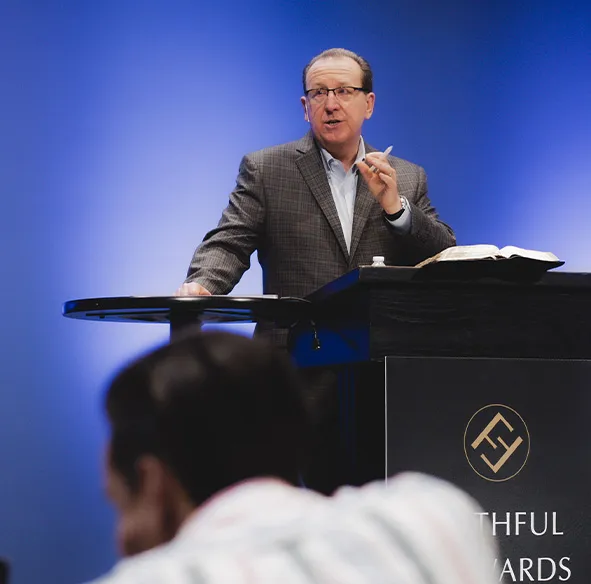
The preaching of God’s Word is central to the life of the church. Tom's pulpit ministry is dedicated to providing clear, biblical teaching to equip believers, strengthen faith, and exalt Christ.


Engage with the most recent teaching from God’s Word.
The preaching of God's Word is central to worship and of the utmost importance for the sanctification of every believer in Christ.

.jpg)
.jpg)

Explore messages organized to help you grow in Christ.
Search and filter sermons for quick access.
Twelve Unlikely Men - Part 2
Tom Pennington's sermon "Twelve Unlikely Men (Part 2)" explores Jesus' deliberate choice of twelve diverse and often improbable individuals to be His apostles. After a night of prayer, Jesus selected these men to be His constant companions for intense training and to be His authoritative representatives, empowered to preach and cast out demons, mirroring His own ministry. The sermon highlights several observations about these men, including a discernible hierarchy with Peter as the undisputed leader, and an inner circle of Peter, James, and John who shared the closest intimacy with Christ. The group was notably diverse, featuring impulsive leaders like Peter, fiery brothers James and John ("Sons of Thunder"), simple believers like Andrew, analytical thinkers like Philip, guileless individuals like Nathanael, a despised tax collector like Matthew, a doubting but ultimately steadfast Thomas, and even a radical nationalist like Simon the Zealot. Despite their varied backgrounds and continued personal failings, Jesus used them mightily; most endured martyrdom for their faith.
The Implications of Christ's Plan for His Church - Part 3
Pastor Tom Pennington's sermon, "The Implications of Christ�s Plan for His Church (Part 3)," examines Ephesians 4:14-16, using the human body as a profound analogy for the church's complex unity. He highlights Christ's plan for both individual believers and the corporate church. Individually, Christians are called to mature beyond spiritual infancy, resisting deception by growing in truth and love. Corporately, four main implications of Christ's plan are presented. First, Christ is the church's sovereign Head, acting as its ultimate authority and the sole source of its life and growth, directing it through His Word. Second, spiritual growth is inherently communal; believers are intended to flourish only when actively connected to the entire body, not in isolation. Third, every Christian is vital, tasked with contributing to the church's health by utilizing their unique spiritual gifts and fulfilling their specific role. Finally, genuine, sacrificial love is the lifeblood of true spiritual growth. Without this love, all efforts and gifts within the church are rendered ineffective and cannot lead to authentic edification. Pennington concludes by urging believers to prioritize Christ's church, actively participate, and function in love, recognizing its eternal significance over worldly concerns.
Twelve Unlikely Men - Part 1
In "Twelve Unlikely Men," Pastor Tom Pennington explains that Jesus often chooses those considered foolish, weak, or despised (1 Corinthians 1), ensuring God alone receives the glory. This was true of His apostles, mostly ordinary men. After a night of prayer, Jesus sovereignly chose twelve from His broader group of disciples, constituting them as a new body. This pivotal moment, halfway through His ministry, was driven by increased workload, growing religious opposition, and the need for intensive training, symbolizing a "new Israel." Their mission had two crucial parts: first, "to be with Him" for education and to serve as eyewitnesses of His entire ministry, death, and resurrection. This firsthand experience was essential for authenticating their future testimony, as consistently highlighted in the book of Acts. Second, they were "to be sent out" as apostles�official, authoritative representatives (like a *shelyak* in Judaism), speaking and acting in Jesus's place with His authority. This understanding is vital because our faith rests on the undeniable eyewitness testimony of these men. Furthermore, Jesus pre-authenticated these apostles to be the inspired authors of the New Testament, ensuring its trustworthiness.
The Implications of Christ's Plan for His Church - Part 2
This sermon, based on Ephesians 4:14-16, emphasizes that spiritual growth is a vital part of the Christian life, moving believers beyond spiritual infancy and protecting them from deceptive doctrines. This growth is achieved primarily by "holding to the truth in love." While God is the ultimate cause of spiritual development, He uses His Word�the entirety of Scripture�as the essential means. The Bible is presented as the primary tool for spiritual growth, capable of restoring the soul, imparting wisdom, bringing joy, enlightening understanding, and purifying conduct. Other spiritual practices, such as prayer or navigating trials, are only beneficial for growth when informed and directed by God's Word. Critically, this truth must not be merely intellectual but coupled with genuine love for God and others, preventing a cold, arid faith. Neglecting God's Word leads to spiritual starvation, apathy, and a diminished appetite for the very sustenance needed to mature into Christ. Therefore, believers are urged to prioritize the diligent study and embrace of Scripture, both personally and corporately, allowing its truth, mixed with love, to transform them.
The Implications of Christ's Plan for His Church - Part 1
This sermon on Ephesians 4:14-16 explores the practical, individual implications of Christ�s plan for the church, aiming to preserve unity through spiritual maturity. Pastor Tom Pennington explains that while the ultimate goal is unity in doctrine, devotion, and likeness to Christ, believers must actively grow up from spiritual infancy. He identifies three key individual implications. First, every Christian begins as a spiritual infant, requiring growth from this newborn state. Second, immature Christians share two primary characteristics of physical children: they are personally unstable, easily "tossed here and there by waves," exhibiting fickleness, impulsiveness, and excessive reactions. They are also easily deceived, "carried about by every wind of doctrine" due to ignorance, pride, and attraction to novelty or showmanship. Third, Satan actively exploits this immaturity through false teachers who employ "trickery" and "deceitful scheming," distorting God's Word for their own gain. The sermon concludes with practical lessons: never equate life or social maturity with spiritual maturity, constantly guard against false teaching from various sources like media and academia, and be patient with others' spiritual immaturity. The overarching call is for believers to diligently pursue growth into Christ's likeness, becoming stable in truth and resisting deception.
The International Ministry of Jesus Christ
Mark 3:7-11 illustrates Jesus' divinely designed international ministry, serving as a blueprint for the church's global mission. After withdrawing from opposition, Jesus attracted vast, diverse multitudes from Galilee, Judea, Idumea, and beyond, who sought teaching and healing. Desperate crowds pressed Him, necessitating a boat. Unclean spirits recognized Him as the "Son of God" but were silenced, as Jesus controlled the timing of His full revelation. His ministry consistently prioritized teaching, complemented by healing�demonstrating His transformative power�and casting out demons, asserting His sovereign authority over evil. This global reach fulfilled ancient prophecies, notably Isaiah's declaration that Gentiles would hope in Him, and the Abrahamic Covenant's promise that all nations would be blessed through His lineage. Israel was called to be a "kingdom of priests," mediating God's message to the world, a mandate echoed by Simeon and Paul. For believers, our inclusion in Christ is God's eternal plan, not an afterthought. Jesus� international example compels the church to embrace this worldwide mission. We are challenged to broaden our vision beyond local concerns, praying for missionaries, giving, and considering personal involvement to display Christ�s glory among all nations, for His name�s sake.
No Results Found.
We couldn’t find anything matching your search.
Explore The Word Unleashed
Our ministry brings together expository preaching, theological precision, and practical application for the good of Christ's church and the daily living of Christ's people.
.webp)
Sermons
Listen to expository sermons that clearly teach God’s Word and guide you in daily living.

Radio
Tune in to gospel-centered programs that share biblical truth and strengthen your daily walk with Christ.
Training
Join courses and workshops designed to deepen your faith and equip you to serve others with biblical wisdom.
.webp)
From the Pastor's Desk
Read pastoral messages that encourage, instruct, and help you apply God’s Word to every part of your life.
.webp)
Hymns
Discover timeless hymns that lift your heart in worship and remind you of God’s abounding grace and faithfulness.
Podcasts
Stay rooted in Scripture through our podcast series.