Sermons That Exalt Christ
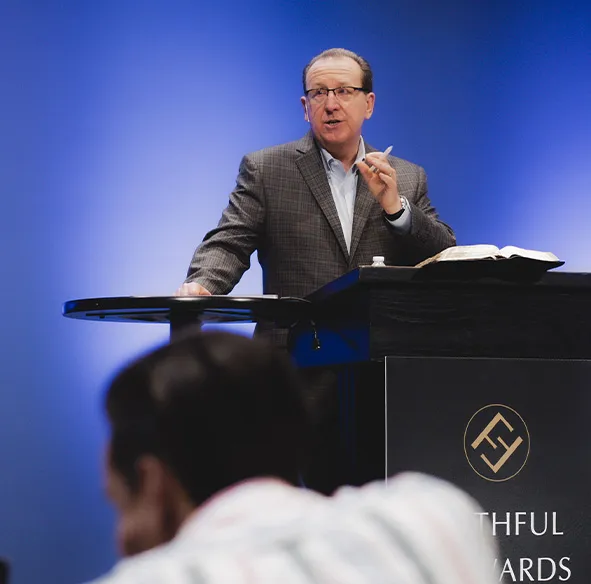
The preaching of God’s Word is central to the life of the church. Tom's pulpit ministry is dedicated to providing clear, biblical teaching to equip believers, strengthen faith, and exalt Christ.


Engage with the most recent teaching from God’s Word.
The preaching of God's Word is central to worship and of the utmost importance for the sanctification of every believer in Christ.

.jpg)
.jpg)

Explore messages organized to help you grow in Christ.
Search and filter sermons for quick access.
Real Change From the Inside Out - Part 1
Tom Pennington's sermon "Real Change from the Inside Out" addresses the universal human desire for change, acknowledging its difficulty. He contends that common cultural approaches�self-help, pharmaceutical drugs, and secular counseling�are insufficient for deep, internal transformation. These methods may alter external behavior or thought patterns, but they cannot produce *real heart change* because, as Jeremiah 13:23 suggests, humans cannot change their fundamental nature. Pennington asserts that true and lasting change is exclusively possible through the gospel of Jesus Christ. Becoming a Christian involves "learning Christ," which he describes as entering a committed teacher-student relationship with Him. This process begins by "hearing Him," signifying a personal response to the initial gospel message and salvation. It continues as believers are "taught in Him," through ongoing systematic instruction from God's Word and faithful teachers. Jesus is presented as the subject, the teacher, and the very foundation of this spiritual education. The sermon emphasizes that all saving truth, and thus the capacity for real change, resides solely in Jesus Christ. For Christians, radical change has already occurred at salvation, necessitating a continuous departure from former ways of life and a progressive manifestation of their new nature in Christ.
How to Live Like a Pagan - Part 4
Pastor Tom Pennington's sermon "How to Live Like a Pagan (Part 4)" from Ephesians 4:17-19 details the sinful lifestyle from which God redeems believers. He highlights the inherent link between thought and action, reflecting humanity's creation in God's image. Paul urges Christians to "walk worthy" in new life, distinct from pagan ways. The sermon specifically addresses the sixth characteristic of pagan living: a sinful lifestyle originating from a hard heart. A "hard heart," a stubborn refusal to submit to God, progressively hardens into a "calloused" heart, losing moral sensitivity and conscience, much like leprosy's loss of pain. This callousness drives pagans to abandon themselves to "sensuality"�unrestrained, shameless indulgence of appetites, ignoring God and societal norms, prevalent in false religions. This lifestyle manifests as "the practice of every kind of impurity," making sin their primary pursuit. They engage with "greediness," illustrating that sin offers no true satisfaction but only an insatiable, escalating craving for more. Pennington cautions Christians against developing such a callous heart, urging tenderness towards God's Word and quick repentance. Our deliverance from this futile existence, as described in 1 Peter 1, is solely through the precious blood of Christ.
Jesus: Liar, Lunatic or Lord? - Part 1
The sermon "Jesus: Liar, Lunatic, or Lord?" explores the three fundamental ways to interpret Jesus' claims of divinity: as a deceptive liar, a deluded lunatic, or the legitimate Lord. Focusing on Mark 3:20-35, the text highlights the "lunatic" perspective initially held by Jesus' own family. His immediate family, including his mother and brothers, traveled to Capernaum to "take custody of Him," convinced "He has lost His senses" due to His relentless ministry, unconventional teachings, and audacious claims of being God. This initial disbelief was so strong that even six months before His crucifixion, John 7:5 notes His brothers still did not believe in Him. This rejection, where Jesus was deemed a religious fanatic, foreshadows how His followers are often perceived as "nuts" today. The common idea of Jesus as a "good man with a messianic delusion" is inherently flawed, as genuine "good men never claim to be God" (Mark 10:17-18). However, a profound transformation occurred after Jesus' resurrection. His brothers, notably James and Jude, became devout believers and even authored New Testament books. This shift, from rejecting Him as mad to worshipping Him as Lord, is attributed to God's sovereign grace (James 1:18).
The Woman Christ Honors
This sermon, "The Woman Christ Honors," critiques society's ever-changing and often distorted standards of admirable women, contrasting them with God's timeless biblical expectations. Using a "Twilight Zone" analogy, the speaker illustrates how physical beauty and inner character are viewed as relative by the world, often valuing traits opposite to divine principles. The core message draws from 1 Timothy 5:9-10, which describes the qualifications for elderly widows worthy of the church's ongoing honor and support. This passage, the sermon argues, provides a divine pattern for all Christian women. Key qualifications include being at least sixty years old, embodying a "one-man kind of woman" heart (signifying unwavering sexual and marital fidelity for married women, or purity and devotion to Christ for singles), and maintaining a strong reputation for good works. Specific examples of these works include diligently raising children or caring for other dependents, consistently offering hospitality, performing humble acts of service, and actively assisting those in distress. Ultimately, the woman Christ honors is characterized by her single-minded devotion to pursuing "every good work," reflecting priorities rooted in God and selfless service to others. This model challenges believers to align their values with Christ's, rather than the world's skewed perception of virtue.
How to Live Like a Pagan - Part 3
Pastor Tom Pennington dissects Ephesians 4:17-19, using the analogy of Renaissance artists studying anatomy, to reveal the "anatomy of the unregenerate soul." Paul aims to show Christians how unbelievers (pagans) live, so believers can forsake that old way and embrace their new life in Christ. Pennington outlines five characteristics of unbelievers: 1. **A worthless worldview:** Their minds are futile, holding a flawed perspective of reality. 2. **A darkened mind:** They lack spiritual light, unable to reason from God's perspective. 3. **A lifeless soul:** Excluded from God's life since the Fall, they are spiritually dead, though physically alive. True eternal life, found only in Jesus Christ, is a spiritual knowledge of God. 4. **Willful ignorance:** This isn't a lack of information or understanding, but a deliberate suppression of God's evident truth (Romans 1) to justify their desires and actions. 5. **A hard heart:** The core issue; their inner person is resistant to God's Word and will, like flint. This refusal to submit leads to God withdrawing His softening influence, further hardening their hearts. For believers, this "spiritual autopsy" is a call to stop living like pagans.
How to Live Like a Pagan - Part 2
The sermon uses the analogy of a sane man mistakenly locked in an asylum to describe Christians living as rational individuals in a "spiritually insane" world. Citing Paul's defense before Festus in Acts 26, where Festus deemed Paul "mad" for his Christian message, the speaker argues that the unregenerate mind perceives spiritual truth as irrationality. Drawing from Ephesians 4:17-19, the text explains that unbelievers walk "in the futility of their mind" (a worthless worldview, often naturalism) and possess a "darkened understanding." This means their intellect, thoughts, and thinking processes are devoid of spiritual light, described by Paul using terms like "debased," "blinded," and "hostile." This spiritual darkness results in futile worldviews, false religion, an inability to grasp divine revelation or the gospel, evil motives, and a sinful lifestyle. Christians are warned against adopting this darkened logic by substituting human reason for divine revelation, neglecting to renew their minds with Scripture, or seeking approval from a world that will deem their faith foolish. The only escape from this pervasive spiritual darkness is through Jesus Christ, who proclaimed Himself to be the light of the world.
No Results Found.
We couldn’t find anything matching your search.
Explore The Word Unleashed
Our ministry brings together expository preaching, theological precision, and practical application for the good of Christ's church and the daily living of Christ's people.
.webp)
Sermons
Listen to expository sermons that clearly teach God’s Word and guide you in daily living.

Radio
Tune in to gospel-centered programs that share biblical truth and strengthen your daily walk with Christ.
Training
Join courses and workshops designed to deepen your faith and equip you to serve others with biblical wisdom.
.webp)
From the Pastor's Desk
Read pastoral messages that encourage, instruct, and help you apply God’s Word to every part of your life.
.webp)
Hymns
Discover timeless hymns that lift your heart in worship and remind you of God’s abounding grace and faithfulness.

Podcasts
Stay rooted in Scripture through our podcast series.