Sermons That Exalt Christ
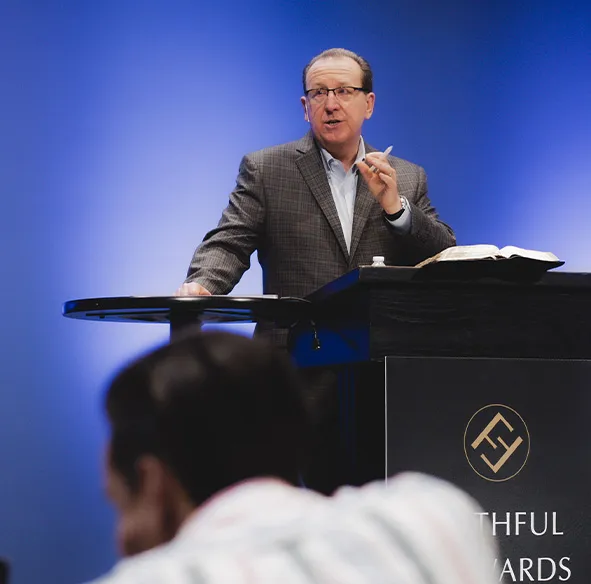
The preaching of God’s Word is central to the life of the church. Tom's pulpit ministry is dedicated to providing clear, biblical teaching to equip believers, strengthen faith, and exalt Christ.


Engage with the most recent teaching from God’s Word.
The preaching of God's Word is central to worship and of the utmost importance for the sanctification of every believer in Christ.

.jpg)
.jpg)

Explore messages organized to help you grow in Christ.
Search and filter sermons for quick access.
The Parable of the Soils - Mark's Perspective - Part 1
This sermon analyzes Mark's Gospel, noting its unique structure where half its chapters cover just one week and one day of Jesus' ministry, emphasizing the profound significance of passages like the Parable of the Soils in Mark 4. Taught by Jesus from a boat to a vast crowd, this parable serves as an "apologetic," explaining the varied responses to His ministry, from devoted followers to outright rejection. The different outcomes, the text argues, reflect the condition of the listener's heart, not the message or the messenger. The parable describes four types of soil where a sower casts seed: hard-packed paths (seed eaten by birds), rocky ground (seed sprouts but withers due to shallow roots), thorny soil (seed choked by competing weeds), and good soil (yielding abundant crops). The sower and the seed remain constant; only the soil varies, determining the yield. Jesus concludes with, "He who has ears to hear, let him hear," emphasizing that true spiritual listening�deep contemplation and humble submission�is crucial. This call invites unbelievers to abandon rebellious hearts and challenges believers to study God's Word profoundly and apply its truth, resisting superficial engagement or rebellion against God's will.
Real Change From the Inside Out - Part 3
Pastor Tom Pennington, referencing tragedies like Michael Jackson and Mark Sanford, highlights humanity's universal struggle with internal sin and inability to achieve true heart change independently. He emphasizes that while self-destruction is common, real change from the inside out is possible through Jesus Christ and the Gospel, as taught in Ephesians 4:20-24. This transformative process involves three crucial steps. First, believers must "lay aside the old self," actively shedding former sinful habits and ways of thinking, akin to removing old, decayed clothing. Second, they must "be renewed in the spirit of their mind," allowing God's Holy Spirit to continuously reshape their thinking through consistent engagement with the Word of God, which acts as the 'grid' through which they perceive life. This is a divine passive, facilitated by human effort. Third, believers are commanded to "put on the new self," actively embracing and practicing virtues that reflect their new identity in Christ, replacing vices with their corresponding Biblical virtues. This involves applying truth to oneself and adopting new patterns of thinking and behaving. Pennington asserts that genuine spiritual growth, or sanctification, is not merely outward behavior modification.
Celebrating Our Real Father
Pastor Tom Pennington's sermon "Celebrating Our Real Father" explores Romans 8:15-17, focusing on God's profound act of adopting believers into His family. At the moment of salvation, God, purely by His grace, grants us the full rights and privileges of sonship, transforming us from children of wrath to His beloved heirs. This divine adoption confers three immense benefits. Firstly, **intimacy**: We receive a "spirit of adoption," enabled by the Holy Spirit, empowering us to cry out "Abba! Father!" This Aramaic term, akin to "Daddy" or "Papa," signifies a deep, personal, and respectful relationship with God, a closeness previously unattainable and particularly profound during trials. Secondly, **assurance**: The Holy Spirit "testifies with our spirit that we are children of God." This isn't a mystical whisper, but a confirmation evidenced through tangible spiritual realities: a believer's progressive sanctification (the ongoing battle against sin), a growing comprehension of God's love for them, and a genuine love for and understanding of the Scriptures. Thirdly, **inheritance**: As God's adopted children, we become "heirs of God and fellow heirs with Christ." This guarantees an imperishable eternal inheritance, encompassing eternal life, all of creation, and most significantly, God Himself for all eternity.
Jesus: Liar, Lunatic or Lord? - Part 3
This sermon analyzes Mark 3:20-35, framing Jesus's claims through C.S. Lewis's "Liar, Lunatic, or Lord" trilemma, arguing that only these three responses are logically possible. In the passage, Jesus's own family initially believed He had "lost His senses" (lunatic), while the religious leaders accused Him of being possessed by Satan and a liar. In contrast, Jesus's disciples and those who "do the will of God" embrace Him as the divine Lord. Jesus's powerful redefinition of His family, declaring His followers as His true "mother, brothers, and sisters," underscores critical implications. There is no neutral stance or middle ground for Jesus; one cannot merely accept Him as a "great moral teacher" while rejecting His divinity. Believers should also expect to be similarly misunderstood and accused. Most profoundly, the text emphasizes that Christians' primary relationships are spiritual, prioritizing Christ and His followers even above earthly family ties. This ultimate intimacy reveals Jesus's astonishing grace in considering imperfect believers as His closest family.
Real Change From the Inside Out - Part 2
This sermon, "Real Change from the Inside Out (Part 2)," explores the necessary motivations for a Christian's genuine internal transformation, drawing an analogy to Hernando Cortez's decisive act of scuttling his ships. It begins by reiterating that real change is possible�it already happened at salvation�and is caused by "learning Christ" through ongoing instruction, not just emotional experiences. The core message identifies four crucial motivations for a Christian's desire to change. First, change is driven by **the salvation we enjoy**. God saved us not merely for forgiveness, but to conform us to Christ's image and bring Him glory; continuing in unrepentant sin is inconsistent with this divine purpose. Second, it is motivated by **the new person we have become**. Through regeneration, the "old self" died, and believers are entirely new in Christ, with the struggle arising from this new self being "imprisoned" by the unredeemed "flesh." Third, motivation stems from **the new body to which we belong**, as our actions impact other members of the church. Lastly, and most importantly, change should be driven by **the glory of God we reflect**. Self-centered motives for change, such as seeking personal comfort or guilt reduction, are insufficient.
Jesus: Liar, Lunatic or Lord? - Part 2
This sermon, "Jesus: Liar, Lunatic, or Lord? (Part 2)," examines Mark 3:20-35, presenting three primary responses to Jesus' claims. Jesus' own family, concerned by His actions and the crowds, believed He had "lost His senses," effectively labeling Him a lunatic and seeking to take custody of Him. Concurrently, scribes from Jerusalem accused Jesus of being possessed by Beelzebul (Satan) and casting out demons by demonic power, thereby condemning Him as a demonic liar. Jesus refuted these accusations, highlighting the illogical nature of Satan fighting himself and illustrating that He was overpowering Satan, the "strong man," by divine power. He then delivered a solemn warning about the unpardonable sin: intentionally and consciously attributing a clear, undeniable work of the Holy Spirit to Satan, which brings eternal unforgiveness. Jesus also redefined His true family as those who do God's will, emphasizing spiritual kinship over biological ties. The sermon concludes that all individuals must confront these three choices: to dismiss Jesus as a deluded lunatic, condemn Him as a deceptive liar, or acknowledge Him as the Divine Lord.
No Results Found.
We couldn’t find anything matching your search.
Explore The Word Unleashed
Our ministry brings together expository preaching, theological precision, and practical application for the good of Christ's church and the daily living of Christ's people.
.webp)
Sermons
Listen to expository sermons that clearly teach God’s Word and guide you in daily living.

Radio
Tune in to gospel-centered programs that share biblical truth and strengthen your daily walk with Christ.
Training
Join courses and workshops designed to deepen your faith and equip you to serve others with biblical wisdom.
.webp)
From the Pastor's Desk
Read pastoral messages that encourage, instruct, and help you apply God’s Word to every part of your life.
.webp)
Hymns
Discover timeless hymns that lift your heart in worship and remind you of God’s abounding grace and faithfulness.

Podcasts
Stay rooted in Scripture through our podcast series.