Sermons That Exalt Christ
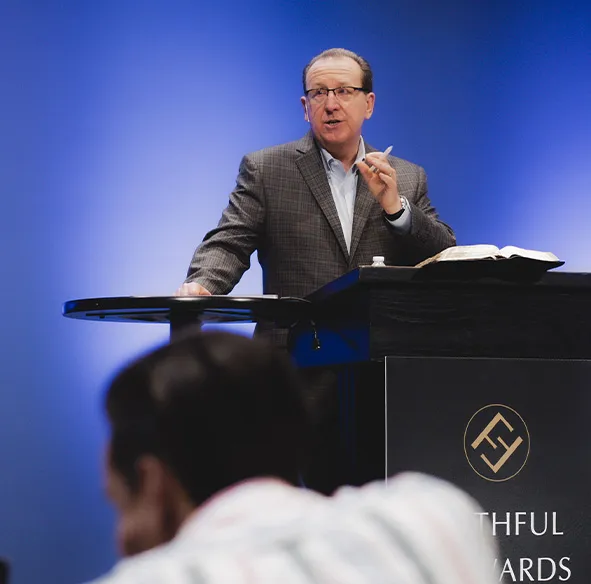
The preaching of God’s Word is central to the life of the church. Tom's pulpit ministry is dedicated to providing clear, biblical teaching to equip believers, strengthen faith, and exalt Christ.


Engage with the most recent teaching from God’s Word.
The preaching of God's Word is central to worship and of the utmost importance for the sanctification of every believer in Christ.

.jpg)
.jpg)

Explore messages organized to help you grow in Christ.
Search and filter sermons for quick access.
Walking In Our Father's Footsteps - Part 4
Tom Pennington's sermon on Ephesians 4:28 challenges a narrow view of stealing, arguing it encompasses widespread behaviors beyond robbery or burglary. He identifies common forms, including failing to pay taxes, shoplifting (often for thrill by adults), and pervasive employee theft, which includes "time theft" and inflated expenses. Biblically, stealing originates from Satan and Adam and Eve's first sin, rooted in covetousness. Other forms include damaging property, failing to pay debts, shorting goods, religious manipulation, not returning borrowed items, deceitful contracts, and cheating. True repentance requires restitution and replacing the habit with opposite virtues. Paul provides three directives from the verse: first, cease stealing. Second, embrace hard work as a God-ordained activity, not a curse, exemplified by God, Adam, Paul, and Jesus. This diligent labor is part of a Christian's testimony and brings blessing. Third, work with the right goals: to use God-given gifts to benefit others (common grace), provide for oneself and dependents, and crucially, "to share with one who has need." Failing to give to the needy is deemed another form of stealing. Ultimately, Christians work to advance God's kingdom and promote God's glory, serving Christ, not just human employers, reflecting our generous Heavenly Father's perfect love.
Walking In Our Father's Footsteps - Part 3
This sermon, "Walking in Our Father's Footsteps (Part 3)," begins by highlighting Americans' often-skewed perception of wealth compared to global poverty, setting the stage for a biblical perspective on possessions. Drawing from Ephesians 4:25 � 5:2, which urges believers to "walk in love" and imitate God, the pastor introduces a foundational philosophy of ownership and property, focusing on the command "Don't steal; instead, work hard and be generous." Six core principles are outlined: 1. **God owns everything** that exists (Psalm 24:1). 2. God **delegated authority** over His creation to mankind (Genesis 1:28). 3. God **established the principle of private ownership**, a concept affirmed throughout Scripture, notably by the commandment "You shall not steal" (Exodus 20:15). 4. We are **owners only in the sense of stewards** of what we possess, accountable to God for its use (1 Chronicles 29:14). 5. Due to the Fall, our **thinking and behavior concerning possessions are badly skewed**, manifesting in sins like hoarding, coveting, pride, and misplaced trust in riches. 6. We are commanded to **take diligent care of our own property and the property of others** (Proverbs 27:23, Deuteronomy 22:1).
The Parable of the Soils - Mark's Perspective - Part 3
This sermon, "The Parable of the Soils" from Mark 4:1-20, clarifies why individuals respond differently to the Gospel. Pastor Tom Pennington highlights the parable's essential role in understanding spiritual receptiveness, with the "Sower" representing anyone sharing the "Seed" (God's Word) and the "Soil" symbolizing four types of human hearts: 1. **Hard Heart**: Hears the Word but doesn't let it penetrate; Satan immediately snatches it, yielding no fruit. 2. **Superficial Heart**: Receives the Word joyfully but lacks deep roots, causing temporary faith to wither when affliction or persecution arises. 3. **Distracted Heart**: The Word begins to grow, yet "worries of the world, deceitfulness of riches, and desires for other things" slowly choke it, resulting in unfruitfulness, even if faith is professed. 4. **Prepared Heart**: Hears, understands, accepts, and consistently bears fruit (Christian character and good works). Significantly, the sermon asserts that a heart becomes "good soil" only through God's gracious preparation, not its own merit. Enduring fruit is the definitive sign of true faith. The parable acts as a spiritual diagnostic, inviting listeners to examine their hearts and seek God's transformative grace.
Walking In Our Father's Footsteps - Part 2
Pastor Tom Pennington's sermon, "Walking in Our Father's Footsteps (Part 2)," from Ephesians 4:25-5:2, urges believers to "walk in love" by confronting sinful anger. He contrasts the world's view of anger as natural with the Bible's universal condemnation of it as destructive to relationships. Sinful anger often arises from a perceived violation of personal "rights," whether from inanimate objects, others' actions, confrontation of one's own sin, or God not fulfilling our desires. To prevent sinful anger, one must acknowledge the absence of inherent rights, trust God's sovereignty, and respond with gentleness. If anger does arise, Paul commands, "Do not let the sun go down on your anger," urging immediate resolution. Sinful expressions like yelling, clamming up, or seeking revenge give the devil an "opportunity" for destruction. Jesus equates unaddressed anger and verbal abuse with murder, highlighting its spiritual gravity. Ultimately, imitating God means not holding onto anger; just as God, despite His righteous anger against humanity's sin, initiated reconciliation through Christ, believers are called to pursue reconciliation, walking in love.
The Parable of the Soils - Mark's Perspective - Part 2
Tom Pennington's sermon on Mark 4:1-20, "The Parable of the Soils," examines Jesus' pivotal shift in teaching. While the Bible is generally perspicuous, parables are unique, intended both to reveal truth to His followers and, conversely, to conceal it from those who rejected Him. This change in methodology occurred two and a half years into Jesus' ministry, explaining why many didn't accept Him: their response reflected the condition of their hearts, not a deficiency in Christ. The parable illustrates four types of "soil" representing human hearts. Jesus granted His disciples the "mystery of the kingdom of God"�the understanding of His present, spiritual rule. To outsiders, however, parables served to obscure truth, fulfilling Isaiah's prophecy of judicial hardening. This was a consequence of their prior, willful rejection, not God instilling evil, but allowing their hardened hearts to run their course. Ultimately, while the immediate cause of "bad soil" is humanity's depraved heart, the "good soil" is solely due to God's sovereign grace preparing hearts to receive the truth. Unbelievers are still commanded to repent, bearing full responsibility if they harden their hearts.
Walking In Our Father's Footsteps - Part 1
This sermon, "Walking in Our Father's Footsteps," opens with an anecdote about people blindly imitating President Coolidge, highlighting that not all imitation is good. Pastor Tom Pennington explains that humans are inherently imitators, a natural learning mechanism. However, due to humanity's fallen nature, this propensity often leads us to imitate evil, embodying the character of "our father the devil," as Jesus describes in John 8. For believers, adopted by God, the call is to actively imitate their new Heavenly Father. The sermon ties into Ephesians 4-6, which outlines how Christians should "walk worthy" in unity, new life, love, light, and the Spirit. Focusing on "walking in love" (Ephesians 4:25-5:2), the first specific instruction is to "lay aside falsehood" and "speak truth each one of you with his neighbor." Lying is presented not as an end in itself, but a tool driven by sinful desires like fear, pride, financial gain, or hiding guilt. Believers must cultivate habitual truthfulness because, as "members of one another" in the body of Christ, deceit is illogical and harmful.
No Results Found.
We couldn’t find anything matching your search.
Explore The Word Unleashed
Our ministry brings together expository preaching, theological precision, and practical application for the good of Christ's church and the daily living of Christ's people.
.webp)
Sermons
Listen to expository sermons that clearly teach God’s Word and guide you in daily living.

Radio
Tune in to gospel-centered programs that share biblical truth and strengthen your daily walk with Christ.
Training
Join courses and workshops designed to deepen your faith and equip you to serve others with biblical wisdom.
.webp)
From the Pastor's Desk
Read pastoral messages that encourage, instruct, and help you apply God’s Word to every part of your life.
.webp)
Hymns
Discover timeless hymns that lift your heart in worship and remind you of God’s abounding grace and faithfulness.

Podcasts
Stay rooted in Scripture through our podcast series.