Sermons That Exalt Christ
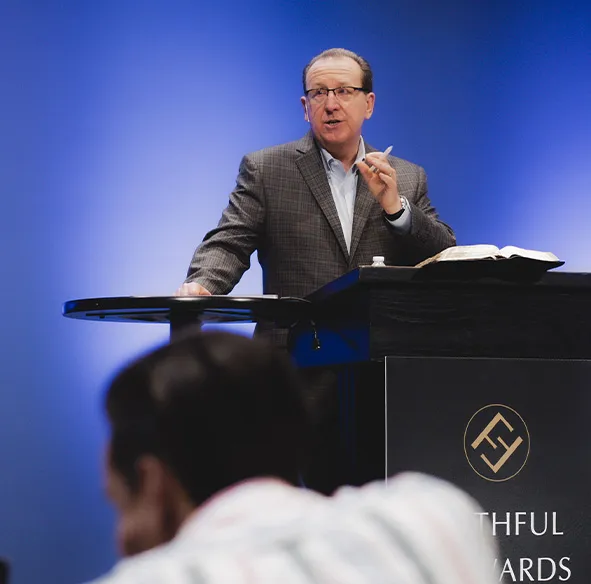
The preaching of God’s Word is central to the life of the church. Tom's pulpit ministry is dedicated to providing clear, biblical teaching to equip believers, strengthen faith, and exalt Christ.


Engage with the most recent teaching from God’s Word.
The preaching of God's Word is central to worship and of the utmost importance for the sanctification of every believer in Christ.

.jpg)
.jpg)

Explore messages organized to help you grow in Christ.
Search and filter sermons for quick access.
If You're Messiah, Where's Elijah?
The sermon "If You�re Messiah, Where�s Elijah?" from Mark 9:11-13 addresses the disciples' post-Transfiguration confusion regarding Old Testament prophecies. Having just seen Elijah, they questioned why scribes said Elijah must come *before* the Messiah (Malachi 3:1, 4:5). Jesus clarifies this by making three points. First, He affirms that Elijah does indeed come first to "restore all things," a spiritual preparation. Second, Jesus reminds them that the Old Testament also prophesies the Messiah's suffering and contempt. Third, He reveals that John the Baptist was the fulfillment of the Elijah prophecy, acting "in the spirit and power of Elijah," though many, including the Jewish leaders, did not recognize him and he ultimately suffered a martyr's death, just as it was "written of him." For believers today, the sermon highlights crucial implications: Jesus' identity as the Messiah is overwhelmingly certified by prophecy and John's witness; the Messiah's suffering was a divine necessity, not a contradiction; and a general principle is established that suffering precedes glory for both Jesus and His followers. This present suffering is temporary, a prelude to incomparable eternal glory.
Learning to Use God's Armor - Part 1
Tom Pennington emphasizes that just as cancer is a silent, invisible physical war, Christians are engaged in a far more consequential spiritual war, a reality many tragically ignore. Focusing on Ephesians 6:10-17, "the believer's armor," he presents eight foundational concepts crucial for understanding this battle. Firstly, the Christian life is an ongoing war against unseen spiritual forces; we transitioned from alliance with Satan to war against him. Secondly, this is a collective battle, requiring Christians to fight together as an army. Thirdly, the overarching conflict is between God and Satan, a powerful, prideful, and malevolent adversary. Fourthly, this war is spiritual, waged in our minds and hearts, not against other people. Fifthly, it's primarily a battle of ideas and thoughts, where every concept originates from either God (truth) or Satan (lies). Therefore, every thought must be tested against God's Word. Sixthly, Christ already definitively defeated Satan at the cross, securing victory, though believers still participate in "mopping up operations.
A Glimpse of His Glory
In this sermon on Mark 9:2-10, Pastor Tom Pennington analyzes the Transfiguration, a pivotal event revealing Jesus Christ�s true glory. Taking Peter, James, and John up Mount Hermon, Jesus undergoes a metamorphosis where His humanity is momentarily veiled, displaying His divinity through blinding light. Moses and Elijah appear, representing the Law and Prophets, to discuss Jesus� impending sacrificial death, confirming that His mission aligns with Old Testament revelation. When Peter mistakenly equates Jesus with these prophets by suggesting three tabernacles, God the Father intervenes through a glory cloud. He declares, "This is My beloved Son, listen to Him," establishing Jesus� unique superiority and demanding total obedience. Pennington emphasizes that this event provides undeniable eyewitness testimony of Christ�s identity. Furthermore, he connects the narrative to believers, noting that while Jesus was transfigured physically, Christians are called to undergo spiritual transformation by renewing their minds and beholding Christ�s glory through Scripture. The sermon concludes by urging the congregation to embrace Jesus as the exclusive Son of God and pursue moral resemblance to Him.
Don't Forget Who You Work For
The sermon "Ephesians: Don't Forget Who You Work For" examines Ephesians 6:5-9, which addresses Christian slaves and masters, applying these principles to modern employees and employers. The speaker first clarifies the Bible's stance on slavery, noting it neither sanctions nor forbids the institution but regulates its practice, condemning kidnapping. He distinguishes Roman slavery�lacking ethnic basis, sometimes voluntary, and often leading to manumission�from American slavery. For Christian employees, eight principles are outlined: daily work matters to Christ, submit to workplace authorities (unless contradicting God's law), submit out of respect for Christ, perform with integrity and wholeheartedness, genuinely seek the employer's best interest, remember you ultimately work for Jesus, and know Christ will reward all good work. Christian employers are urged to treat employees with justice, fairness, and respect, abandoning threats, and remembering their authority is delegated from an impartial God. Ultimately, all work should be performed as an act of worship and service to Jesus Christ, our true Master, serving as a powerful testimony and a test of genuine faith.
He'll Be Back!
Pastor Tom Pennington's sermon "He'll Be Back!" on Mark 8:38-9:1 highlights Jesus's certain and triumphant return as the ultimate judge. Though Jesus prophesied His own suffering and death, He immediately assured His disciples of His victory. The sermon unpacks four facts about this second coming: First, its **certainty**: Jesus declared, "when He comes," signifying an undeniable return, a promise more steadfast than any earthly event. Second, its **reason**: Jesus will be God's appointed judge, distinguishing true disciples�those unashamed of Him and willing to deny themselves�from false ones and unbelievers, judging all according to their deeds. Third, its **circumstance**: He will return after the Great Tribulation, appearing "in the glory of His Father with the holy angels," a majestic display of divine power. Fourth, a **preview**: Mark 9:1, where Jesus promises some disciples will see the Kingdom of God with power before dying, refers to the Transfiguration�a glorious foretaste of His future kingship witnessed by Peter, James, and John. For believers, this reality motivates personal holiness, compels them to warn unbelievers, and inspires living for Christ's eternal kingdom rather than transient earthly life.
Parenting For Life
This sermon on Ephesians 6:4 addresses parents' responsibilities, particularly fathers, acknowledging children's inherent depravity. It critiques two common parenting extremes: the "guarantee" approach, which misinterprets Proverbs 22:6 to assure specific Christian outcomes from diligent effort, neglecting children's sinful hearts; and the "laissez-faire" approach, characterized by minimal engagement. Both are deemed unbiblical. Instead, parents are called to diligent teaching and discipline because God *commands* it, with God evaluating their faithfulness, not the outcome. The first command is "do not provoke your children to anger," which means treating them with dignity and avoiding actions like inconsistent discipline, constant criticism, favoritism, neglect, or abuse, which can cause them to "lose heart" and become discouraged. The positive command is to "bring them up in the discipline and instruction of the Lord." "Discipline" involves systematic training with rules, rewards, and consequences, including loving physical correction, to cultivate first-time obedience. "Instruction" is verbal teaching, warning, and encouragement, with Scripture as the primary guide. Crucially, parenting must be "of the Lord," meaning Christ-centered. Parents' authority is God's, and children's disobedience is ultimately against Him.
No Results Found.
We couldn’t find anything matching your search.
Explore The Word Unleashed
Our ministry brings together expository preaching, theological precision, and practical application for the good of Christ's church and the daily living of Christ's people.
.webp)
Sermons
Listen to expository sermons that clearly teach God’s Word and guide you in daily living.

Radio
Tune in to gospel-centered programs that share biblical truth and strengthen your daily walk with Christ.
Training
Join courses and workshops designed to deepen your faith and equip you to serve others with biblical wisdom.
.webp)
From the Pastor's Desk
Read pastoral messages that encourage, instruct, and help you apply God’s Word to every part of your life.
.webp)
Hymns
Discover timeless hymns that lift your heart in worship and remind you of God’s abounding grace and faithfulness.

Podcasts
Stay rooted in Scripture through our podcast series.