Sermons That Exalt Christ
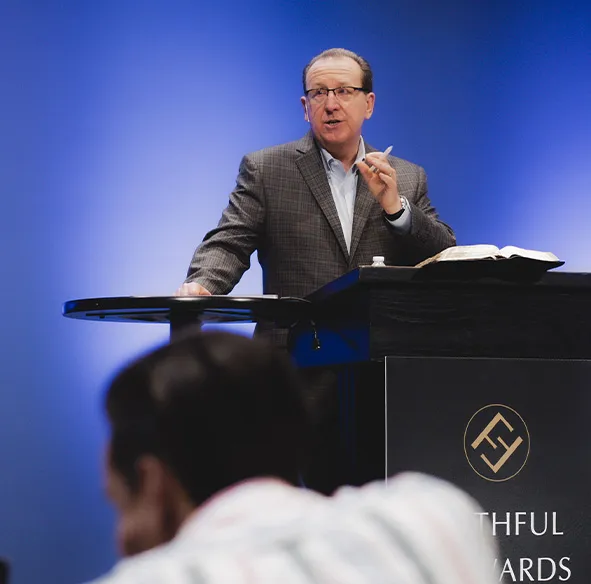
The preaching of God’s Word is central to the life of the church. Tom's pulpit ministry is dedicated to providing clear, biblical teaching to equip believers, strengthen faith, and exalt Christ.


Engage with the most recent teaching from God’s Word.
The preaching of God's Word is central to worship and of the utmost importance for the sanctification of every believer in Christ.

.jpg)
.jpg)

Explore messages organized to help you grow in Christ.
Search and filter sermons for quick access.
The Lord's Prayer - Part 2
Tom Pennington's sermon on Matthew 6:9-15 challenges Christians to reconcile their belief in a God who hears prayers with their often prayerless lives. Citing Francis Schaeffer's "two chairs" analogy, Pennington argues that many profess supernatural faith but live like materialists, neglecting active engagement with God. He asserts that genuine Christianity involves living as if God actively intervenes through prayer, not just giving mental assent to doctrine. The Lord's Prayer is presented as a model for all prayer, a "skeleton" for structuring our petitions rather than a mere recitation. Pennington stresses the importance of beginning prayer with recollection and reverence, avoiding hurried, "texting-like" requests. Delving into the preface, "Our Father who is in heaven," the sermon highlights the significance of the word "Our." This mandates praying as a family member: first, for others, demonstrating spiritual maturity by focusing on collective needs rather than solely individual desires; second, with others, following the biblical pattern of corporate prayer. Most profoundly, "Our" signifies praying *with Christ* as our older brother, as Jesus both modeled these petitions on earth and continuously intercedes for believers in heaven (Romans 8, Hebrews 7). Thus, adopting this pattern means joining our prayers with Christ's ongoing intercession.
Jesus Before Pilate - Part 2
The sermon, "Jesus Before Pilate (Part 2)," examines the profoundly illegal and unjust series of Jewish and Roman trials Jesus endured. After being condemned for blasphemy by the Sanhedrin, Jewish leaders presented Jesus to Pilate, the Roman governor, twisting His spiritual claims into false accusations of sedition against Rome. Pilate interrogated Jesus about being "King of the Jews," to which Jesus affirmed His kingship was "not of this world." Despite finding "no guilt in Him" multiple times, Pilate faced persistent accusations. Jesus's subsequent silence, even as more charges were hurled, amazed Pilate, who recognized the envy driving the accusers. Pilate attempted to shift responsibility by sending Jesus to Herod, who also found no basis for condemnation. The sermon emphasizes five reasons for recording these trials: they highlight humanity's desperate need for a Savior, confirm Jesus's divine claims, expose the fabricated charges against Him, call every reader to make a personal verdict about Jesus's identity, and powerfully demonstrate Jesus's complete innocence. Ultimately, Jesus's willing silence and suffering fulfilled prophecy (Isaiah 53), as He allowed Himself to be crushed as a guilt offering for humanity's transgressions, revealing a divine plan beyond human injustice.
The Lord's Prayer - Part 1
Pastor Tom Pennington introduces a multi-week study on the Lord's Prayer, first addressing the prevalent issue of prayerlessness among Christians, including pastors, who often pray less than seven minutes daily. He attributes this to a man-centered culture and dismisses common excuses like lack of time, desire, focus, or perceived results as mere justifications. Instead, Pennington identifies three fundamental reasons for "flabby prayer lives": a lack of understanding regarding prayer's vital importance as a foundational spiritual discipline, a lack of diligence in planning for prayer and meditating on Scripture, and ultimately, a lack of obedience to divine commands to pray. Introducing Jesus' teaching on prayer from Matthew 6 and Luke 11, Pennington highlights the disciples' request, "Lord, teach us to pray." From Luke 11:1, four key implications are drawn: prayer was a crucial part of Jesus' life, demonstrating how a godly man should pray; prayer takes deliberate, planned time; prayer does not come naturally, even to seasoned believers; but crucially, prayer is a learnable skill. Jesus, the perfect prayer, provides the pattern for believers to follow.
Praying for the Wrong Reasons
Tom Pennington's sermon, "Praying For The Wrong Reasons," from Matthew 6:5-8, explores Jesus' teaching on prayer in the Sermon on the Mount, emphasizing the critical importance of right motives. Jesus' overarching principle in Matthew 6:1 warns against practicing righteousness�including prayer�to be noticed by others, as this forfeits any heavenly reward. The sermon identifies two primary wrong reasons for prayer. First, praying to gain a reputation with people (vv. 5-6). Hypocrites pray publicly for human adoration, receiving only that as their reward. Jesus clarifies that while public prayer isn't forbidden, the *motive* of being seen is. He instructs disciples to pray privately, in an "inner room," addressing "your Father who is in secret," who will genuinely reward sincere, hidden devotion. Second, Jesus cautions against praying with meaningless repetition to gain merit with God (vv. 7-8). Pagans babble extensively, thinking numerous words will make God more likely to listen. Jesus teaches against this, stressing that God, as our Father, already "knows what you need before you ask Him." He is not manipulated by prayer's length or repetition but desires a sincere heart. Prayer isn't about overcoming God's reluctance but embracing His willingness, expressing our dependence, and aligning with His sovereign plan.
Jesus Before Pilate - Part 1
Pastor Tom Pennington's sermon "The Memoirs of Peter Jesus Before Pilate (Part 1)" examines Jesus' final trials, emphasizing the Jewish leaders' deep hatred for Jesus. Their pure life starkly reflected their own wickedness, akin to an African chief smashing a mirror that showed her "horrible" reflection. The sermon details the intense timeline of Jesus' last hours: from the Last Supper and Gethsemane, through preliminary Jewish hearings. At dawn, a formal third Jewish trial by the full Sanhedrin condemned Jesus for blasphemy after He affirmed being the Messiah and Son of God. During this time, Judas, upon learning of Jesus' condemnation, felt remorse, tried to return the silver, and ultimately committed suicide. Immediately, Jesus endured three rapid Roman trials before Pilate and Herod, concluding within two hours. Pontius Pilate, depicted as a cruel, self-seeking, and anti-Jewish governor, interrogated Jesus. Pennington highlights that Pilate believed Jesus was on trial, but in reality, Pilate was being judged. This spiritual truth extends to everyone encountering Jesus' claims; neutrality is impossible. Ultimately, these events were not a tragic accident but part of God's predetermined, loving plan for Jesus to willingly sacrifice Himself to rescue sinners.
Church Matters!
Pastor Tom Pennington's sermon, "Church Matters!", argues the local church�an assembly of believing people�should be central to a Christian's life, aligning with God's perspective. He provides ten biblical reasons for its importance: the church, with Christ, is central to God's eternal plan and glory. It's God's family and dwelling place. It's the only entity Christ promised to build, lovingly leads, and supremely loves, dying for its purification. The church received most New Testament writings and is the primary reason for Christ's return. Given this significance, believers are urged to make five commitments: 1. **Commit to a specific local church** via membership, mirroring early practice. 2. **Prioritize the church** in all life decisions, like career and family. 3. **Serve faithfully** using spiritual gifts within its community. 4. **Love the church** by actively building mutual relationships and fulfilling "one another" commands. 5. **Evangelize**, recognizing the church as a temple needing more "living stones." The sermon challenges listeners to assess the church's true place in their lives, urging deep commitment over casual engagement, because it matters most to God.
No Results Found.
We couldn’t find anything matching your search.
Explore The Word Unleashed
Our ministry brings together expository preaching, theological precision, and practical application for the good of Christ's church and the daily living of Christ's people.
.webp)
Sermons
Listen to expository sermons that clearly teach God’s Word and guide you in daily living.

Radio
Tune in to gospel-centered programs that share biblical truth and strengthen your daily walk with Christ.
Training
Join courses and workshops designed to deepen your faith and equip you to serve others with biblical wisdom.
.webp)
From the Pastor's Desk
Read pastoral messages that encourage, instruct, and help you apply God’s Word to every part of your life.
.webp)
Hymns
Discover timeless hymns that lift your heart in worship and remind you of God’s abounding grace and faithfulness.
Podcasts
Stay rooted in Scripture through our podcast series.