Sermons That Exalt Christ
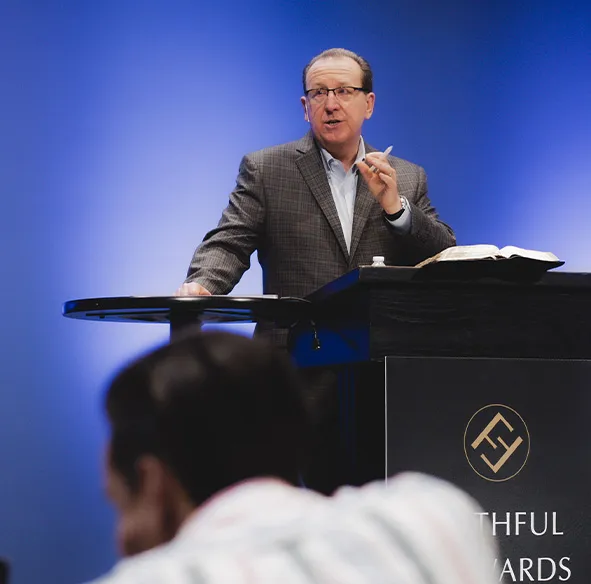
The preaching of God’s Word is central to the life of the church. Tom's pulpit ministry is dedicated to providing clear, biblical teaching to equip believers, strengthen faith, and exalt Christ.


Engage with the most recent teaching from God’s Word.
The preaching of God's Word is central to worship and of the utmost importance for the sanctification of every believer in Christ.

.jpg)
.jpg)

Explore messages organized to help you grow in Christ.
Search and filter sermons for quick access.
Q & A
Pastor Tom Pennington held a Q&A session addressing various theological inquiries. He firmly rejected the Big Bang and old earth theories, advocating for a literal six-day creation and historical Adam and Eve based on Genesis' narrative style and Jesus' affirmations, calling opposing views a compromise. Regarding eschatology, Pennington explained that the pre-tribulation raptured church returns with Christ for the millennial kingdom, living with glorified, sinless bodies alongside unredeemed individuals who will eventually rebel. He maintained that miraculous gifts ceased with the apostles, as their purpose was to confirm God's messengers during specific historical periods, citing biblical and historical evidence. He discussed the TULIP doctrines, clarifying that while elders agreed on most points, the "L" (limited atonement) referred to Christ's substitutionary death being specifically for the elect, distinct from the universal offer of the gospel and common grace. Pennington also affirmed hell as eternal torment, not annihilation, due to the infinite nature of sin against God. He concluded by asserting Jesus' impeccability in His humanity and that believers in glory will likewise be unable to sin, while confirming that biblical "wine" was fermented, its consumption being a matter of Christian liberty as long as it doesn't lead to drunkenness.
Give Us Our Daily Bread
This sermon profoundly explores the fourth petition of the Lord's Prayer, "Give us this day our daily bread" (Matthew 6:11), contrasting the unregenerate heart's ingratitude with a Christian's utter dependence on God. It emphasizes that while this petition addresses personal needs, it must always be prayed in the context of God's glory, kingdom, and will. The text reveals four key spiritual lessons embedded in these words: First, "Give" teaches a lesson in **grace**, highlighting that everything we possess�life, resources, skills, and financial prosperity�is an undeserved gift from God, regardless of our diligence. Second, "Give us" imparts a lesson in **love**, urging believers to pray not only for their own needs but also for their families, fellow Christians, and all those in need, fostering a responsibility to share and act. Third, "this day" emphasizes a lesson in **trust**, encouraging daily dependence on God, cautioning against worrying about tomorrow, and reminding us that accumulated wealth can vanish instantly. Finally, "our daily bread" teaches a lesson in **contentment**, prompting us to ask only for what is necessary for today, cultivating satisfaction, and warning against the spiritual dangers of pursuing excessive riches, a stark contrast to the health, wealth, and prosperity gospel.
Your Will Be Done
The sermon "Your Will Be Done" (Matthew 6:10) highlights the ultimate surrender exemplified by missionaries John and Betty Stam. This third, God-centric petition of the Lord's Prayer seeks three spiritual results. Firstly, it demands a deliberate rejection of all other wills: Satan's desire to promote sin and destroy faith, others' wishes (even well-meaning loved ones) that diverge from God's path, and especially our own will, requiring daily self-denial. Secondly, it calls for unconditional acceptance of God's sovereign will�His unchangeable plan that always occurs. This means embracing all life circumstances, whether good or bad, without complaint, by trusting God's perfect power, goodness, and wisdom. Thirdly, and primarily, it signifies willing obedience to God's revealed will in Scripture. Unlike His sovereign plan, God's commands are not perfectly obeyed on earth. This revealed will includes being saved, Word-saturated, sanctified, submissive, grateful, and prepared to suffer for Christ. Jesus' prayer in Gethsemane, "not My will, but Yours be done," perfectly models this complete surrender and obedience.
Your Kingdom Come!
This sermon, "Your Kingdom Come" (Matthew 6:10), explores the second petition of the Lord's Prayer, urging Christians to prioritize God's spiritual kingdom. Pastor Tom Pennington illustrates this commitment using Winston Churchill and the Battle of Britain as an analogy for defending a beloved realm. The petition "Your kingdom come" reveals three spiritual realities. First, we live in a world of opposing kingdoms: Satan's kingdom, a powerful spiritual entity controlling the world's values (though under God's ultimate control), and the kingdom of self, where individuals reject God's rule. This conflict is spiritual, not against people. Second, God's kingdom, a central theme in Jesus's and the apostles' teachings, has two forms. The *present form* is God's spiritual rule in believers' hearts, entered through salvation. Praying "Your kingdom come" therefore means seeking the spiritual expansion of God's rule through evangelism and deeper sanctification in believers. The *future form* is the literal, physical reign of Christ on Earth during the millennium, followed by a new heaven and new earth. Thus, the prayer also anticipates Christ's swift return to establish this literal kingdom. Finally, the kingdom advances through our actions: communicating the gospel, making God's kingdom our highest priority, and making personal sacrifices.
Hallowed Be Your Name!
The sermon "Hallowed Be Your Name!" from Matthew 6:9 emphasizes that the first petition of the Lord's Prayer is a foundational principle for all prayer and spiritual life. Drawing parallels with Leviticus 10:3, where God demands to be treated as holy, Pastor Tom Pennington explains "hallowed" as "sanctified" or "treated as holy," and "name" as God's entire essence, attributes, and actions. Essentially, it means glorifying God. This petition is paramount because God's glory is His chief end, evident in creation and redemption, and He severely judges those who fail to hallow Him (e.g., Nadab and Abihu, Moses). True prayer, therefore, prioritizes God's holiness above personal demands, acknowledging that hallowing His name is more important than any individual need and will continue eternally in heaven. We hallow God's name by: speaking about Him reverently, praising and thanking Him, thinking rightly about Him, responding in faith to Jesus Christ, living righteously, loving other Christians, trusting Him in trials, and intentionally committing all actions to His glory. Our prayers should thus begin by asking God to cause His name to be hallowed in our hearts, lives, and throughout the world, aligning our desires with His ultimate, glorifying purpose.
The Lord's Prayer - Part 3
In "The Lord's Prayer, Part 3," Pastor Tom Pennington emphasizes the importance of prayer, drawing inspiration from George M�ller's life and his own experiences of answered prayer. He notes that despite God's responsiveness, believers often pray inconsistently, failing to grasp its significance. Jesus, in Matthew 6:9-15, provides a pattern for prayer, which can be used as a model or recited verbatim. This sermon focuses on the preface, "Our Father who is in heaven," outlining three essential attitudes for approaching God. First, we pray as a member of a family, recognizing the communal aspect of prayer, both for and with others, and alongside Christ. Second, we pray as a child of a father, embracing God as our intimate "Abba"�a term conveying both deep affection and respect. This attitude involves an awareness of our adoption into God's family, confidence in His gracious desire to meet our needs (as a perfect Father), and a spirit of submission to His will, mirroring Jesus' own submission. Third, we pray as a subject of a king, understanding that "who is in heaven" signifies God's absolute majesty and sovereignty.
No Results Found.
We couldn’t find anything matching your search.
Explore The Word Unleashed
Our ministry brings together expository preaching, theological precision, and practical application for the good of Christ's church and the daily living of Christ's people.
.webp)
Sermons
Listen to expository sermons that clearly teach God’s Word and guide you in daily living.

Radio
Tune in to gospel-centered programs that share biblical truth and strengthen your daily walk with Christ.
Training
Join courses and workshops designed to deepen your faith and equip you to serve others with biblical wisdom.
.webp)
From the Pastor's Desk
Read pastoral messages that encourage, instruct, and help you apply God’s Word to every part of your life.
.webp)
Hymns
Discover timeless hymns that lift your heart in worship and remind you of God’s abounding grace and faithfulness.
Podcasts
Stay rooted in Scripture through our podcast series.