Sermons That Exalt Christ
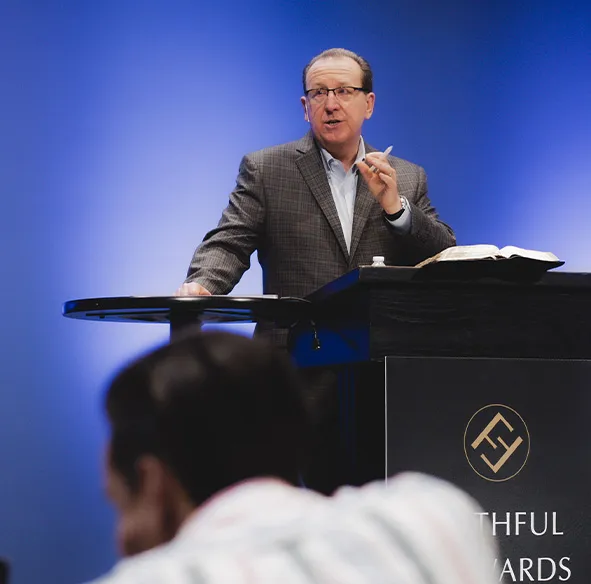
The preaching of God’s Word is central to the life of the church. Tom's pulpit ministry is dedicated to providing clear, biblical teaching to equip believers, strengthen faith, and exalt Christ.


Engage with the most recent teaching from God’s Word.
The preaching of God's Word is central to worship and of the utmost importance for the sanctification of every believer in Christ.

.jpg)
.jpg)

Explore messages organized to help you grow in Christ.
Search and filter sermons for quick access.
The Soldiers' Game
The text details humanity's persistent hatred for righteousness, which reached its peak with Jesus. From early in His ministry, enemies plotted His death, and Jesus had to escape multiple attempts on His life. His trials saw escalating abuse, with the author suggesting two distinct beatings: a lighter scourging by Pilate to gain sympathy (John 19), followed by the brutal "verberatio" (Matthew 27, Mark 15) that preceded crucifixion. During this period, soldiers subjected Jesus to a cruel game of mockery. They stripped Him, dressed Him in a scarlet robe (representing royal purple) and a crown of thorns, hailed Him as "King of the Jews," spat on Him, beat His head with a reed, and bowed in sarcastic worship. This abuse served several theological purposes: it perfectly fulfilled Jesus' own prophecies (Mark 10) and Old Testament messianic predictions (Isaiah 50), graphically illustrated humanity's inherent hatred and rejection of God, was a direct part of Jesus' suffering for sin (Isaiah 53), and profoundly demonstrated mankind's rejection of His rightful authority and kingship. Despite their cruel intent, the soldiers' actions inadvertently acknowledged Jesus' true identity as King.
Lead Us Not Into Temptation - Part 1
The sermon, "Lead Us Not Into Temptation, Part 1," on Matthew 6:13, emphasizes temptation as an unavoidable reality for believers, even as they pursue holiness. The sixth petition of the Lord's Prayer�"Lead us not into temptation, but deliver us from evil"�is presented as a prayer for personal holiness and preservation from future sin, distinguishing it from merely seeking past forgiveness. The speaker clarifies that "temptation" in this context refers to an internal solicitation to sin, not a divine test. He identifies three key sources. First, our "flesh" represents our internal enemy, encompassing inherent cravings for forbidden things. Second, "the world" signifies an organized system of evil, established by Satan, which promotes values contrary to God through cultural mindsets like materialism and pride. Third, "the devil" is the ultimate adversary and a direct source of temptation, using his forces to induce sin, pride, anger, and denial of faith, as exemplified by figures like David, Job, and Peter. Recognizing humanity's spiritual weakness, the sermon stresses that we cannot resist these combined forces�the flesh, the world, and the devil�alone.
For God So Loved the World
This sermon clarifies the true meaning of Easter, emphasizing that it centers on the gospel as found in John 3:16. Drawing from Jesus' conversation with Nicodemus, it establishes humanity's inability to achieve salvation through personal effort, underscoring the necessity of God's intervention. The message unpacks John 3:16, starting with the "cause of the mission": God's profound, eternal, and intense love for all humanity. In response to foreknown sin, God "gave His only begotten Son," which is the "heart of the mission." This refers to Christ's incarnation�God becoming human�and His crucifixion and resurrection, being "lifted up" to pay for sins and secure exaltation. The "goal of the mission" is that "whoever believes in Him should not perish, but have eternal life." "Belief" is illustrated by the Israelites looking in faith at the bronze serpent, signifying a complete repudiation of self-salvation and sole trust in Jesus. Believers are promised freedom from condemnation and receive a *quality* of "eternal life" (life of the coming age) that begins immediately through knowing God. Conversely, those who do not believe are "judged already" and remain under God's wrath, often due to a love for their own sin rather than a lack of evidence.
Father, Forgive Them
Pastor Tom Pennington's sermon, "Father Forgive Them" (Luke 23:34), explores Jesus' first utterance from the cross. Amid unimaginable torment, Jesus prayed, "Father, forgive them; for they do not know what they are doing." This prayer, a stark contrast to the brutality He endured, reflected His unwavering love and trust in God. Jesus, bearing humanity's sins, asked the Father for forgiveness for all responsible for His crucifixion�Jewish leaders, Pilate, soldiers, and criminals. His reasoning highlighted their ignorance of intentionally killing God's Son, though it didn't negate their guilt for murder. The sermon emphasizes that forgiveness requires genuine repentance and faith. God answered Jesus' prayer both generally, by showing patience (delaying judgment on Jerusalem), and specifically, by bringing salvation to individuals like the penitent thief, Simon of Cyrene, the centurion, and thousands at Pentecost. This serves as a powerful model for believers to cultivate a forgiving spirit and actively pray for the salvation of unbelievers, recognizing that no sin is too great for Christ's atoning sacrifice. Ultimately, Jesus' prayer epitomizes His substitutionary payment, buying our forgiveness on the cross.
The Great Exchange
Pastor Tom Pennington's sermon "The Great Exchange" from Mark 15:3-25 examines Jesus' third and final Roman trial before Pontius Pilate. Following three Jewish and two previous Roman hearings, Jesus, arrested after midnight, was brought to Pilate by early Friday morning. During the Passover, Pilate customarily released one prisoner. Aware the chief priests' envy fueled their desire to condemn Jesus, Pilate sought to release Him. He presented a choice between Jesus, whom he called "King of the Jews," and Barabbas, a notorious murderer and insurrectionist. The chief priests, however, incited the crowd to demand Barabbas's release and Jesus' crucifixion. Despite Pilate finding no fault in Jesus and his wife's warning, the crowd fiercely cried, "Crucify Him!" Driven by personal ambition and fear of Caesar, Pilate sacrificed Jesus, releasing Barabbas and ordering Jesus to be scourged and crucified. This act, called "the great exchange," depicts Jesus, the perfectly innocent and righteous One, being condemned and executed in the place of a guilty, condemned sinner like Barabbas. This substitutionary atonement is God's design, where Christ bore the sins due to humanity, allowing us to be pardoned and brought to God. We are called to live daily remembering this profound sacrifice.
Forgive Us Our Debts
Pastor Tom Pennington's sermon on Matthew 6:12, "Forgive Us Our Debts," emphasizes the universal struggle with sin and the critical need for forgiveness. He identifies two common, unhelpful reactions to sin: minimizing its impact or succumbing to despair, both of which hinder confession and lead to spiritual stagnation. Jesus instructs us to acknowledge our sins as "transgressions" (straying from God's path) and "debts" (failure to render perfect obedience). This spiritual debt, which is immense and unpayable by human effort, was fully settled by Jesus Christ's sacrifice on the cross for all believers. The sermon clarifies two aspects of divine forgiveness: the "spiritual bath" of justification, a one-time act at salvation that pardons all sins and establishes our relationship with God as Father; and the "washing of feet," the daily act of confessing sins to maintain ongoing fellowship with Him. God's nature is one of abundant compassion, eager to forgive. Receiving God's forgiveness carries conditions: we must genuinely forgive others who have wronged us, as an unforgiving heart blocks our own access to divine pardon.
No Results Found.
We couldn’t find anything matching your search.
Explore The Word Unleashed
Our ministry brings together expository preaching, theological precision, and practical application for the good of Christ's church and the daily living of Christ's people.
.webp)
Sermons
Listen to expository sermons that clearly teach God’s Word and guide you in daily living.

Radio
Tune in to gospel-centered programs that share biblical truth and strengthen your daily walk with Christ.
Training
Join courses and workshops designed to deepen your faith and equip you to serve others with biblical wisdom.
.webp)
From the Pastor's Desk
Read pastoral messages that encourage, instruct, and help you apply God’s Word to every part of your life.
.webp)
Hymns
Discover timeless hymns that lift your heart in worship and remind you of God’s abounding grace and faithfulness.
Podcasts
Stay rooted in Scripture through our podcast series.