Sermons That Exalt Christ
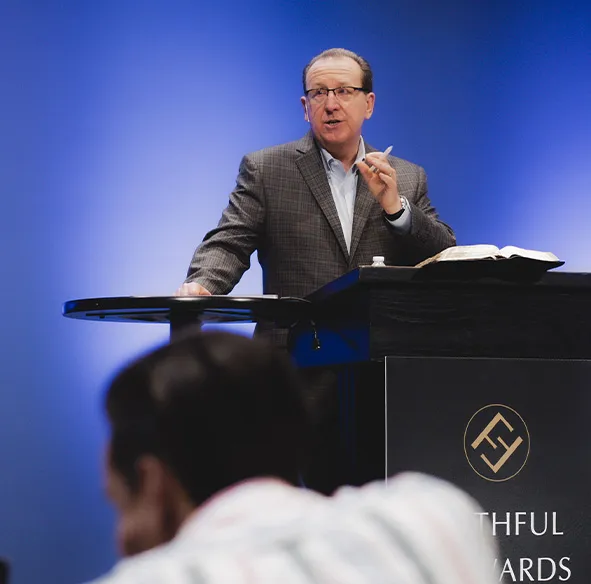
The preaching of God’s Word is central to the life of the church. Tom's pulpit ministry is dedicated to providing clear, biblical teaching to equip believers, strengthen faith, and exalt Christ.


Engage with the most recent teaching from God’s Word.
The preaching of God's Word is central to worship and of the utmost importance for the sanctification of every believer in Christ.

.jpg)
.jpg)

Explore messages organized to help you grow in Christ.
Search and filter sermons for quick access.
All the World's A Stage
Pastor Tom Pennington's sermon, "All the World's a Stage," challenges the humanistic notion that "man is the measure of all things," instead proclaiming that God's ultimate purpose in salvation is "to the praise of His glory." Drawing from Ephesians 2:1-10, Pennington explains that humanity was spiritually dead and deserving of wrath. Yet, God, by grace alone, made us alive, raised us up, and seated us with Christ. God's sovereign act of rescue serves three primary purposes: to abolish human boasting (v.8-9), to ensure believers produce good works (v.10), and most significantly, to display His glory (v.7). This grand, cosmic exhibition of God's "surpassing riches of His grace" unfolds through all ages, demonstrated by His eternal kindness towards us, made possible solely "in Christ Jesus." This divine display has a vast audience, including all humanity, redeemed believers, angels, and ultimately, it serves as a love gift from the Father to the Son, fulfilling an eternal promise. Consequently, believers are called to humility, understanding their individual salvation is part of God's greater plan, yet find profound assurance in His commitment to them, recognizing themselves as "trophies of His grace." Our salvation ultimately serves to exhibit God's incomparable character.
The Birth of Jesus Christ - Part 2
This sermon on Luke 2:1-7 emphasizes that Jesus' birth was not accidental but perfectly aligned with God's divine plan. The text highlights four key aspects of this divine orchestration. First, Jesus was born at the **right time**. Historical clues from Caesar Augustus's census and Quirinius's governorship place His birth around 5-6 BC, possibly December 25th, fulfilling ancient prophecies like Daniel 9:25 about the Messiah's appearance in history. Second, He was born to the **right family**. Joseph and Mary, though a poor, unknown couple from Nazareth, were both direct descendants of King David. Joseph provided the legal claim to David's throne, while Mary provided the physical lineage, ensuring Jesus had legitimate claims to the Messianic promises foretold in 2 Samuel 7. God chose them by sovereign grace, ensuring the Child remained the central focus. Third, Jesus was born in the **right city**, Bethlehem. The Roman census decreed by Caesar Augustus compelled Joseph, along with a heavily pregnant Mary, to travel 90 miles from Nazareth to Bethlehem, "the city of David." This journey fulfilled Micah 5:2, which prophesied that the Messiah would be born in Bethlehem. Finally, Jesus was born under the **right circumstances**.
When a Disciple Denies His Lord
The sermon "The Memoirs of Peter" examines Peter's denial of Jesus (Mark 14:66-72), contextualizing it within Jesus's final hours and the broader message of Christ's redemptive purpose. Drawing from Mark's vivid, Peter-influenced account, the pastor details four distinct denials that escalated from a simple lie to vehement cursing and swearing. These denials occurred as Peter warmed himself in the high priest's courtyard, fulfilling Jesus's prediction that Peter would deny Him before the rooster crowed twice. Overcome by the rooster's crow and a poignant glance from Jesus, Peter wept bitterly in remorse. The text extracts several profound lessons: It highlights the seriousness of denying Christ, whether through silence, unrepentant living, or fear. It offers encouragement that, like Peter, even those who deny Jesus can find forgiveness, restoration, and future service through repentance. The sermon emphasizes God's willingness to forgive any sin when there's genuine repentance and illustrates the perseverance of saints, whose faith is ultimately upheld by Jesus's intercession. Crucially, it contrasts Peter's self-confident failure with Jesus's humble dependence on the Father, demonstrating that true spiritual strength comes from relying solely on God.
The Birth of Jesus Christ - Part 1
This sermon delves into Peter's profound denial of Jesus during Christ's final hours, framed by the ultimate redemptive purpose of Christmas. Jesus had twice prophesied Peter would deny Him three times before the rooster crowed twice. The pastor identifies four denials: Peter first simply denies being a disciple at Annas's gate. Next, he denies knowing Jesus to a servant-girl by the fire. A third denial, with an oath, occurs on the porch. Finally, identified by his Galilean accent and confronted by a relative of the man whose ear he severed, Peter curses and swears, refusing to even name Jesus. As the rooster crows a second time, Peter remembers Jesus�s prophecy. Luke adds that their eyes met�a look conveying both gentle rebuke and profound love. Peter then wept bitterly. The sermon draws several lessons: the gravity of denying Christ (often stemming from pride or fear), the encouraging promise of forgiveness and restoration for those who repent, and God's willingness to forgive any sin. Peter's ultimate perseverance demonstrates Jesus's keeping power, as Christ prayed his faith would not fail. Crucially, Peter's failure originated from self-confidence, contrasting sharply with Jesus's humble dependence on God.
For His Eyes Only: Giving to the Glory of God - Part 2
This sermon on Matthew 6:2-4, "Giving To The Glory of God (Part 2)," challenges the common Christian belief that many cannot afford to give. The speaker highlights that, by global standards, most Americans are wealthy; thus, the real issue often lies in one's heart or stewardship, not income. The central message revolves around Jesus' warning against hypocrisy in giving, contrasting the wrong approach with the right one. Hypocrites give publicly, "sounding a trumpet," to gain human honor and glory, receiving only the fleeting praise of men as their full reward. In stark contrast, true disciples are called to give in secret�not only from others but even from themselves, avoiding self-congratulation. The proper motive for giving is solely for God's approval and glory, recognizing Him as the ultimate provider and making the act a sincere form of worship, a "fragrant aroma" to Him. God, who sees all, promises to reward such genuine giving with spiritual blessings now and eternal rewards in the future, including a greater capacity for service in eternity and His invaluable commendation: "Well done, good and faithful slave.
The Rescue Mission
"The Rescue Mission" sermon emphasizes that the true essence of Christmas lies not merely in *that* or *how* Jesus came, but profoundly in *why* He came: to save sinners, as stated in 1 Timothy 1:15. This rescue mission carries three crucial implications. First, everyone needs rescue. All humanity falls short of God's moral requirements, making us "sinners" inherently rebellious against God. This rebellion earns us God's coming wrath, a just display of His anger from which we desperately need saving. Second, Jesus is the *only* one who can rescue us. We cannot save ourselves through good deeds, religious observance, or self-improvement; such efforts are futile. Jesus is the exclusive Savior, accomplishing our rescue by becoming our substitute, suffering God's deserved wrath on the cross, a sacrifice validated by His resurrection. Third, rescue is only possible on God's specific terms. To be saved, one must acknowledge their sinfulness and need for rescue, reject all attempts at self-salvation, be willing to turn from sin (repentance), and place complete faith and hope solely in Jesus Christ for forgiveness and eternal life.
No Results Found.
We couldn’t find anything matching your search.
Explore The Word Unleashed
Our ministry brings together expository preaching, theological precision, and practical application for the good of Christ's church and the daily living of Christ's people.
.webp)
Sermons
Listen to expository sermons that clearly teach God’s Word and guide you in daily living.

Radio
Tune in to gospel-centered programs that share biblical truth and strengthen your daily walk with Christ.
Training
Join courses and workshops designed to deepen your faith and equip you to serve others with biblical wisdom.
.webp)
From the Pastor's Desk
Read pastoral messages that encourage, instruct, and help you apply God’s Word to every part of your life.
.webp)
Hymns
Discover timeless hymns that lift your heart in worship and remind you of God’s abounding grace and faithfulness.
Podcasts
Stay rooted in Scripture through our podcast series.