Sermons That Exalt Christ
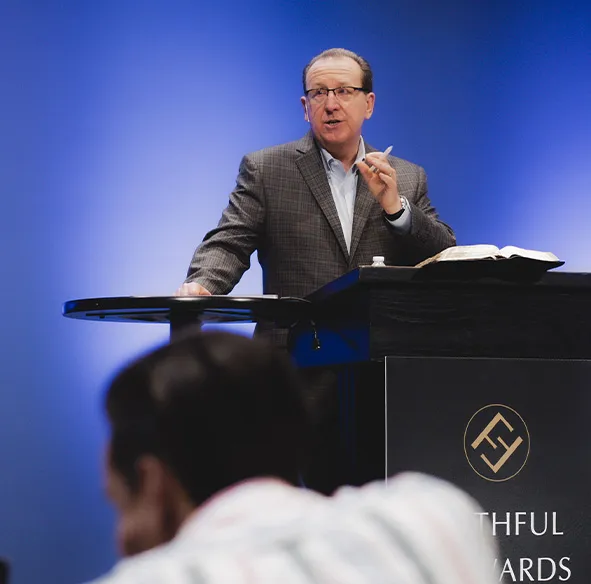
The preaching of God’s Word is central to the life of the church. Tom's pulpit ministry is dedicated to providing clear, biblical teaching to equip believers, strengthen faith, and exalt Christ.


Engage with the most recent teaching from God’s Word.
The preaching of God's Word is central to worship and of the utmost importance for the sanctification of every believer in Christ.

.jpg)
.jpg)

Explore messages organized to help you grow in Christ.
Search and filter sermons for quick access.
The Deadly Dangers of Materialism - Part 3
In "The Deadly Dangers of Materialism, Part 3," Pastor Tom Pennington explores the profound perils of materialism from Matthew 6:19-24. Building on the previous sermon about how materialism consumes one's heart, this message focuses on two additional dangers: spiritual blindness and becoming a worshiper of materialism. Pennington explains Jesus's metaphor of the eye as the "lamp of the body," illustrating that a "clear" spiritual eye leads to light and proper perception, while a "bad" or covetous eye results in spiritual darkness. Materialism blinds individuals in several ways: it obscures the value of spiritual things, distorts the true gospel (as seen in the rich young ruler and the parable of the sower), hides its own destructive power, and prevents contentment by making people forget God's abundant provision and ever-present help. The final danger discussed is the impossibility of serving two masters. Jesus's teaching emphasizes that humans are inherently slaves to either sin or God. Attempting to serve both wealth (mammon) and God means wealth becomes an idol, as God demands exclusive devotion.
The Deadly Dangers of Materialism - Part 2
Pastor Tom Pennington refutes the prosperity gospel, emphasizing that Jesus never promised financial wealth for His followers; instead, His life exemplified deprivation, and materialism is defined as prioritizing physical comfort and possessions over spiritual values. Drawing from Matthew 6:19-21, Pennington exhorts listeners not to store up earthly treasures, which are uncertain, fleeting (susceptible to moths, rust, thieves, and economic downturns), and cannot be taken to the afterlife. Instead, believers are commanded to store up treasures in heaven. This process primarily involves ensuring one's salvation through faith in Jesus Christ, recognizing Him as the ultimate, surpassing treasure, even if it means renouncing earthly attachments. Subsequently, heavenly treasures are accrued by actively investing in the advancement of God's spiritual kingdom through missions, evangelism, and supporting the church, as well as by generously meeting the needs of other people. The core danger of materialism, highlighted by Jesus, is that "where your treasure is, there your heart will be also." This means one's entire inner self�mind, emotions, and will�will be consumed by and directed toward whatever is most valued, dictating the course of one's life.
The Comedy at Calvary
In "The Comedy at Calvary," Tom Pennington preaches on Mark 15:27-32, analyzing the widespread mockery Jesus faced at the cross as a timeless rejection of His divine claims. He identifies five groups of mockers. The "power elite," exemplified by Pilate, used Jesus' crucifixion between two "robbers" as a cruel joke against Him and the Jews, unknowingly fulfilling prophecy that Jesus would be "numbered with transgressors" and bear the sin of many. "Outwardly religious" passersby hurled abuse, twisting Jesus' words about destroying and rebuilding the temple (referring to His body) and sarcastically demanding He save Himself. "False teachers" like the chief priests and scribes acknowledged Jesus' miracles ("He saved others") but disingenuously challenged Him to descend from the cross as the "Christ, the King of Israel, the Son of God" if they were to believe. Even "entirely pagan" Roman soldiers and initially, both "condemned sinners" crucified with Him joined the insults. This pervasive ridicule ironically served to confirm Jesus' claims as Messiah, King, and Son of God, highlighting His mission to save others through His sacrifice, with the resurrection as the ultimate proof. While humanity mocked, God's plan unfolded, turning their vitriol into truth.
The Deadly Dangers of Materialism - Part 1
In "The Deadly Dangers of Materialism, Part 1," Pastor Tom Pennington defines materialism as prioritizing material objects and comforts over spiritual values, noting its pervasive influence globally and within the church. He highlights the prosperity gospel, popularized by figures like E.W. Kenyon and Kenneth Hagin, as a significant driver of materialism in modern Christianity. This false teaching, promoted by leaders such as Joel Osteen and Robert Morris, promises financial prosperity and physical healing to believers who demonstrate enough faith and give generously, often with guaranteed returns. Pennington argues this message fundamentally contradicts Jesus�s true teachings, which emphasize spiritual virtues like poverty of spirit and righteousness, not worldly wealth. Examining Matthew 6:19, "Do not store up for yourselves treasures on earth," Pennington clarifies Jesus�s intent. He explains that Jesus does not condemn wealth itself, hard work, saving for the future, or enjoying resources. Instead, Jesus forbids the *love* of money and making material possessions ultimately important. The sermon identifies three specific dangers: selfishly hoarding wealth beyond necessity, selfishly spending solely on personal comfort and pleasure, and sinfully craving wealth one does not possess. True spirituality, Pennington concludes, involves being delivered from the love of money, rather than pursuing its accumulation.
Where Do You Stand?
Drawing from Proverbs 3:5-6, this sermon challenges listeners to identify their ultimate foundational authority, or "pou sto," a metaphorical "place to stand" that underpins all truth claims. While many rely on diverse sources like human reason, naturalism, postmodernism, personal "designer religions," or even Christian traditions and experiences, the text posits only two true choices: human understanding or divine revelation. Solomon, the wisest man, counsels two core commitments. First, "Trust in the Lord with all your heart and do not lean on your own understanding." This means exclusively relying on God's revealed wisdom, not personal intellect, cultural consensus, or human "experts," whose reasoning is inherently flawed and darkened by humanity's fall. This trust must be absolute and wholehearted, applying God's truth to every area of life, from salvation to morality and origins. Second, "In all your ways acknowledge Him." This demands obeying God's Word as a practical authority, recognizing His lordship over every habit and detail of life�marriage, career, family. It means renouncing personal autonomy and allowing His Word to direct every decision. The remarkable promise is that God "will make your paths straight," ensuring a morally and spiritually wise life that pleases Him.
God Always Finishes What He Starts
Tom Pennington�s sermon, "God Always Finishes What He Starts," based on Philippians 1:6, highlights God's unwavering commitment to completing the salvation He begins in believers. Unlike human projects, God�s work is sovereign and guaranteed. Paul�s confidence stems from three foundational arguments: First, God *began* the "good work" of salvation through regeneration, imparting spiritual life and enabling faith, a monergistic act where He alone initiates. Second, God *is accomplishing* this work through sanctification, actively conforming believers to Christ's image. While believers are commanded to "work out their salvation," God concurrently "works in them both to will and to work for His good pleasure," using various means to achieve His purpose. Third, God *has promised to perfect* this work until Christ's return, ensuring glorification for all He predestined. This divine promise is guaranteed by His faithfulness. This profound understanding of God's completed salvation yields three key consequences for believers: overwhelming gratitude for His unmerited grace, unshakable assurance that God will perfect them despite challenges, and the perseverance of the saints, as God's preserving power ensures no true believer will be lost.
No Results Found.
We couldn’t find anything matching your search.
Explore The Word Unleashed
Our ministry brings together expository preaching, theological precision, and practical application for the good of Christ's church and the daily living of Christ's people.
.webp)
Sermons
Listen to expository sermons that clearly teach God’s Word and guide you in daily living.

Radio
Tune in to gospel-centered programs that share biblical truth and strengthen your daily walk with Christ.
Training
Join courses and workshops designed to deepen your faith and equip you to serve others with biblical wisdom.
.webp)
From the Pastor's Desk
Read pastoral messages that encourage, instruct, and help you apply God’s Word to every part of your life.
.webp)
Hymns
Discover timeless hymns that lift your heart in worship and remind you of God’s abounding grace and faithfulness.
Podcasts
Stay rooted in Scripture through our podcast series.