Sermons That Exalt Christ
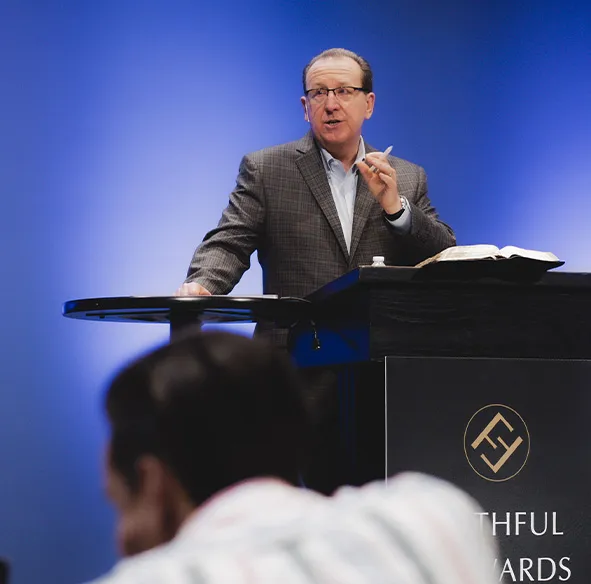
The preaching of God’s Word is central to the life of the church. Tom's pulpit ministry is dedicated to providing clear, biblical teaching to equip believers, strengthen faith, and exalt Christ.


Engage with the most recent teaching from God’s Word.
The preaching of God's Word is central to worship and of the utmost importance for the sanctification of every believer in Christ.

.jpg)
.jpg)

Explore messages organized to help you grow in Christ.
Search and filter sermons for quick access.
Mastering Materialism - Part 3
Pastor Tom Pennington�s sermon, "Mastering Materialism (Part 3)," from Matthew 6:25-34, confronts the pervasive issue of worry, particularly concerning life�s duration and physical needs. He opens by noting research suggesting genetics, not lifestyle, is the primary factor in human longevity, underscoring God's ultimate sovereignty over life. Jesus commands believers not to worry about necessities like food, drink, or clothing. The pastor explains this trust is rooted in God's character: He gives life itself, feeds all living things (like birds), and crucially, has determined the length of each person�s life. Quoting Matthew 6:27, "Who of you by being worried can add a single hour to his life?", Pennington elaborates that human anxiety cannot alter God's predetermined plan. He explains this through the theological concepts of God's sovereignty and providence, stating God controls every detail of life, including the exact timing and circumstances of death. While human decisions and natural laws act as secondary causes, God orchestrates them all to achieve His eternal purposes, a concept known as concurrence. Worrying about one's lifespan is therefore futile.
Mastering Materialism - Part 2
The sermon, "Mastering Materialism, Part 2" from Matthew 6:25-34, addresses the sin of worry, defining it as fear of the future, with trust in God as its antidote. Pastor Tom Pennington explains Jesus' command not to worry about life's basic necessities, such as food and clothing. He differentiates sinful worry from legitimate care, noting that worry becomes sinful when it distracts from spiritual priorities, is borne alone instead of being cast upon God, or escalates into fear and distrust. To overcome worry, one must shift their perspective on God, as Jesus identifies worry's root cause as "little faith"�a lack of confidence stemming from an inadequate understanding of God's character. Pennington highlights two aspects of God's character: First, if God granted the greater gifts of physical life and the human body, He will surely provide the lesser needs for their sustenance, reflecting His immense goodness and generosity. Second, God consistently feeds wild birds that neither sow nor store provisions. Since humans, created in God's image, possess far greater value than animals, our Heavenly Father will undeniably provide for His adopted children.
The Death of God's Only Son - Part 1
Tom Pennington's sermon on Mark 15:33-39, "The Death of God's Only Son, Part 1," centers on Jesus's crucifixion as the zenith of Mark's gospel and God's ultimate demonstration of love. The text highlights three " divine miracles" that reveal God the Father's perspective on Jesus's death. First, a miraculous darkness covered the land from noon to 3 PM. This supernatural event, not a natural eclipse, symbolized God's judgment against sin, foreshadowing the "outer darkness" of hell that Jesus endured in our place. Second, Jesus's miraculous desertion, expressed in His loud cry, "My God, My God, why have You forsaken Me?" This Aramaic cry revealed the Father's abandonment of Jesus as He bore the world's sins and God's wrath. Jesus experienced the eternal separation from God that sinners deserve. Third, a miraculous death. Unlike typical victims, Jesus died with powerful, conscious cries ("It is finished!" and "Father, into Your hands I commit My spirit"), demonstrating His sovereignty. He willingly laid down His life, a voluntary and substitutionary sacrifice. These miracles at Calvary reveal the Father's boundless love, punishing His Son to rescue us from eternal judgment, proving God's immense love for humanity.
Mastering Materialism - Part 1
In "Mastering Materialism (Part 1)," Pastor Tom Pennington addresses the pervasive sin of worry, anxiety, and fear, rooted in materialism. He critiques common secular and "pop Christian" solutions�like distraction, therapy, drugs, or designated "worry times"�as ineffective, since they fail to tackle the core issue. Drawing from Matthew 6:25-34, Pennington explains Jesus' teaching on how to overcome worry about future needs such as food, drink, and clothing. This approach models sanctification by moving beyond external actions to address sinful thinking, and ultimately, flawed perceptions of God. Pennington clarifies that the Greek word for "worry" can signify legitimate care and concern, but sinful worry distinguishes itself by distracting from kingdom priorities, shouldering burdens alone rather than casting them on God, and stemming from fear and a lack of trust. Worry, likened to being choked or strangled, is fundamentally an expression of fear. Jesus' command to "not be worried" isn't a prohibition against wise planning, but against anxious thoughts and a lack of faith concerning the necessities of physical life. To avoid materialism's dangers, one must stop this sinful pattern of worrying about future needs.
The Desperate Cry For Forgiveness
Tom Pennington's sermon on Psalm 130, one of Martin Luther's "Pauline Psalms," explores the profound cry for forgiveness originating from "the depths" of personal guilt. The sermon highlights three essential truths about God's forgiveness, drawn from verses 3-4 of the psalm. First, **everyone needs forgiveness**. God, in His perfect justice, records every sin and demands punishment. If He were to "mark iniquities," no one could stand before Him, revealing humanity's complete inability to justify themselves. Second, **God provides forgiveness**. This divine attribute involves canceling objective guilt and treating repentant sinners as if they had not broken His law. Critically, this forgiveness is only possible through a sacrificial ransom�the shedding of blood. Jesus Christ's death on the cross satisfied God's justice, bearing humanity's iniquities, thus enabling a holy God to forgive. Repentance, a frank and full confession of sin, is the necessary condition for receiving this pardon. Third, **God uses forgiveness for His glory**. The ultimate purpose of forgiveness is "that You may be feared"�not with terror, but with a reverential awe that transforms individuals into true worshipers. This awe inspires love, service, and obedience, fostering reconciliation with God.
What God Says About Homosexuality
Pastor Tom Pennington's sermon, "What God Says About Homosexuality," posits it as a defining issue, noting how a "brilliant marketing strategy" shifted cultural perceptions by portraying homosexuality as natural and discrediting biblical opposition. Pennington asserts that the Bible consistently condemns homosexuality. He begins with God's created order in Genesis 1-2, establishing marriage exclusively for one man and one woman, refuting the concept of a "born gay" orientation. The destruction of Sodom and Gomorrah (Genesis 19, Jude 7) serves as divine judgment for homosexual acts. Old Testament Law (Leviticus 18:22, 20:13) explicitly calls all homosexual activity an "abomination." Jesus affirmed these Old Testament teachings. Paul in Romans 1 describes homosexuality as "unnatural," a "degrading passion" indicative of God's wrath of abandonment for idolatry, leading to self-destructive behavior. 1 Corinthians 6:9-11 states that practicing homosexuals will not inherit God's kingdom, implying such a lifestyle is incompatible with genuine Christianity. However, the gospel offers forgiveness and power to change ("such were some of you") through repentance and faith. Christians are urged to uphold biblical truth, treating individuals with grace while speaking against sin, and sharing the transforming hope of Christ.
No Results Found.
We couldn’t find anything matching your search.
Explore The Word Unleashed
Our ministry brings together expository preaching, theological precision, and practical application for the good of Christ's church and the daily living of Christ's people.
.webp)
Sermons
Listen to expository sermons that clearly teach God’s Word and guide you in daily living.

Radio
Tune in to gospel-centered programs that share biblical truth and strengthen your daily walk with Christ.
Training
Join courses and workshops designed to deepen your faith and equip you to serve others with biblical wisdom.
.webp)
From the Pastor's Desk
Read pastoral messages that encourage, instruct, and help you apply God’s Word to every part of your life.
.webp)
Hymns
Discover timeless hymns that lift your heart in worship and remind you of God’s abounding grace and faithfulness.

Podcasts
Stay rooted in Scripture through our podcast series.