Sermons That Exalt Christ
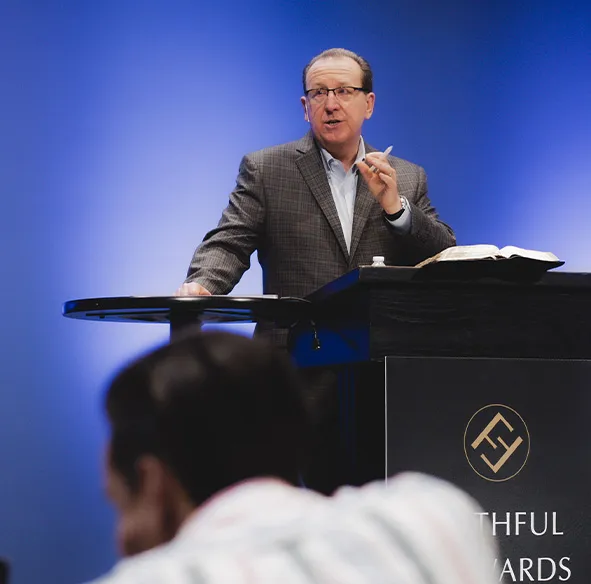
The preaching of God’s Word is central to the life of the church. Tom's pulpit ministry is dedicated to providing clear, biblical teaching to equip believers, strengthen faith, and exalt Christ.


Engage with the most recent teaching from God’s Word.
The preaching of God's Word is central to worship and of the utmost importance for the sanctification of every believer in Christ.

.jpg)
.jpg)

Explore messages organized to help you grow in Christ.
Search and filter sermons for quick access.
Responding to the Sins of Others - Part 2
Pastor Tom Pennington's sermon on Matthew 7:1-6, "Responding to the Sin of Others," explores Jesus' command "Do not judge." He clarifies that this directive doesn't forbid all forms of judgment, such as civil law, church discipline, or confronting false teaching. Instead, it prohibits a harsh, critical, and judgmental spirit prevalent in the world, which must not characterize Christ's disciples. Jesus teaches that believers must respond to the sins of others with grace (vv. 1-2). He warns that God will apply the same measure of judgment to us that we apply to others, meaning a harsh spirit invites divine discipline, while a gracious spirit reflects true salvation. Furthermore, responding to sin requires humility (vv. 3-5). The vivid imagery of a "speck" in a brother's eye versus a "log" in one's own highlights how pride makes us quick to notice minor faults in others while remaining blind to our own significant sins, leading to hypocrisy. True humility, Jesus explains, demands accepting this diagnosis of hypocrisy and diligently removing the "log" from one's own eye first. This involves deep self-examination: sitting in judgment on one's own sins, confessing them, and actively committing to turn from them and pursue obedience.
Responding to the Sins of Others - Part 1
The sermon on Matthew 7:1-6 clarifies Jesus' command "Do not judge," a frequently misused scripture. Pastor Tom Pennington explains that Jesus is not prohibiting human courts, church discipline, or the confrontation of false teachers, as these are scripturally supported. Instead, Jesus condemns a "harsh, critical, judgmental spirit" that focuses on others' minor flaws while excusing one's own significant sins, illustrated by the "log and speck" analogy. This critical spirit, often manifested internally or online, is contrary to the disciple's life. Jesus intends for believers to respond to others' sins with grace, mirroring the mercy they've received from God. The passage warns that God will judge us by the same standard we apply to others, highlighting that mercy begets mercy. A graceless, judgmental spirit is a sin in itself and suggests a fundamental misunderstanding of God's boundless grace. To apply this teaching, believers should recognize judgmentalism as sin, believe the best in others, cultivate a forgiving and gentle spirit, and profoundly acknowledge their own sinfulness, which ultimately drives them back to the cross for God's indispensable grace.
Mastering Materialism - Part 6
Pastor Tom Pennington introduces Allen Frances' book, "Saving Normal," which critiques psychiatry's over-medicalization of normal life and the over-prescription of drugs for "the worried well." Pennington argues that while medication can mask symptoms, Jesus' teachings offer the true solution for worry and anxiety. Referencing Matthew 6:25-34, he explains Jesus' command not to worry, a root cause of materialism. Jesus provides three reasons: God's character (He cares for His creation), kingdom priorities (seek God's kingdom first, and needs will be met), and simple logic from verse 34: "Do not worry about tomorrow; for tomorrow will care for itself. Each day has enough trouble of its own." Worry, encompassing the entire future, is sinful as it's self-destructive, a display of unbelief, and often based on untruths. Tomorrow isn't our responsibility; God's providence manages it. We are to live in today by addressing current troubles, praying about future concerns, and taking necessary present actions for legitimate future needs, trusting God's daily grace and care.
Mastering Materialism - Part 5
Pastor Tom Pennington's sermon on Matthew 6:25-34, "Mastering Materialism," calls believers to overcome worry by prioritizing God's kingdom and righteousness. Jesus commands us not to worry about life's necessities like food, drink, and clothing, reminding us that our heavenly Father, who feeds birds and clothes lilies, will surely care for His much more valuable children. Worry, defined as fear of the future and doubt in God's provision, is inconsistent with our new identity in Christ, as we have been given new hearts and spiritual priorities. While unbelievers ("Gentiles") eagerly pursue earthly things, disciples are commanded to "seek first His kingdom and His righteousness." Seeking God's kingdom involves ensuring salvation, submitting to Christ's rule in every life aspect, spreading the gospel, and making daily decisions that advance His purposes. Seeking His righteousness means pursuing personal holiness, as outlined in the Sermon on the Mount, influencing both external behavior and inner thoughts. Jesus pledges that our Father knows what we need and will generously supply all physical necessities if we prioritize spiritual goals.
Mastering Materialism - Part 4
This sermon, based on Matthew 6:25-34, explores clothing as a basic human necessity for modesty, protection, status, and beauty, first provided by God in Eden. While essential, clothing can become an idol, leading to excessive accumulation and worry. Jesus commands believers not to worry about life's physical needs, including clothing. He argues from God's character: if God gives life, He will sustain it. If He feeds birds, He will feed His more valuable children. Specifically addressing clothing, Jesus points to wildflowers, noting God clothes them with a beauty surpassing even Solomon's glory, despite their brief existence. Therefore, God will "much more" clothe His children, who are made in His image and destined for eternity. Worry, Jesus concludes, is a sign of "little faith." The message advocates a balanced view of beauty in clothing, avoiding both excess and equating godliness with drabness, as God is a creator of beauty. God typically provides physical clothing through our resources, through others helping the needy, or occasionally through miraculous intervention. More profoundly, God provides spiritual clothing for believers: the perfect righteousness of Jesus Christ, covering their sin. Therefore, Christians should seek God's kingdom first, trusting Him to provide all their needs.
The Death of God's Only Son - Part 2
Tom Pennington's sermon on Mark 15:33-39 highlights Jesus's death as the central event of human history, marked by God the Father's direct commentary through a series of divine miracles. During Jesus's final three hours on the cross, a miraculous darkness fell, signifying God's judgment against sin being poured out on His Son. Jesus's cry, "My God, My God, why have You forsaken Me?" revealed a miraculous desertion, as He bore the separation from God that humanity deserved, a profound act of love. His miraculous death with a loud cry demonstrated His sovereignty, declaring "It is finished." Further divine intervention included miraculous destruction: the Temple veil tore from top to bottom, symbolizing open access to God through Christ's torn flesh, ending the Old Covenant. An earthquake and opened tombs affirmed God's presence, judgment, and promised victory over death. Finally, a miraculous deliverance occurred as a hardened Roman centurion and his soldiers, witnessing these events and Jesus's manner of death, confessed Him as "Truly this man was the Son of God!" This confession, the first true human declaration in Mark's gospel, underscores the transformative power of the cross, even for Jesus's executioners.
No Results Found.
We couldn’t find anything matching your search.
Explore The Word Unleashed
Our ministry brings together expository preaching, theological precision, and practical application for the good of Christ's church and the daily living of Christ's people.
.webp)
Sermons
Listen to expository sermons that clearly teach God’s Word and guide you in daily living.

Radio
Tune in to gospel-centered programs that share biblical truth and strengthen your daily walk with Christ.
Training
Join courses and workshops designed to deepen your faith and equip you to serve others with biblical wisdom.
.webp)
From the Pastor's Desk
Read pastoral messages that encourage, instruct, and help you apply God’s Word to every part of your life.
.webp)
Hymns
Discover timeless hymns that lift your heart in worship and remind you of God’s abounding grace and faithfulness.

Podcasts
Stay rooted in Scripture through our podcast series.